1725–1770
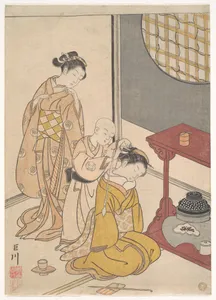
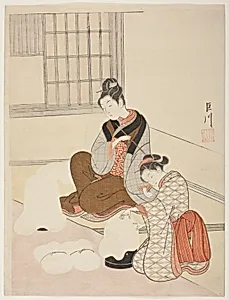
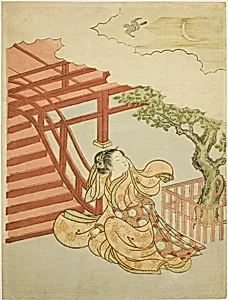
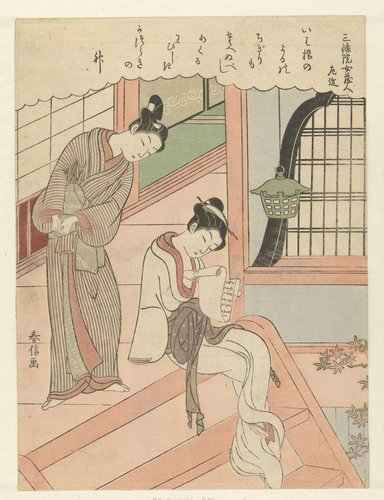
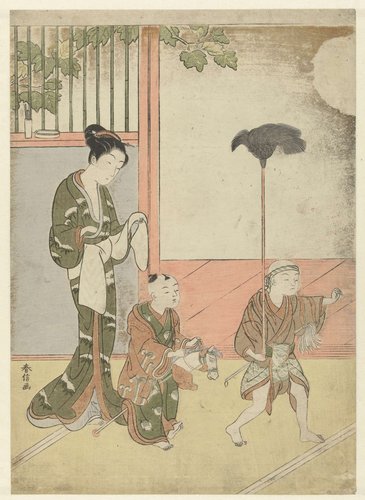
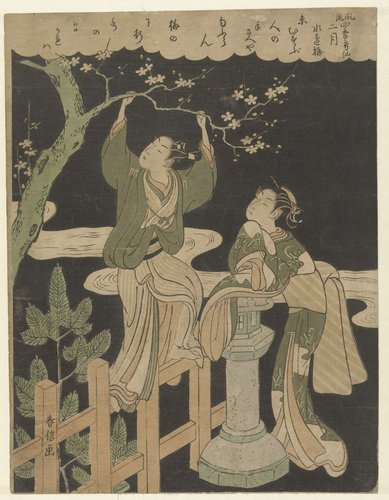
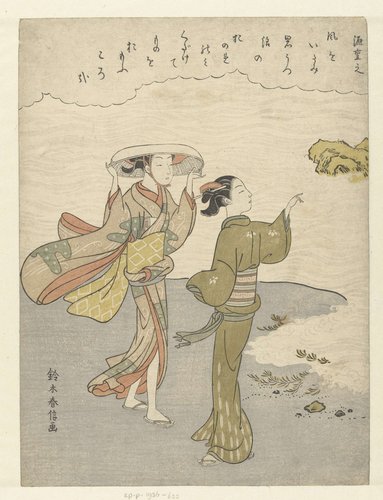
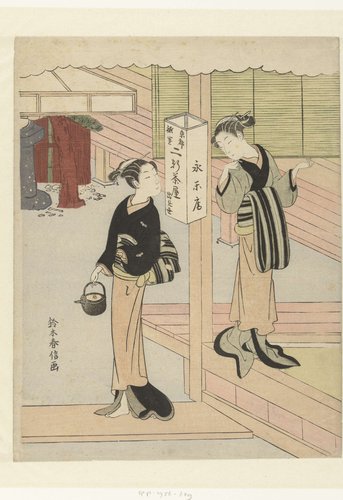
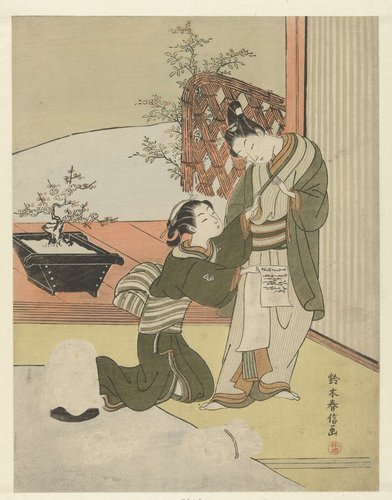
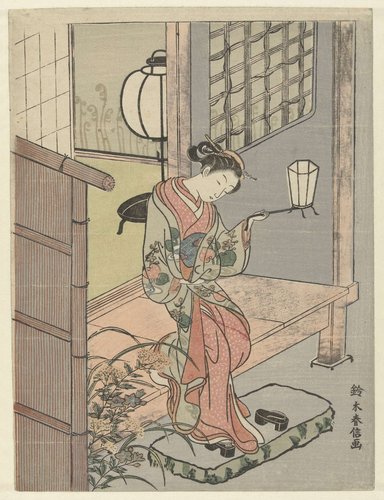
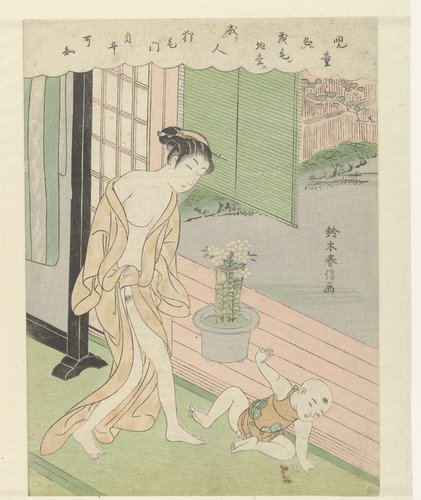
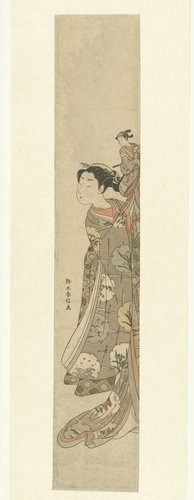
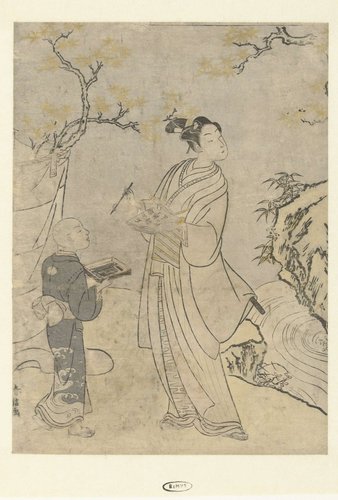
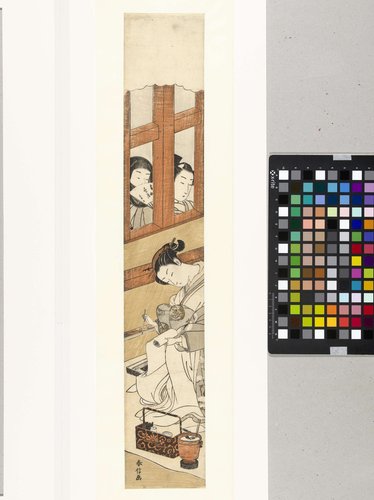
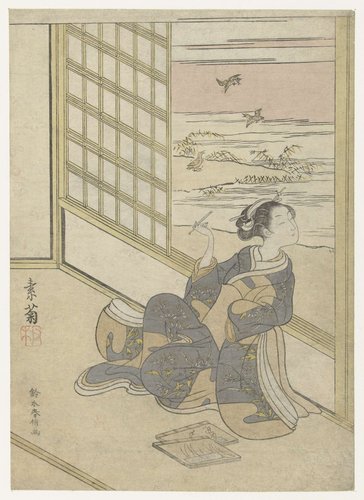
Suzuki Harunobu (c. 1725-1770) was a Japanese ukiyo-e artist who revolutionized woodblock printing by developing nishiki-e—full-color prints using multiple woodblocks—in 1765. Before Harunobu, Japanese prints were limited to two or three colors; his innovation unleashed the entire artist's palette, transforming ukiyo-e into the vibrant art form that would later captivate Western artists from Manet to Van Gogh. In just five years before his death, Harunobu created over 1,000 color prints and illustrated nearly two dozen books. His delicate depictions of slender young women in poetic settings established an influential aesthetic of 'eternal girlhood,' while his technical mastery set standards that defined the golden age of ukiyo-e printmaking.
Born around 1725 in Edo (Tokyo), Harunobu came from a samurai family that had fallen from status after his grandfather and father were exiled for involvement in gambling activities. Unlike most ukiyo-e artists who adopted artistic names, Harunobu used his real family name.
He likely studied under Nishimura Shigenaga and was strongly influenced by Kyoto artist Nishikawa Sukenobu's elegant depictions of women. His early work shows influences from multiple sources including the Torii school, Ishikawa Toyonobu, and the classical Kanō tradition.
Harunobu's early prints followed the prevailing benizuri-e style—prints using two or three colors (typically rose-red and green) over black outlines. His subjects included actors and beautiful women in the established ukiyo-e manner.
A crucial development came through his involvement with calendar print exchanges (egoyomi) among wealthy Edo connoisseurs. These privately commissioned prints, used to celebrate the new year, allowed for experimentation with costly materials and techniques.
In 1765, Harunobu achieved the breakthrough that would define his legacy: the development of nishiki-e ('brocade pictures'). Using precise registration marks (kento) to align multiple woodblocks, he could print eight, ten, or more colors in perfect alignment, creating prints of unprecedented chromatic richness.
The innovation required collaboration between artist, block-cutter, and printer at the highest levels. Harunobu's calendar prints for 1765 demonstrated the new technique, and its success quickly transformed commercial print production.
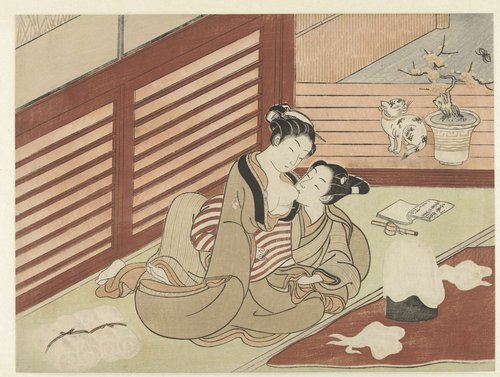
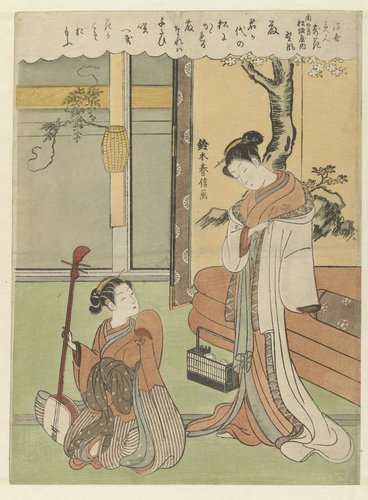
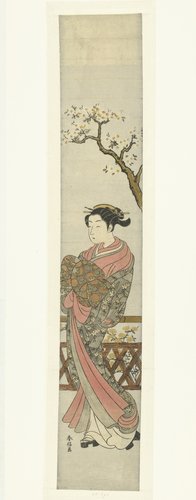
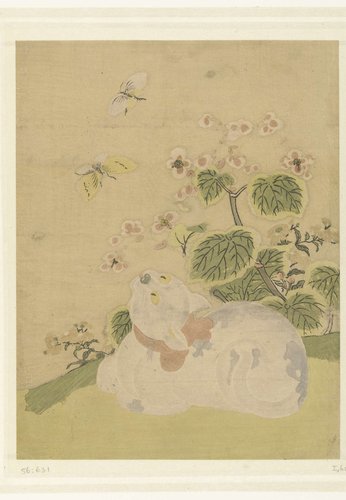
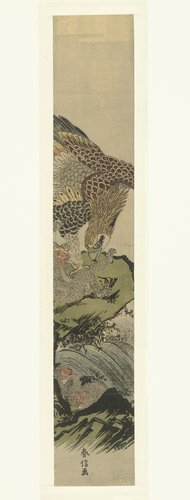
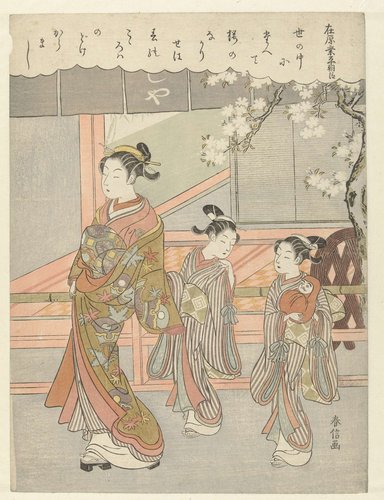
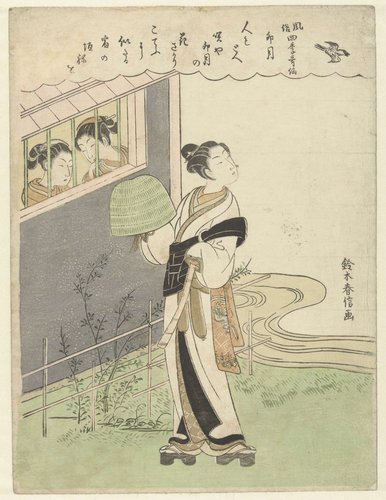
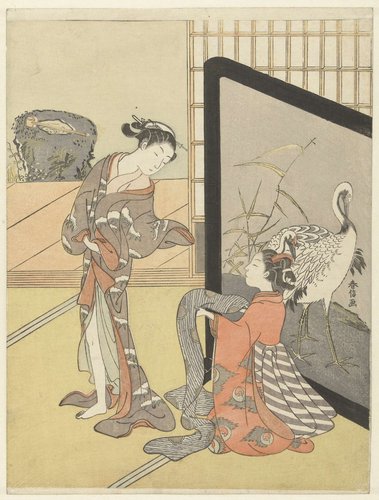
Harunobu's brief mature period produced an astonishing output: over 1,000 color prints depicting beautiful women (bijin-ga), lovers, literary subjects, and scenes of everyday Edo life. His figures—delicate, slender, almost childlike—inhabit dreamlike settings suffused with poetry and nostalgia.
He also created numerous shunga (erotic prints) and illustrated books. Harunobu died suddenly on July 8, 1770, at approximately 45 years old, leaving ukiyo-e transformed. His technical innovations enabled the subsequent achievements of Utamaro, Sharaku, Hokusai, and Hiroshige.
Biography length: ~870 words