
Ctrl K
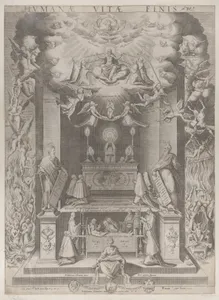
Bernardino Passeri (1540–1588) was an Italian engraver, painter, and draughtsman born in Ancona who established himself in Rome during the late 16th century. Active from around 1577 to 1585, he contributed significantly to the vibrant print culture of Counter-Reformation Rome as a designer whose compositions were reproduced by leading engravers across Europe. His early career involved providing drawings for book illustrations printed in Rome and Antwerp, including a substantial portion of the 55 engravings in Lorenzo Gambara's *Rerum sacrarum liber*, published by Christophe Plantin in 1576—one of which bears his signature.
Passeri's most influential project was the 50 drawings depicting the life of Saint Benedict of Nursia for *Vita et miracula sanctissimi patris Benedicti*, engraved by Aliprando Caprioli and published in Rome around 1579. These images decisively shaped the saint's iconography and were widely imitated by artists such as the Wierix brothers, Karel van Mallery, and Adriaen Collaert. He also created drawings for *Evangelicae historiae imagines* by Jerónimo Nadal (1593), a key Jesuit publication visualizing Christ's life, as well as engravings for *Saint Cecilia: Vita et martyrium* (Rome, ca. 1590). Notable among his free-standing works is the dramatic *Allegory of the End of Man's Life* (1589), an engraving published by fellow Roman printmaker Tommaso Moneta. Passeri worked primarily with the burin, producing religious subjects that emphasized didactic clarity for devotional use.
Tommaso Moneta (active Rome, 1588–1603), possibly born in 1538 and living until 1642, operated as a publisher, engraver, and painter in the same Roman milieu, bridging Passeri's era into the early 17th century. He took over addresses on earlier plates, such as those originally by Clodio, and published Passeri's *Allegory*, ensuring its dissemination. Moneta also engraved plates after Antonio Tempesta for *Vita et miracula d. Bernardi Clarevalensis*, including scenes like Saint Bernard healing his uncle or performing exorcisms (1587), and issued portrait series of rulers and commanders.
Though their early lives and formal training remain undocumented, Passeri and Moneta exemplified the collaborative print ecosystem of papal Rome, where designers, engravers, and publishers like Cornelis Cort, Hendrik Goltzius, and the Wierix brothers amplified religious imagery for mass devotion. Their works, blending Mannerist elegance with doctrinal fervor, influenced European iconography and underscore the era's innovative use of prints as tools for spiritual instruction and visual propaganda. Today, their contributions survive in major collections like the Metropolitan Museum of Art and British Museum, highlighting Rome's pivotal role in early modern graphic arts.
No artworks found for this artist