
Ctrl K
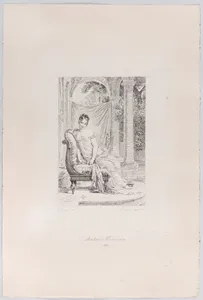
**Baron François Gérard (1770–1837)** was a leading French Neoclassical painter renowned for his elegant portraits of European royalty, statesmen, and cultural figures during the Napoleonic era and the Bourbon Restoration. Born François Pascal Simon Gérard on May 4, 1770, in Rome to a French father serving in the household of the French ambassador and an Italian mother, he moved to Paris with his family around 1782.
He trained under sculptor Augustin Pajou and painter Nicolas-Guy Brenet before becoming a student and later assistant to the great Jacques-Louis David. Gérard worked firmly in the Neoclassical tradition, excelling in precise draftsmanship, balanced compositions, and a refined sense of color and psychological insight that set his portraits apart.
His career flourished under Napoleon, for whom he served as court painter, producing iconic works such as the 1799 portrait of Joséphine Bonaparte and the large-scale *Battle of Austerlitz* (1808). After the Empire’s fall, he continued as First Painter to Louis XVIII (who created him a baron in 1809 or 1819) and Charles X, painting official portraits and executing ceiling decorations for the Panthéon.
Gérard’s legacy endures through his sensitive depictions of power and personality that captured the transition from revolutionary fervor to imperial grandeur and restored monarchy. Though Urbain Canel appears primarily as a Paris publisher of the period and Pierre Michel Adam as a later engraver (1799–1853), Gérard’s paintings and their reproductions circulated widely, cementing his influence on 19th-century French portraiture.