
Ctrl K
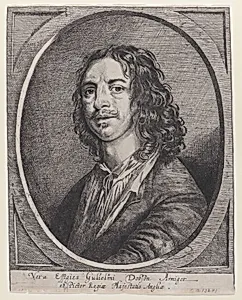
**William Dobson** (baptised 4 March 1611 – buried 28 October 1646) was an English portrait painter and one of the first significant native-born artists in Britain. Born in London, he trained initially as an apprentice to the printseller and painter William Peake before joining the studio of the German-born artist Francis Cleyn. Through this connection, Dobson gained access to the Royal Collection, where he copied works by Titian and Anthony van Dyck, absorbing Venetian colour and texture while developing a distinctive, robust style of his own.
His career accelerated after van Dyck’s death in 1641, when he secured royal commissions from Charles I. Dobson is said to have served as serjeant painter to the king. With the outbreak of the English Civil War, he followed the royal court to Oxford, where he produced the majority of his surviving works between 1642 and 1646. These include striking half-length portraits of leading Royalists such as Prince Rupert of the Rhine, Prince Maurice, John Byron, and Charles Lucas, as well as a notable baroque portrait of the future Charles II as Prince of Wales. His paintings are marked by sincere characterisation, rich impasto in earlier works that later thinned due to wartime shortages, and a direct, unidealised approach to his sitters.
Dobson returned to London after the fall of Oxford in 1646. Without patronage, he faced financial hardship, including a period of imprisonment for debt, and died in poverty at the age of thirty-five. He was married twice—first to Elizabeth (d. 1634) and then to Judith Sander.
Today, roughly sixty of his paintings are known, held in major British collections including the National Portrait Gallery, Tate Britain, and the Scottish National Portrait Gallery, as well as institutions in the United States and New Zealand. Contemporary John Aubrey hailed him as “the most excellent painter that England has yet bred,” and later critics have recognised him as the first British-born painter of genuine genius, bridging the gap before the rise of Hogarth. His work remains a vital record of the Royalist cause during the Civil War.
No artworks found for this artist