Ctrl K
**Abraham Blooteling (also spelled Bloteling; 1634–1690) was a Dutch engraver, designer, and pioneering mezzotint artist born in Amsterdam.**
He was likely a pupil of the Visscher family of engravers, whose influence is evident in the style of his early etchings. Following the French invasion of the Netherlands in 1672, Blooteling traveled to England, where he enjoyed moderate success before returning to Amsterdam after two or three years. There he maintained close ties with the painter Gerard de Lairesse, with whom he shared a residence on the Prinsengracht; Blooteling remained a lifelong bachelor.
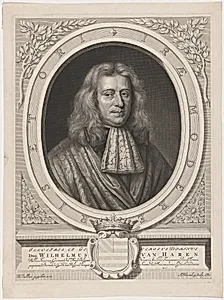
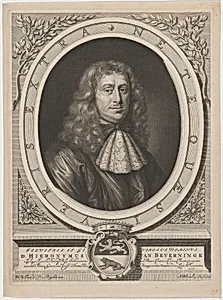
Blooteling worked primarily in etching, line engraving, and especially mezzotint, a tonal technique he adopted by 1671 and helped popularize. He is often credited with refining the “rocker” tool for preparing mezzotint plates and with introducing the medium to England. His output includes numerous portraits after leading artists of the day—Peter Lely, Caspar Netscher, and others—as well as reproductive prints after his own designs and those of masters such as Rubens and Raphael. Among his works after Bernard Vaillant (sometimes associated with Wallerant Vaillant) are the 1679 engraving of Jerome de Beverningh and the 1680 portrait of Willem van Haren. In 1685 he published an etched edition of Leonardo Agostini’s collection of antique gems.
Blooteling’s technical brilliance and role in disseminating mezzotint across northern Europe secured his lasting reputation. His prints—many of which survive in major museum collections—remain valued for their clarity, tonal richness, and faithful rendering of contemporary sitters and classical subjects.
All 2 artworks loaded