Ctrl K
1853–1908
Occupations
Adachi Ginkō (安達 吟光, 1853–after 1908), born Adachi Heishichi in the spring of 1853, emerged as a prolific Japanese printmaker during the transformative Meiji era. Little is known of his early years beyond his birth in the second month of Kaei 6 (roughly March or April), but he pursued formal training under the painter Goseda Hōryū, a master of Western-style yōga techniques. This exposure to European methods likely influenced Ginkō's versatility, though he channeled his skills primarily into the indigenous ukiyo-e tradition as a member of the esteemed Utagawa school. By around 1870, he had begun designing woodblock prints, marking the start of a career that bridged Japan's feudal past and its rapid modernization.
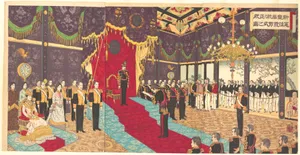
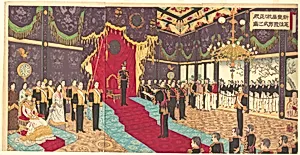
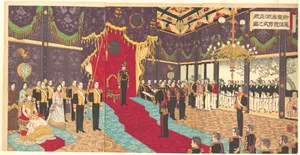
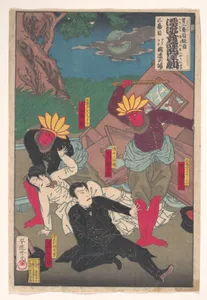
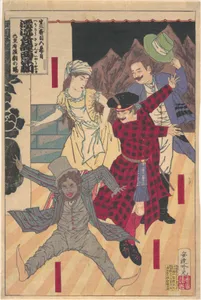
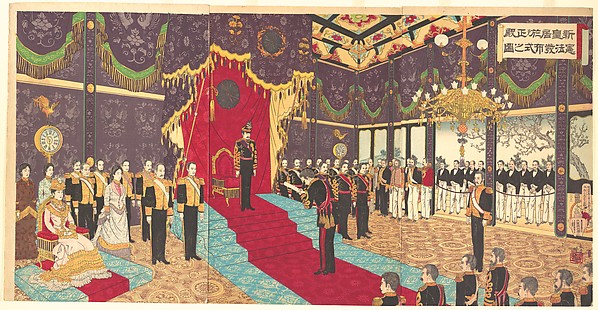
Ginkō's oeuvre spans an impressive range of genres, including bijin-ga (portraits of beauties), yakusha-e (actor prints), landscapes, book illustrations, and satirical works. He excelled in large-scale triptychs depicting contemporary events, capturing the drama of the era with dynamic compositions and vivid colors. His most celebrated series, *Pictorial Outline of Japanese History* from the late 1880s, chronicles key moments from ancient times to the present in intricate, narrative panels that blend historical accuracy with dramatic flair. Other notable works include *Ladies Sewing (Kijo saihō no zu)* (Metropolitan Museum of Art), showcasing elegant women in domestic scenes; *Kabayama, the Chief of Naval Staff, Attacking Enemy Ships* (Art Institute of Chicago), a patriotic wartime print from 1894; and *Matsuura Sayo-hime* from *A Mirror of Famous Women of Present and Past*, evoking mythological grace. Worked in the Utagawa school tradition, Ginkō produced satirical pieces that occasionally courted controversy, such as a caricature of Emperor Meiji that landed him in jail and with a fine in 1889.
Ginkō's legacy endures as a chronicler of Meiji Japan's social upheavals, from naval victories to cultural shifts, amassing hundreds of prints that reflect the Utagawa school's waning dominance amid Western influences. Active into the early 20th century, he navigated the decline of ukiyo-e while preserving its storytelling essence. Today, his works grace collections like the Metropolitan Museum of Art and are prized for their historical insight and artistic boldness, offering a window into an empire in flux. (312 words)
Wikidata (CC0)
All 6 artworks loaded