
Ctrl K
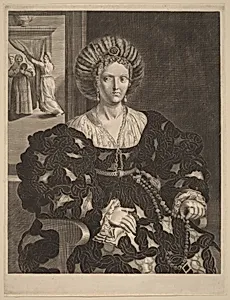
Pieter Holsteyn II (c. 1614–1673) was a Dutch Golden Age painter, engraver, and stained-glass artist born and primarily active in Haarlem. The eldest son of Pieter Holsteyn I, a prominent Haarlem stained-glass painter, engraver, and tapestry designer from Schleswig, he grew up in a Catholic artistic family that included his younger brother, Cornelis Holsteyn, also a painter. Holsteyn II studied under his father, whose influence is evident in their shared focus on birds and natural subjects, sometimes making their works difficult to distinguish. He later taught the painter Josua Breckerveld and signed his pieces with the monogram "PH."
Holsteyn II worked across Haarlem, Amsterdam, Münster, and Enkhuizen, contributing to projects like the glass paintings of the "damiaatjes" story in Haarlem's City Hall alongside Johannes Boeckhorst. His style epitomized Dutch Golden Age precision in watercolor and engraving, specializing in meticulous studies of flora and fauna—tulips, insects, birds—that captured nature's intricate details with scientific accuracy and artistic elegance. He also excelled as a reproductive engraver, faithfully rendering Renaissance masters' designs, blending his family's stained-glass heritage with the era's fascination for natural history and classical revival.
Among his notable works are watercolor depictions like the tulip "Lap Rock" from a former tulip book and the "Oostindische Raven" (East Indian raven), signed "PH fe," once in the Enschedé collection. A prime example of his engraving prowess is *Isabella d'Este* (c. 1655/1660), an exquisite copper engraving after Giulio Romano's portrait, showcasing his skill in translating Mannerist elegance into print. These pieces highlight his versatility, from hyper-realistic botanicals amid Tulipmania's echo to historical reproductions.
Holsteyn II's legacy endures through his influence on later natural history artists like Herman Henstenburgh, whose watercolors echoed his technique. A 1706 Haarlem auction of his insect and bird watercolors, praised by biographer Arnold Houbraken, underscores their enduring value, cementing his role in bridging art, science, and craft during the Dutch Golden Age.