Ctrl K
**Philip Galle (1537–1612)** was a leading Netherlandish engraver, designer, and print publisher whose reproductive prints helped disseminate the works of major 16th-century masters across Europe. Born in Haarlem, he trained as a pupil of the humanist and engraver Dirck Volkertsz. Coornhert.
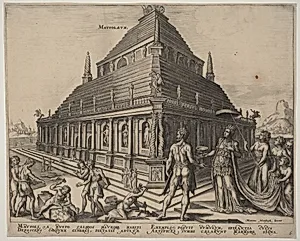
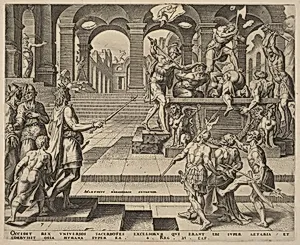
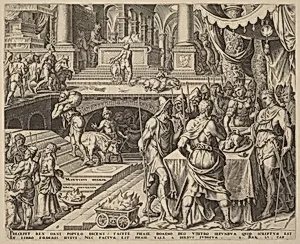
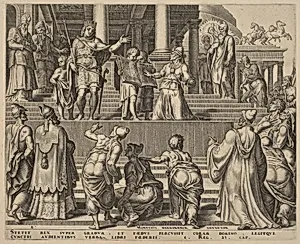
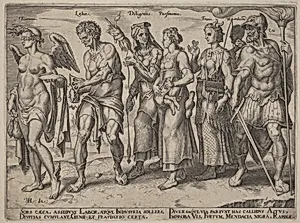
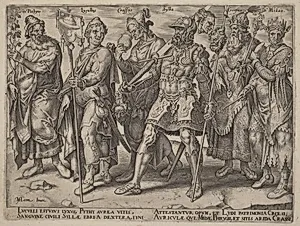
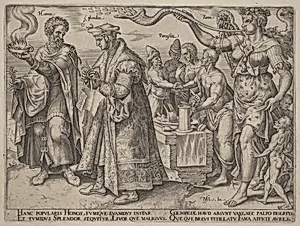
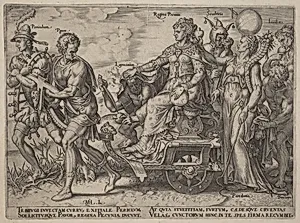
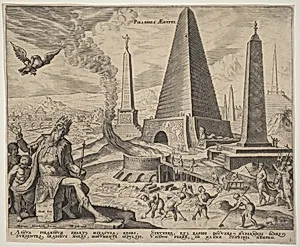
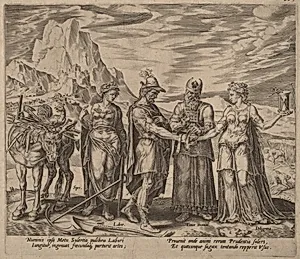
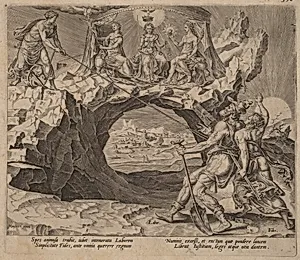
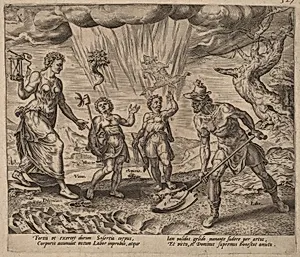
In Haarlem, Galle engraved several compositions by the local painter Maerten van Heemskerck, establishing a close professional relationship that produced numerous prints after the older artist’s designs. He also worked from 1557 for the prominent Antwerp publisher Hieronymus Cock while running his own press in Haarlem from 1563, creating prints after artists such as Johannes Stradanus and Maerten de Vos. Around 1570 he relocated to Antwerp, where he eventually took over Cock’s operations and became a citizen of the city.
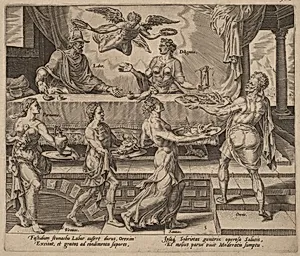
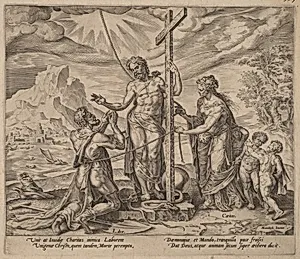
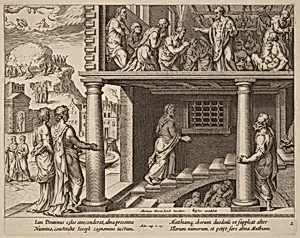
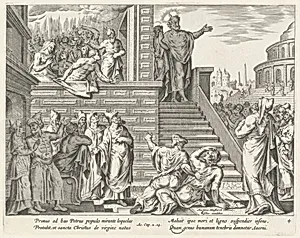
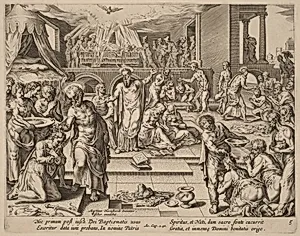
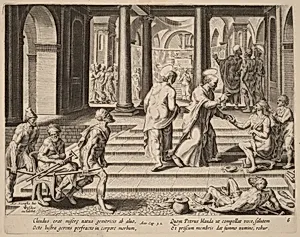
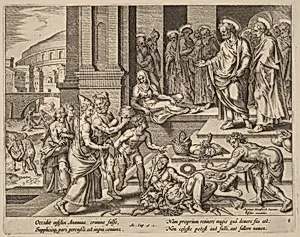
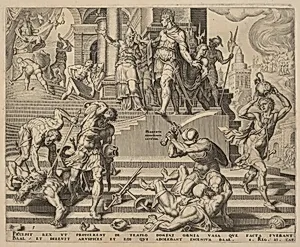
Galle specialized in finely executed reproductive engravings that translated paintings and drawings into print, often employing dense cross- and parallel-hatching to achieve rich tonal effects. Among his notable series are engravings after Pieter Bruegel the Elder’s *Seven Virtues*, collaborative works such as *The Seven Sacraments* with Hans Bol, and many biblical and allegorical scenes after van Heemskerck, including *The Deaths of Ananias and Sapphira*. He also produced portraits, maps, and historical subjects, and authored a short chronicle of the Spanish Fury in Antwerp.
His workshop trained several important engravers, including his pupil Hendrick Goltzius (who painted Galle’s portrait in 1577) and his own children—Theodoor, Cornelis, and others—who carried on the family publishing business into the seventeenth century. Galle’s prolific output and international network made him one of the most influential print publishers of his era, ensuring the lasting visual legacy of the artists whose works he reproduced.