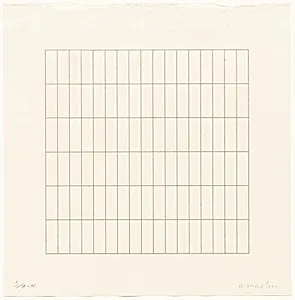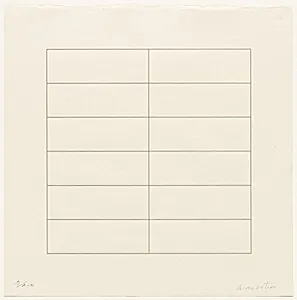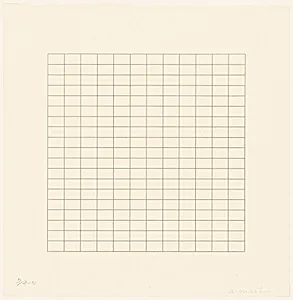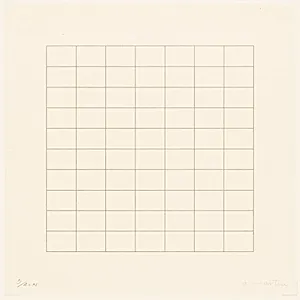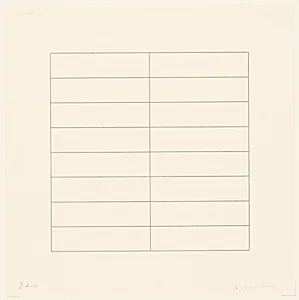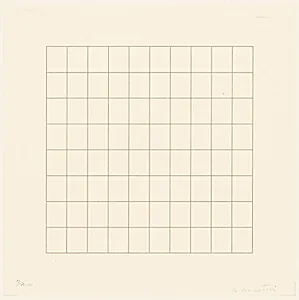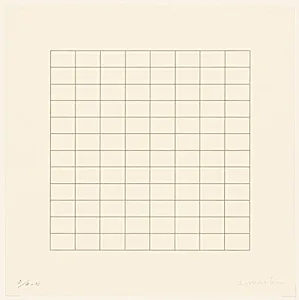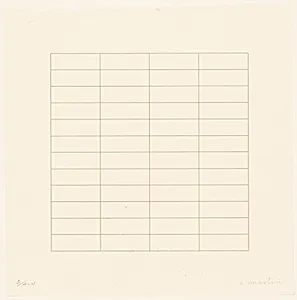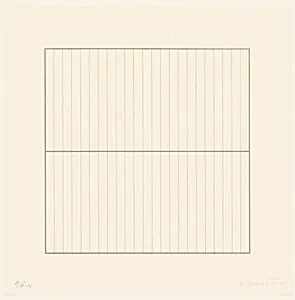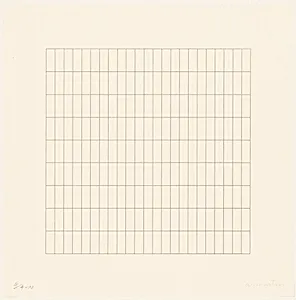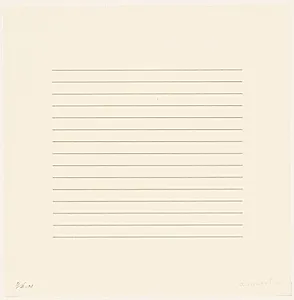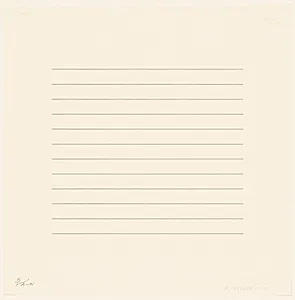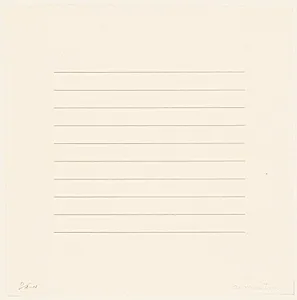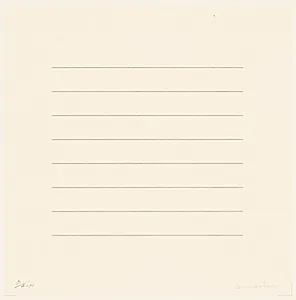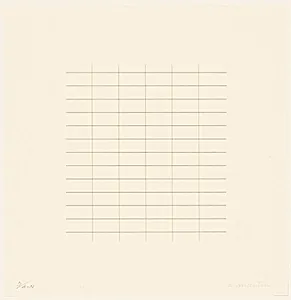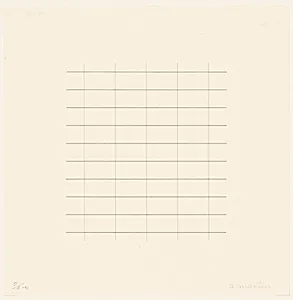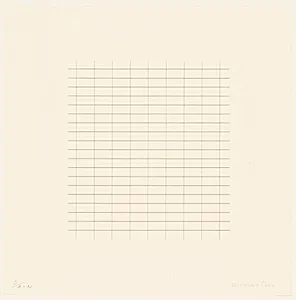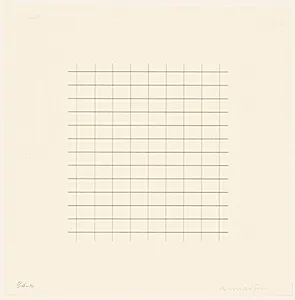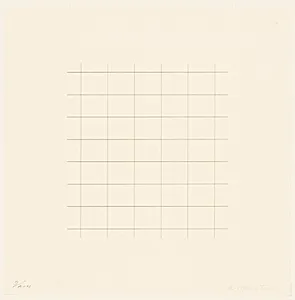
Agnes Martin (1912–2004) was a Canadian-born American painter who became one of the most revered abstract artists of the twentieth century, known for her luminous, meditative paintings of grids and horizontal bands. Born in Macklin, Saskatchewan, she moved to the United States in the 1930s and studied at Columbia University in New York, where she was influenced by Zen Buddhism and Taoist philosophy.
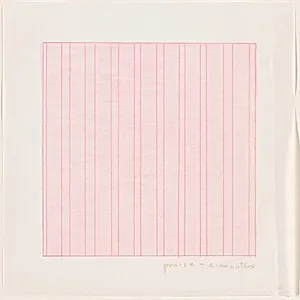
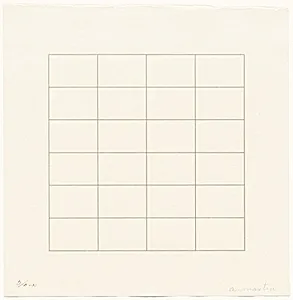
Martin worked in various styles through the 1950s before arriving at her signature format around 1960: square canvases inscribed with delicate grids of pencil lines and washed with subtle, almost imperceptible layers of pale color. These paintings — shimmering fields of gray, white, pink, and blue — are often associated with Minimalism, but Martin insisted that her work was rooted in emotion and the inner experience of beauty, perfection, and joy rather than in formal concerns.
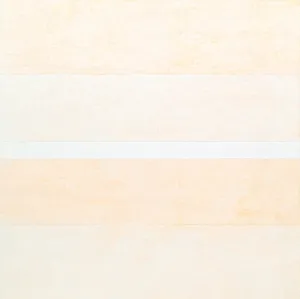
In 1967, Martin abruptly left New York and stopped painting for nearly seven years, living a solitary, semi-nomadic existence before settling in New Mexico. She resumed painting in 1974, producing a body of later work characterized by horizontal bands of pale acrylic color that possess an even greater luminosity and simplicity than her earlier grids. These late paintings are among the most transcendent works in modern American art.
Martin received the National Medal of Arts in 1998 and the Golden Lion at the Venice Biennale in 1997. She lived and worked in near-monastic solitude in Taos, New Mexico, until her death at ninety-two. Her paintings are held by the Museum of Modern Art, the Tate, the Dia Art Foundation, the National Gallery of Art, and the Harwood Museum of Art in Taos.