
Ctrl K
Agostino Carracci (1557–1602), born in Bologna to a tailor's family, emerged as a pivotal figure in the Bolognese School alongside his younger brother Annibale and cousin Lodovico. Initially trained as a goldsmith, he turned to painting under Prospero Fontana—master to Ludovico—and later Bartolomeo Passarotti. He journeyed to Parma to study Correggio's masterpieces and, with Annibale, visited Venice, where he honed engraving skills under Cornelis Cort. Together with his relatives, Agostino co-founded the Accademia degli Incamminati, a progressive academy challenging Mannerist excesses through life drawing and eclectic influences from Renaissance giants like Titian and Veronese.
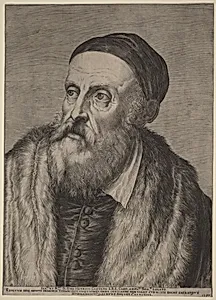
Renowned primarily as a reproductive engraver, Agostino produced prints from 1574 onward, faithfully capturing works by masters such as Federico Barocci, Tintoretto, and Titian, whose images circulated widely across Europe, influencing artists like Rembrandt. His 1587 engraving of Titian's self-portrait exemplifies his technical prowess, rendering the Venetian's fur collar and expressive gaze with luxurious detail. As a painter, he collaborated on ambitious fresco cycles, including Histories of Jason and Medea in Palazzo Fava (1584) and Scenes from the Foundation of Rome in Palazzo Magnani (1590–1592). Standout easel works feature The Last Communion of Saint Jerome (1592, Pinacoteca Nazionale di Bologna), his acknowledged masterpiece blending emotional depth with clarity; Madonna with Child and Saints (1586, Galleria Nazionale di Parma); and the poignant Lamentation (c. 1586, Hermitage Museum).
In 1597, Agostino joined Annibale in Rome to decorate the Palazzo Farnese Gallery, contributing cartoons before departing in 1600 for Parma as court painter to Duke Ranuccio I Farnese. There, he began mythological ceiling frescoes in Palazzo del Giardino but died prematurely at 44, leaving a son, Antonio Carracci, who briefly carried the family legacy. Agostino's legacy endures through his engravings' dissemination and posthumously published anatomical studies, which served as teaching tools for centuries, cementing the Carracci's role in bridging Mannerism and Baroque naturalism.