Ctrl K
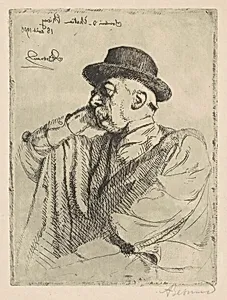
1849–1934
Paul-Albert Besnard, known as Albert Besnard, was born on June 2, 1849, in Paris to an artistic family: his father, Louis Adolphe Ferdinand Besnard, was a history painter and pupil of Ingres, while his mother, Marie Louise Pauline Vaillant, was a noted miniaturist trained under Lizinska de Mirbel. Precociously talented, he began his training under Jean-François Brémond before entering the École des Beaux-Arts in 1866, where he studied in the studios of Alexandre Cabanel and Sébastien Cornu. In 1874, he won the prestigious Prix de Rome with *Death of Timophanes, Tyrant of Corinth*, securing a residency at the Villa Médicis in Rome from 1875 to 1878. Besnard married sculptor Charlotte Dubray in 1879; their children included painters Robert and Louis Besnard, sculptors Germaine and Philippe Besnard, and ceramist Jean Besnard.
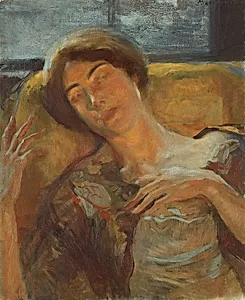
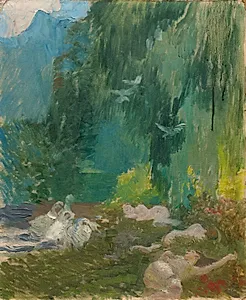
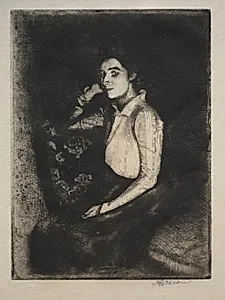
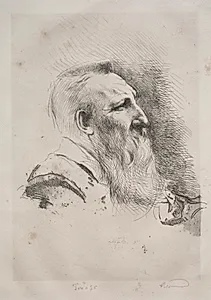
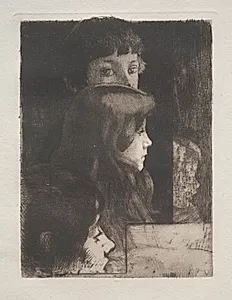
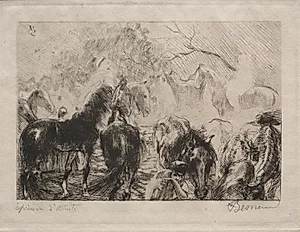
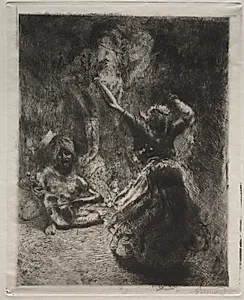
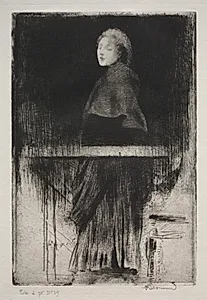
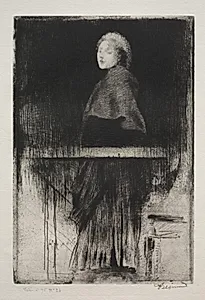
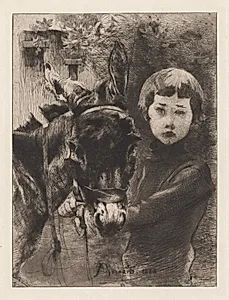
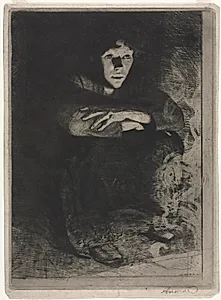
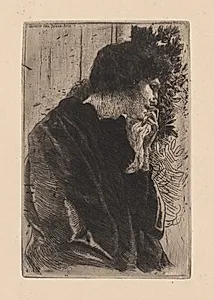
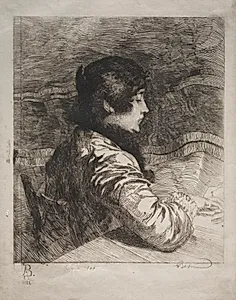
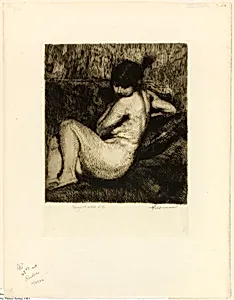
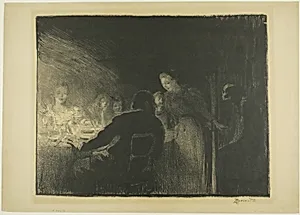
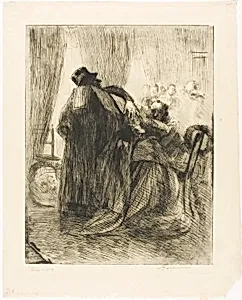
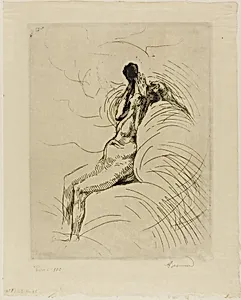
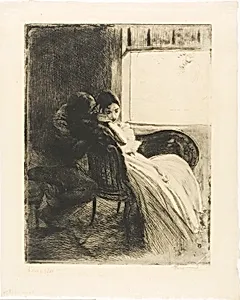
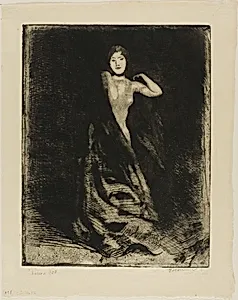
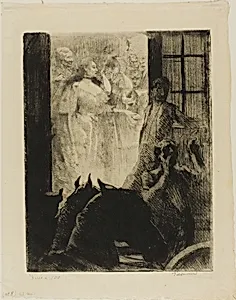
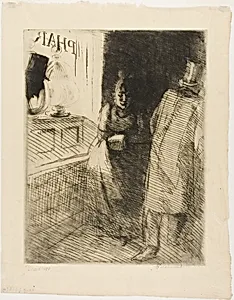
Initially rooted in academic traditions influenced by Cabanel, Besnard's style evolved dramatically around 1880, embracing Impressionist techniques of color and light while rejecting their realism in favor of bold, imaginative compositions. He excelled as a Symbolist decorator, creating luminous frescoes that evoked 18th-century French masters like Chardin, alongside influences from Gainsborough and Reynolds absorbed during a London stay. His oeuvre spans masterful portraits such as *Madame Roger Jourdain* (1886, Musée d'Orsay), *Portrait of the Kharitonenko Sisters* (1903, Pushkin Museum), and *Les Ghats de Bénarès* (1910–1911); etchings like *Morphine Addicts (Morphinomanes)* (1887); and grand decorations including the Sorbonne auditorium, Comédie-Française ceiling, Hôtel de Ville's Salle des Sciences (*Truth Leading the Sciences*), and Berck hospital's Stations of the Cross.
In his later years, Besnard held influential positions: director of the Villa Médicis (1913–1921), École des Beaux-Arts (1922), and a member of the Académie des Beaux-Arts (1912) and Académie française (1924, the first painter since 1760). A founder of the Société Nationale des Beaux-Arts (1890) and co-founder of the Salon des Tuileries (1923), he left a legacy as a virtuoso in oil, pastel, and etching, blending psychological portraiture with monumental decoration. His works, vibrant with "chic" luminosity, continue to adorn public spaces and museums, embodying France's transition from academicism to modern vibrancy.