Ctrl K
1803–1892
Alexander Jackson Davis (1803–1892) was a pioneering American architect whose imaginative designs helped define the nation's picturesque country house tradition. Born in New York City on July 24, 1803, Davis received an informal education, studying drawing at the American Academy of the Fine Arts, the New-York Drawing Association, and the antique casts at the National Academy of Design. He apprenticed as a printer in his youth before working as a draftsman for Josiah R. Brady, an early Gothic Revival proponent, starting in 1826. That same year, he joined the prestigious office of Ithiel Town and Martin E. Thompson, where access to Town's extensive architectural library provided thorough training in Greek Revival principles.
In 1829, Davis partnered with Ithiel Town to form Town & Davis, the first recognizably modern American architectural firm, which lasted intermittently until 1844. Their practice spanned Greek Revival public buildings—like the Indiana State House (1831–1835) and North Carolina State Capitol (1833–1840)—and innovative fenestration systems. Independently and through collaborations with Andrew Jackson Downing, Davis championed picturesque styles, including Gothic Revival and Italianate, emphasizing site-sensitive massing, contrasts, and landscape integration. His 1837–1838 pattern book *Rural Residences* introduced domesticated Gothic and Tuscan villas executable in wood, influencing vernacular architecture. Masterpieces include the Gothic Revival Lyndhurst mansion in Tarrytown, New York (1838, expanded 1864–1867); Blandwood Mansion, America's earliest Italianate Tuscan villa in Greensboro, North Carolina (1844–1846); and the fully Gothic Revival campus of the Virginia Military Institute (1848–1850s), where he coined "Collegiate Gothic."
Davis's peak in the 1840s–1850s produced over 100 villas and cottages, from the Hudson River Bracketed "Ericstan" (1855–1859) to Llewellyn Park, an early planned suburb in West Orange, New Jersey (late 1850s). The Civil War halted commissions, and he rejected emerging styles like Second Empire, closing his office in 1878. Retiring to Llewellyn Park, Davis documented his oeuvre, leaving archives at institutions like the Metropolitan Museum of Art and Columbia University. His legacy endures in the romantic fusion of architecture and nature, widely imitated interiors, and the popularization of Gothic and Italianate country estates that shaped American domestic ideals.
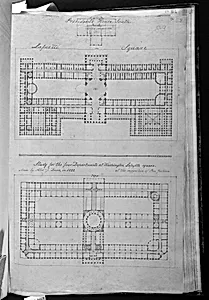
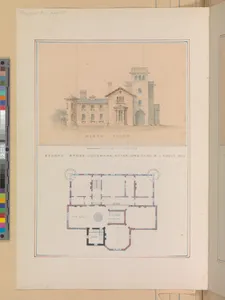
![A. J. Davis, Scrapbook II [Folio P or "Blue Book"]](https://images.artheonmuseum.org/met/dp/thumb/a-j-davis-scrapbook-ii-folio-p-or-blue-book-357110.webp)
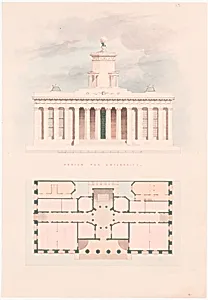
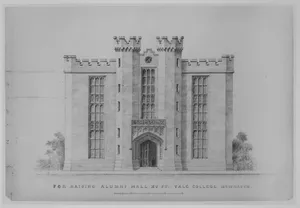
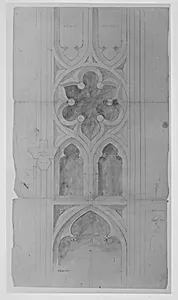
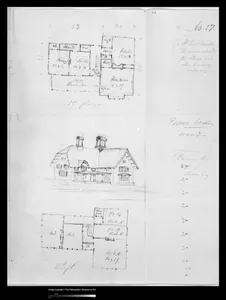
![Switz[erland] Cottage (elevation and three plans), and Factory Lodge (elevation and three plans) for Montgomery Place, Annandale-on-Hudson, New York](https://images.artheonmuseum.org/met/dp/thumb/switz-erland-cottage-elevation-and-three-plans-and-factory-lodge-elevation-and-t-395209.webp)
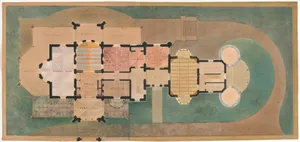
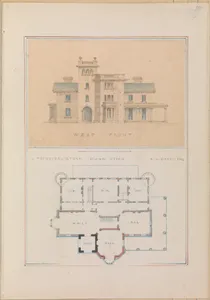
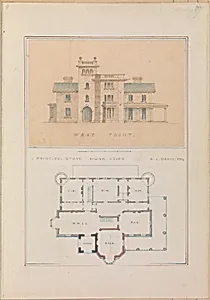
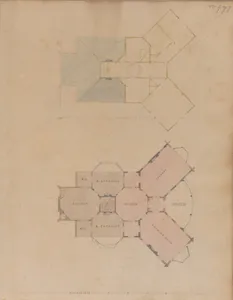
![Lyndhurst for George Merritt, Tarrytown, New York (west [rear] elevation and plan)](https://images.artheonmuseum.org/met/dp/thumb/lyndhurst-for-george-merritt-tarrytown-new-york-west-rear-elevation-and-plan-388433.webp)
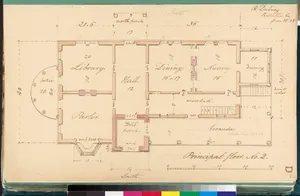
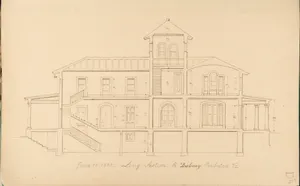
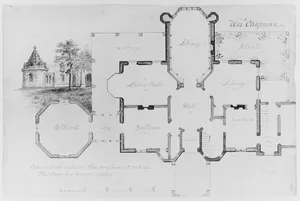
![House of R. Dabney, Powhatan, Virginia (north [rear] side)](https://images.artheonmuseum.org/met/dp/thumb/house-of-r-dabney-powhatan-virginia-north-rear-side-394196.webp)