Ctrl K
Alexandre Lacauchie, born Alexandre Marie Lacauchie on February 22, 1814, in Paris's former 2nd arrondissement, emerged from a vibrant urban milieu. The son of Marie-Alexandre Lacauchie and Pauline-Angélique Depoilly, who ran the Café Flamand near the Porte Saint-Martin, he grew up immersed in the lively theater district, residing there at least until 1835. In April 1839, he married Rosalie-Pamela Poisson, and the couple settled at 25 Boulevard Saint-Martin. Little is documented about his early training or formal mentors, though his precocious debut at the Salons de peinture et de sculpture from 1833 to 1835—where he exhibited paintings, portraits, landscapes, pastels, and drawings—signals a self-assured entry into Parisian art circles.
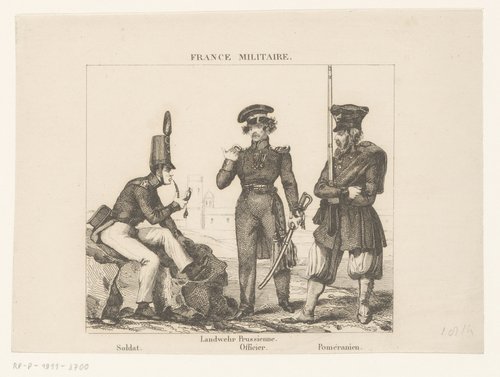
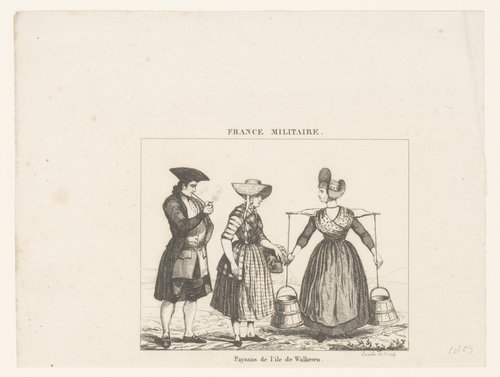
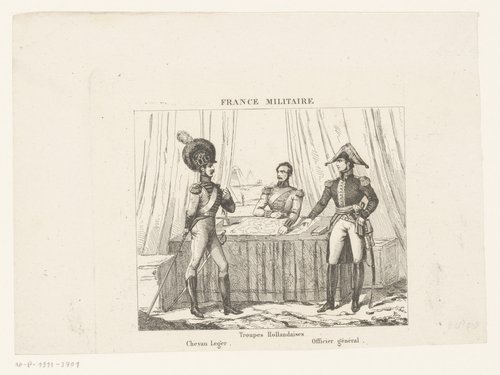
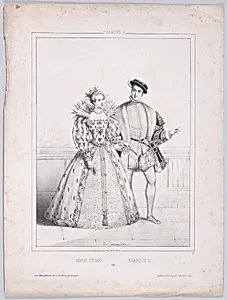
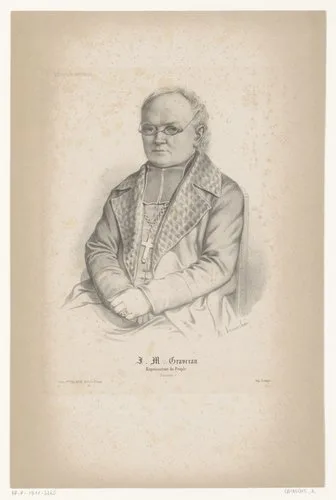
Lacauchie specialized as a lithographer, engraver, draughtsman, and painter, excelling in fashion plates, theatrical portraits, and historical costumes that captured the Romantic era's fascination with drama and exoticism. Worked in the fashion plate tradition, his lithographs often depicted actors in character, revolutionaries, and global attire, blending meticulous detail with theatrical flair. Collaborating with engravers like Henri-Jules Faxardo and Eugène Leguay, he contributed to albums such as the *Galerie des artistes dramatiques de Paris* (1840–1841, 80 full-length portraits published by Marchant) and the *Galerie historique de la Révolution française*, featuring figures like François-Séverin Marceau, Jean-Baptiste Kléber, and Brueys d'Aigalliers. Standout works include his lithograph of Adelaïde Ristori (Godard, 1858), the engraved portrait of Joseph Poniatowski (by Marc Antoine Claude Monnin, now in Warsaw's National Museum), and vivid costume scenes like *Mary, Queen of Scots and Francis II* (Maison Martinet-Hautecoeur, mid-19th century).
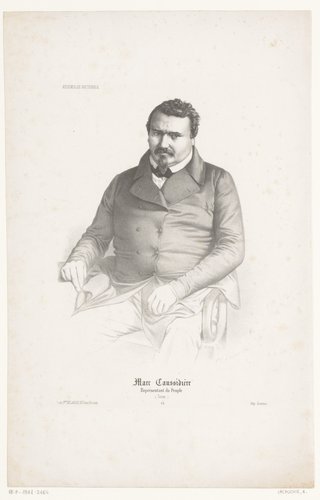
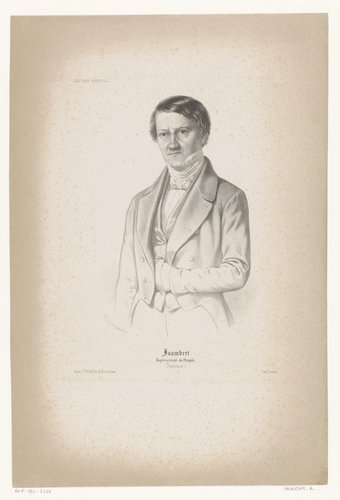
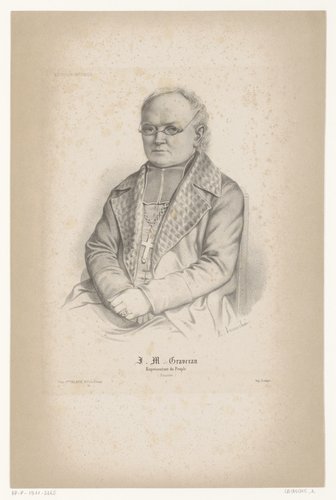
His oeuvre extended to opera stars—such as Gilbert Duprez as Gaston in Verdi's *Jérusalem*—and international costumes in series like *Robes Modèles Historiques*, alongside political portraits from 1848 revolutions (e.g., Ledru-Rollin, Lamartine). Lacauchie's prints, produced with printers like Rigo Frères and Lemercier, adorned albums and periodicals, reflecting Paris's cultural pulse.
Though not a household name, Lacauchie's legacy endures in institutions like the Metropolitan Museum, British Museum, and Victoria & Albert Museum, where his lithographs preserve 19th-century fashion, theater, and history. Active until around 1860, he died on July 29, 1886, in Paris's 4th arrondissement, leaving a prolific body of work that auctions occasionally today.
Wikidata (CC0)