
Ctrl K
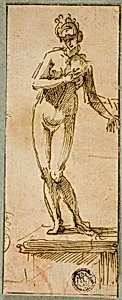
**Francesco Allegrini da Gubbio (1587–1663)** was an Italian painter of the Baroque period, known for his historical, religious, and battle scenes. Born in Gubbio in the Papal States, he came from a family of artists; his father, Flaminio Allegrini da Cantiano, was also a painter, and his children Flaminio and Angelica followed in the profession.
He trained under Giuseppe Cesari, known as the Cavaliere d’Arpino, and was drawn early to the dynamic style of Pietro da Cortona, though he retained a more measured approach that avoided the full exuberance of High Baroque. Active primarily in Rome, with periods in Genoa, Savona, and Naples, Allegrini produced frescoes and canvases for churches and palaces, often blending narrative drama with decorative elegance.
Among his notable works are the *St. Catherine* altarpiece (c. 1650) in Santi Domenico e Sisto, Rome; frescoes in the Speralli Chapel of Gubbio Cathedral (1652–54); contributions to the decoration of San Marco Evangelista al Campidoglio under Cortona’s supervision (1653); scenes from the Old Testament in Palazzo Pamphilj; and battle frescoes in Palazzo Rospigliosi and Palazzo Altemps. His most celebrated cycle includes three frescoes—the *Battle of Muret*, the *Martyrdom of St. Peter of Verona*, and the *Triumph of St. Thomas Aquinas*—in the Palace of the Holy Office (1659–60). Later commissions encompassed frescoes of the *Life of St. Alexander* in Santi Cosma e Damiano and altarpieces in Gubbio upon his return there around 1661.
Allegrini earned particular admiration as a battle painter, and his drawings, such as those in the style represented by *Venus on Pedestal*, reflect his skill as a prolific draughtsman. A short biography appears in Filippo Baldinucci’s *Notizie de’ professori del disegno*. His legacy endures through his influence on decorative fresco cycles and his role in bridging Mannerist traditions with emerging Baroque sensibilities in 17th-century Italy.