
Ctrl K
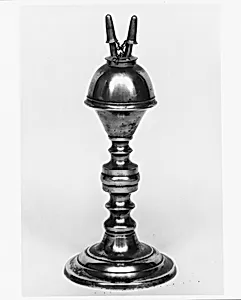
1830–1838
**Allen Porter** (active 1830–1838) was an American pewterer based in Westbrook, Maine, known for his skillfully crafted household objects during the early nineteenth century.
Little is documented about his early life or formal training. He worked in the tradition of American pewterers who produced functional yet elegantly designed items for domestic use, particularly lamps fueled by whale oil, lard, or camphene. Porter operated during a period when pewter remained popular for everyday lighting and tableware before being largely supplanted by other materials.
His output included teapots of refined design and some of the most handsome lamps of the era. In partnership with his brother for part of his career, he created stand lamps featuring distinctive elements such as acorn-shaped fonts resting on knopped bases. One such example, a pewter stand lamp measuring about 10 inches in height and made between 1830 and 1838 in Westbrook, Maine, survives in the collection of The Metropolitan Museum of Art.
Porter’s brief period of activity left a modest but notable legacy in American decorative arts. His lamps exemplify the transition from purely utilitarian pewter to pieces with graceful proportions and thoughtful detailing, contributing to the appreciation of early nineteenth-century New England craftsmanship. With only a single work firmly attributed in major public collections, his surviving output underscores the challenges of documenting regional artisans of the time.