Ctrl K
1853–1914
Alphonse Bertillon (1853–1914) was a pioneering French photographer whose work revolutionized forensic documentation, transforming police identification into a precise visual science. Born in Paris on April 22, 1853, he was the son of medical professor and statistician Louis-Adolphe Bertillon and the younger brother of demographer Jacques Bertillon. Lacking formal higher education after expulsion from the Imperial Lycée of Versailles, Bertillon drifted through odd jobs and army service before his father secured him a position as a records clerk at the Paris Prefecture of Police in 1879. There, amid frustration with recidivist identification, he self-developed anthropometry—detailed body measurements combined with standardized photography—in his spare time.
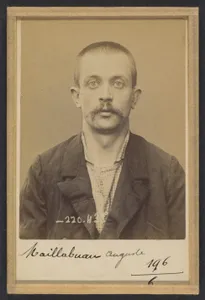
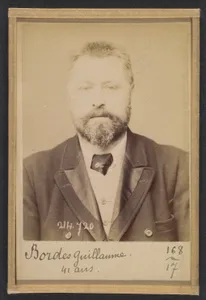
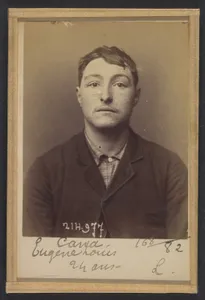
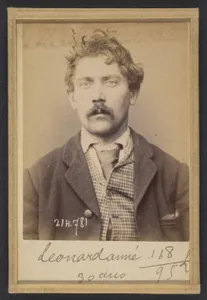
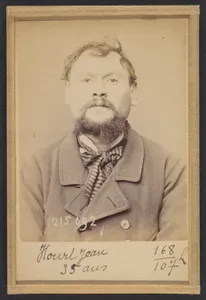
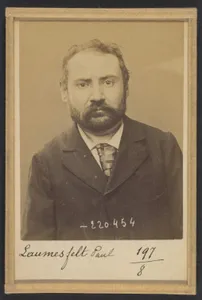
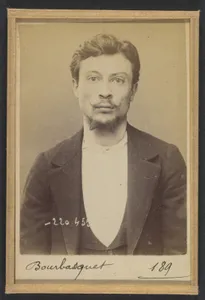
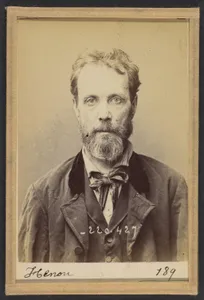
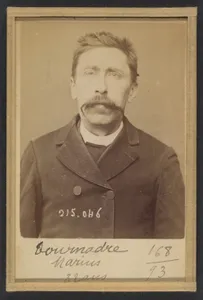
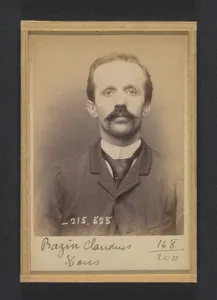
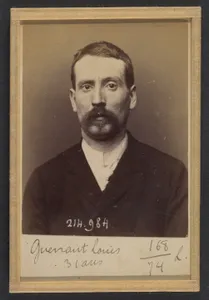
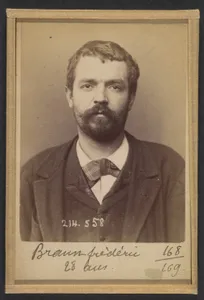
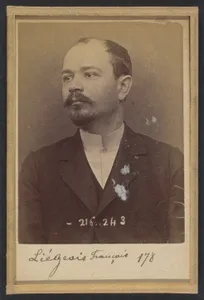
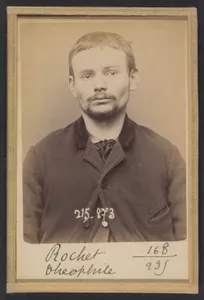
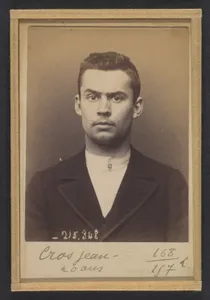
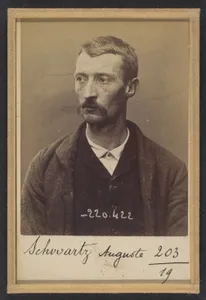
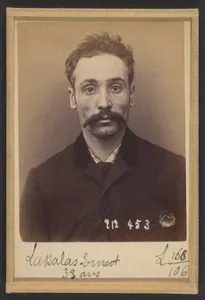
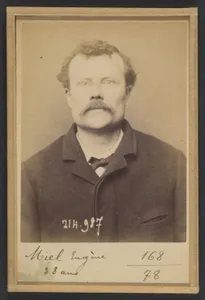
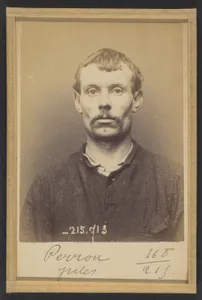
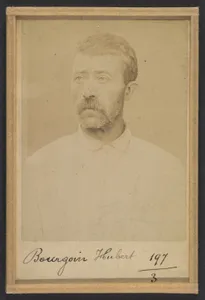
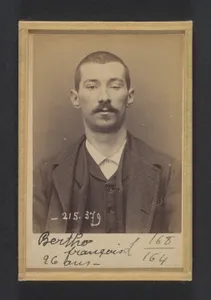
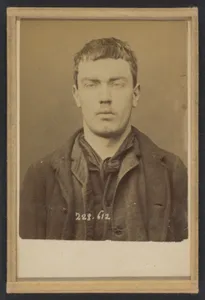
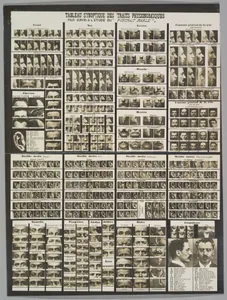
Bertillon's artistic style emerged from this utilitarian context: clinical, metric precision in "signaletics" or Bertillonage, featuring mug shots (full-face and profile views taken from a fixed distance starting in 1888) alongside measurements of the head, limbs, and distinctive marks like scars or tattoos. He extended photography to crime scenes with elevated tripods for undistorted surveys and "metric photography" using grids for scale, as detailed in his 1890 treatise *La Photographie judiciaire*. Schematic ink drawings annotated his scar notations, blending photography with diagrammatic illustration, as seen in works like *Notation of Scars, Schematic Drawings* (ca. 1893). His anthropometric cards, exhibited internationally such as at the 1893 World's Columbian Exposition in Chicago (*Mensuration de la coudée*), captured subjects like anarchists and criminals with unflinching objectivity, pioneering the modern mug shot format.
Though Bertillonage waned by the early 20th century in favor of fingerprints due to inconsistencies, Bertillon's legacy endures in forensic practice and art history. His methods standardized global police photography, influencing ballistics, footprint casting, and even handwriting analysis (controversially, as in the Dreyfus Affair). Today, his images—mug shots, crime albums from 1886–1902, and identification portraits—are collected by institutions like The Metropolitan Museum of Art, MoMA, and the Getty Museum, celebrated for their raw documentary power and role in early photographic modernism. With over 400 works in museum holdings, Bertillon bridges science and visual art, his stark portraits a haunting testament to 19th-century empiricism.
![[Album of Paris Crime Scenes]](https://images.artheonmuseum.org/met/ph/thumb/album-of-paris-crime-scenes-284718.webp)