
Ctrl K
**Alphonse François (1814–1888)**
Louis Alphonse François was born on August 25, 1814, in Paris to Rémy Jean François and Catherine Émilie Bailly. The younger brother of fellow engraver Charles-Rémy-Jules François (1809–1861), he trained alongside him at the school of Louis-Pierre Henriquel-Dupont, a leading figure in French engraving. This rigorous academic formation equipped François with the precision and finesse that defined his career as a master reproductive engraver, translating paintings into intricate prints with remarkable delicacy and elegance.
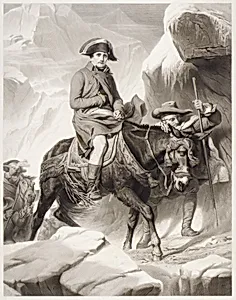
François gained prominence through his collaborations with Paul Delaroche, producing celebrated engravings after the painter's dramatic historical scenes. Key works include *Marie-Antoinette au Tribunal révolutionnaire* (1857), capturing the queen's trial with haunting intensity; *Bonaparte franchissant les Alpes* (c. 1851), depicting Napoleon crossing the Alps on a mule; and *Le jeune Pic de la Mirandole apprenant à lire avec sa mère*, portraying the Renaissance scholar's early education. These pieces, often published by Goupil & Cie, brought Delaroche's romantic realism to wider audiences, blending meticulous line work with emotional depth in the tradition of 19th-century French academic engraving.
Beyond Delaroche, François engraved after masters like Ary Scheffer (*La Tentation du Christ*, 1860; *Mignon et son père*), Gustave Doré (*The Dream of Pilate's Wife*, c. 1879), Jean-Léon Gérôme (*L'Épouse du roi Candaule*, 1863), and old Italians such as Raphael, Titian, and Fra Angelico (*Le Couronnement de la Vierge Marie*, which earned a medal in 1867). His oeuvre bridged contemporary Romanticism and Renaissance classicism, making elite art accessible. François married Eugénie Couillard and received high honors: Officer of the Légion d'honneur (1867), and election to the Académie des Beaux-Arts and Institut de France (1873). He died in Paris on July 7, 1888, leaving a legacy as one of the finest interpreters of his era's masterpieces.
(Word count: 378)