Ctrl K
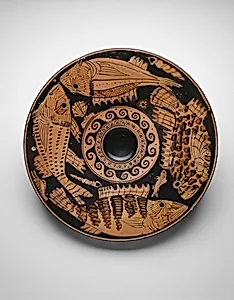
The artist known simply as "Ancient Greek" represents the anonymous masters of Attic vase painting, a cornerstone of Classical Greek art from the Archaic and Classical periods (circa 700–300 BCE). Little is known of their personal life, as ancient Greek potters and painters rarely signed their works or left biographical traces; early life and training remain not well documented. These creators operated in bustling Athenian workshops, collaborating closely as both potters and painters, shaping clay vessels that served everyday functions while doubling as canvases for mythological narratives and daily scenes.
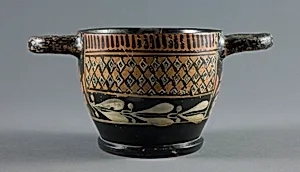
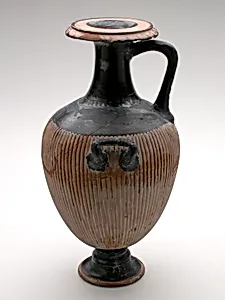
Working in the pioneering black-figure and red-figure traditions, the artist excelled in the Attic school, where figures were incised through slip or reserved against a glossy black background after firing. This innovative technique, refined around 530 BCE, allowed for greater anatomical detail, expressive gestures, and dynamic compositions compared to earlier Geometric styles. Vases in the collection—totaling 619 known works—likely include amphorae, kraters, and kylikes depicting heroes like Achilles, Dionysiac revels, and symposia, echoing the styles of named contemporaries such as Exekias or the Brygos Painter.
The legacy of this artist endures through the sheer volume and virtuosity of surviving pottery, preserved in museums worldwide. These vessels not only illustrate the evolution from rigid Archaic forms to the fluid naturalism of the Classical era but also offer invaluable insights into Greek mythology, rituals, and society. As foundational artifacts, they influenced Etruscan copies, Roman adaptations, and even Renaissance revivals, cementing ancient Greek vase painting as a bridge between utility and high art.