
Ctrl K
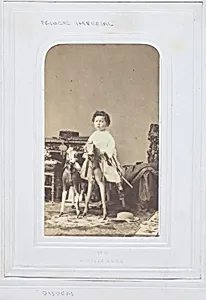
1819–1889
**André-Adolphe-Eugène Disdéri** (1819–1889) was a pioneering French photographer whose innovations transformed portraiture into a mass medium during the Second Empire. Born on March 28, 1819, in Paris, Disdéri pursued diverse careers in commerce, acting, and politics early on, while studying art amid personal hardships following his father's death, which compelled him to support his mother, siblings, and later his wife, Geneviève Élisabeth, whom he married in 1843. During the Revolution of 1848, the couple relocated to Brest, opening a daguerreotype studio around 1848–1849, where Geneviève managed operations after he departed for Nîmes in late 1852. There, with chemical assistance from Édouard Boyer and Joseph Jean Pierre Laurent, he experimented with the wet collodion process, capturing portraits, picturesque groups of beggars and ragpickers, athletes, and laborers. By 1853, he settled in Paris, establishing the foundation for his revolutionary contributions.
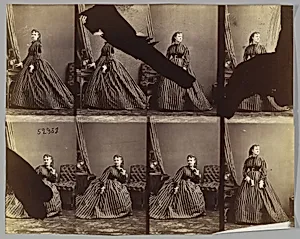
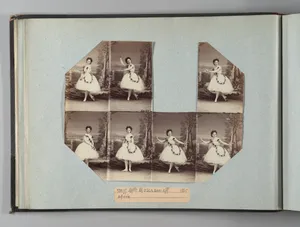
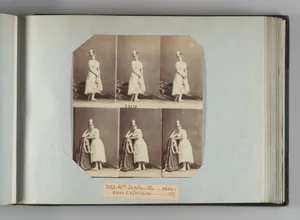
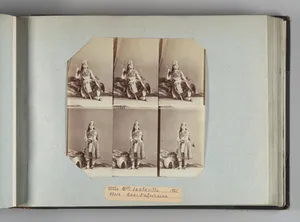
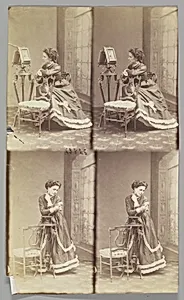
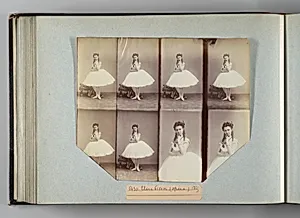
Disdéri's breakthrough came on November 27, 1854, when he patented the carte de visite—a compact 6×9 cm albumen print on cardstock, produced via a four-lens camera and sliding plate holder yielding up to eight images per negative, inspired by stereoscopic designs. His opulent Boulevard des Italiens studio, dubbed the "Temple of Photography," churned out thousands daily, amassing a fortune by 1861 as the world's richest photographer and official court portraitist. Celebrity cartes featured Napoleon III (whose 1859 troop photo outside the studio sparked mania), Empress Eugénie (c. 1870), Giuseppe Verdi, and Prince Lobkowitz (1858), alongside mosaics like *Les Jambes de l'opéra* (c. 1862) and stark *Dead Communards* (1871). He also devised an early twin-lens reflex camera, cementing his role in the portrait photography tradition.
Though self-taught without formal mentors, Disdéri's affordable format democratized imagery, fueling a collecting craze akin to trading cards and influencing global studios until larger cabinet cards eclipsed it around 1868. Competition eroded his empire; bankrupt and relocated to Nice as a beach photographer, he died deaf, half-blind, and indigent on October 4, 1889, at Paris's Hôpital Ste. Anne. His legacy endures as the architect of photography's commercial explosion, making the elite visage ubiquitous in Victorian parlors.
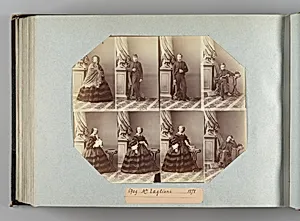
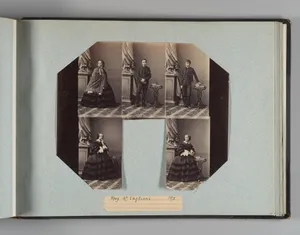
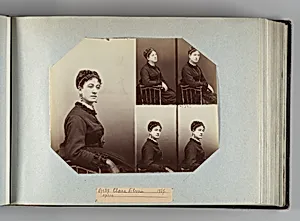
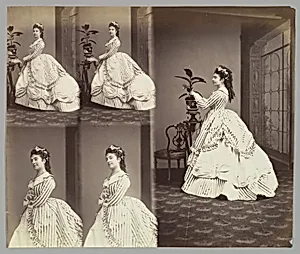
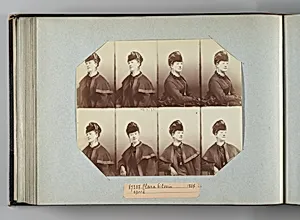
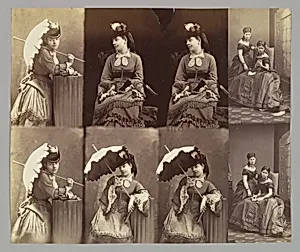
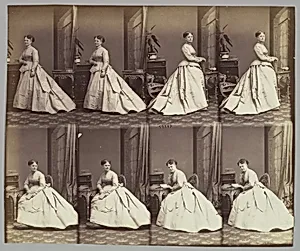
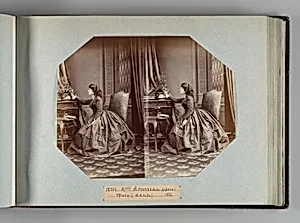
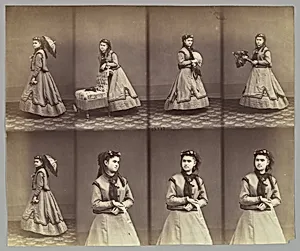
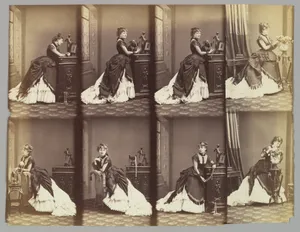
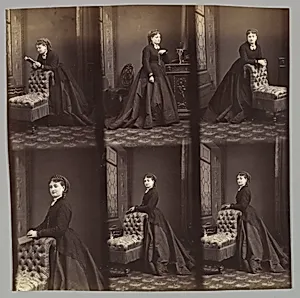
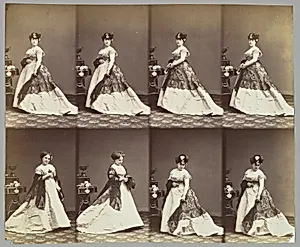
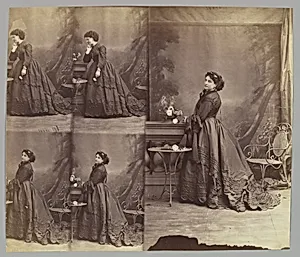
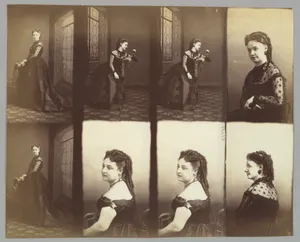
![Mlle Thouvenot [?]; Mlle Vallier](https://images.artheonmuseum.org/met/ph/thumb/mlle-thouvenot-mlle-vallier-705005.webp)
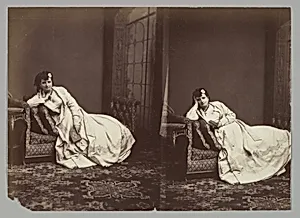
![Mlle Ghibert[?]](https://images.artheonmuseum.org/met/ph/thumb/mlle-ghibert-705003.webp)
![[Imperial Prince with Gun]](https://images.artheonmuseum.org/met/ph/thumb/imperial-prince-with-gun-285970.webp)