Ctrl K
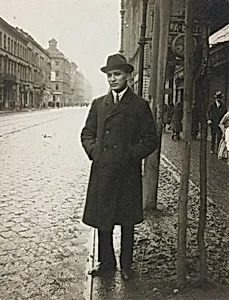
1894–1985
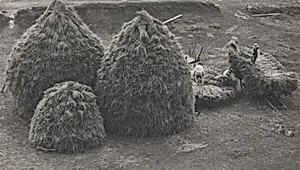
André Kertész, born Andor Kertész on July 2, 1894, in Budapest, Hungary, to a middle-class Jewish family, initially pursued a conventional path as a clerk at the Budapest Stock Exchange after graduating from the Academy of Commerce in 1912. Self-taught in photography after purchasing his first camera that year, he captured his early poetic visions of Hungarian landscapes and peasant life, including *Sleeping Boy, Budapest* (1912). World War I interrupted his pursuits when he served in the Austro-Hungarian army, producing poignant trench images like *Eugene* (1914) before being wounded in 1915. Postwar political turmoil and a desire for artistic freedom prompted his move to Paris in 1925, where he adopted the name André and immersed himself in the city's avant-garde scene.
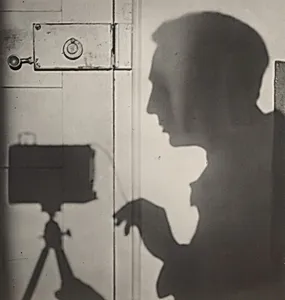
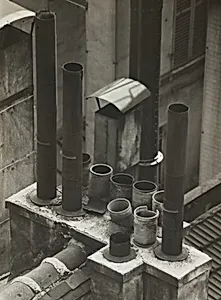
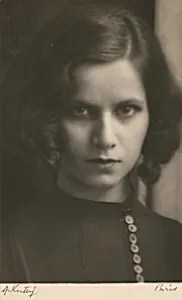
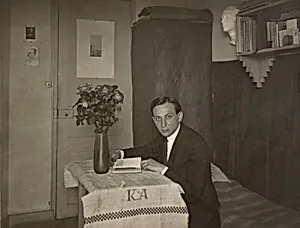
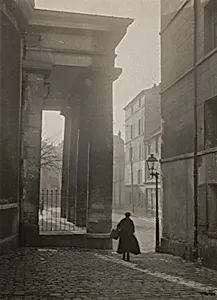
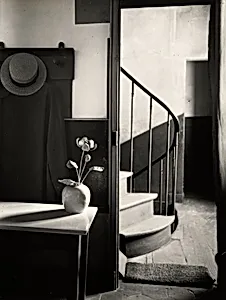
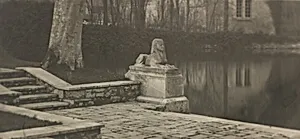
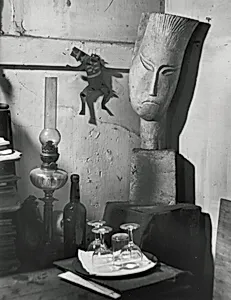
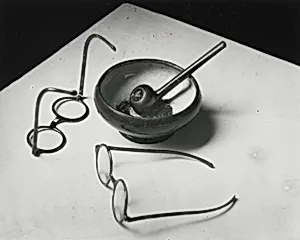
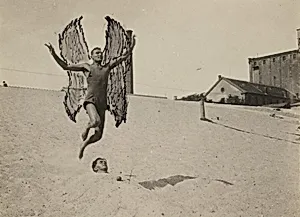
In Paris, Kertész revolutionized photographic composition with unorthodox angles, reflections, and distortions, pioneering street photography and the photo essay amid Dada and Surrealist circles. He acquired a Leica in 1928, enabling spontaneous captures like *Satiric Dancer* (1926), *Mondrian's Glasses and Pipe* (1926), *The Fork* (1928), and *Meudon* (1928). Freelancing for *Vu* magazine, he held his first solo exhibition in 1927 and produced books such as *Enfants* (1933) and the groundbreaking *Distortions* series (1933), using funhouse mirrors for surreal nudes. He mentored Brassaï in night photography, photographed artists like Piet Mondrian and Marc Chagall, and married fellow photographer Rogi André (1928–1932) before wedding his lifelong muse, Elizabeth Saly, in 1933; his brother Jenő, also a photographer, featured prominently in his work. These years defined his lyrical style—intimate, light-infused glimpses of everyday poetry.
Emigrating to New York in 1936 amid rising antisemitism, Kertész faced commercial drudgery and obscurity, working for *House & Garden* (1947–1962) while classified as an "enemy alien" during World War II; he and Elizabeth naturalized as Americans in 1944. His intimate views persisted in *Lost Cloud* (1937) and Washington Square Park series, culminating in *Washington Square, Winter* (1954). Late recognition arrived with a Museum of Modern Art retrospective (1964), Guggenheim Fellowship (1974), and books like *From My Window* (1981). Kertész died on September 28, 1985, in New York, leaving a legacy as a modernist pioneer whose intuitive geometry and humanistic gaze influenced Henri Cartier-Bresson, Robert Capa, and generations of street photographers, proving photography's power as transcendent art.