Ctrl K
1830–1902
Andrew Joseph Russell (1829–1902) was a pioneering American photographer whose work captured the raw drama of the Civil War and the monumental engineering of the transcontinental railroad. Born on March 20, 1829, in Walpole, New Hampshire, to Joseph Russell and Harriet Robinson, he grew up in Nunda, New York, where he developed an early passion for painting, creating portraits, landscapes, and even a recruitment diorama for Union soldiers in the war's opening years. On October 17, 1850, he married Catherine Adelia Duryee, with whom he had two daughters, Cora Phillips and Harriet M. Russell, though their family life remained fragmented as he pursued his career.
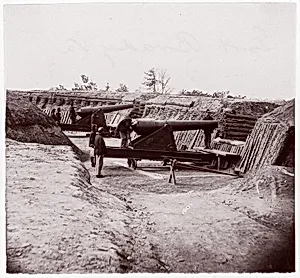
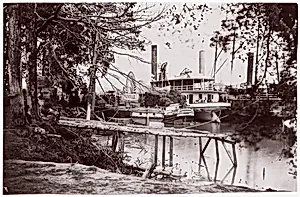
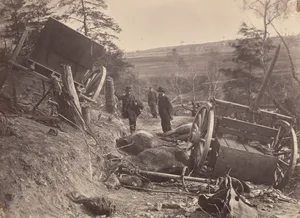
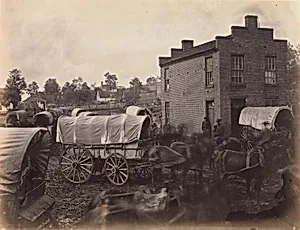
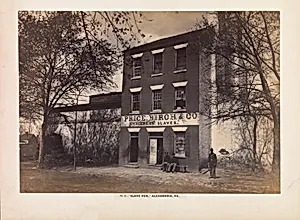
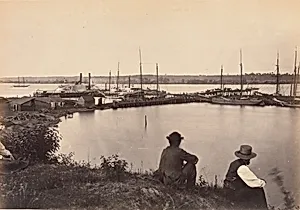
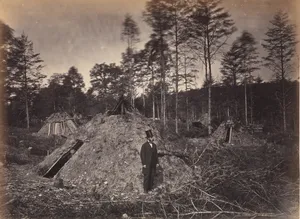
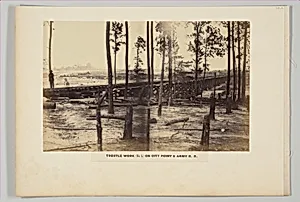
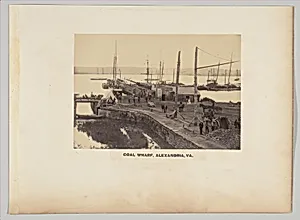
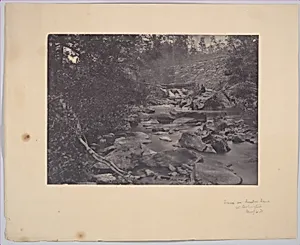
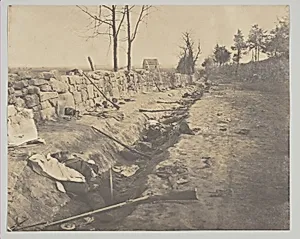
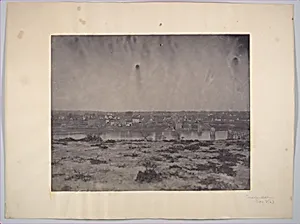
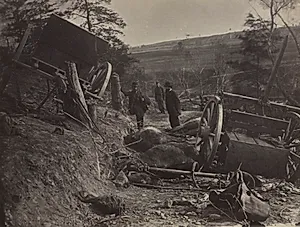
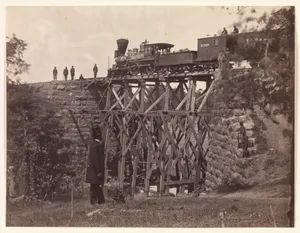
Russell's entry into photography came abruptly during the Civil War. In February 1863, as a captain in the 141st New York Volunteer Regiment, he paid civilian photographer Egbert Guy Fowx $300 to teach him the collodion wet-plate process; Fowx had worked for Mathew Brady and the War Department. Colonel Herman Haupt, head of the U.S. Military Railroads, soon transferred him to document operations, making Russell the only military officer to photograph officially for the War Department. His Civil War images, such as "Confederate Dead Behind the Stone Wall" and a view from the Battle of Chancellorsville on May 3, 1863, offered stark, unvarnished depictions of battlefields, particularly during the Siege of Petersburg.
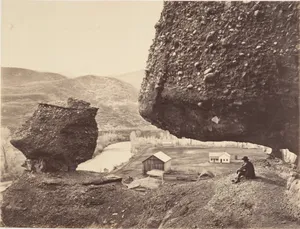
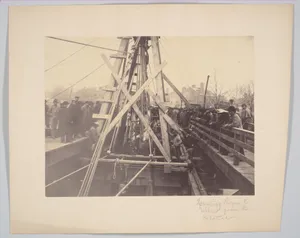
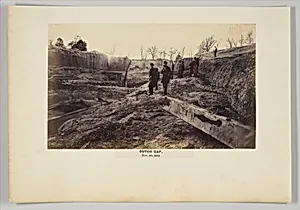
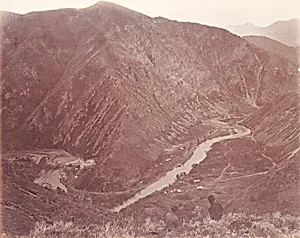
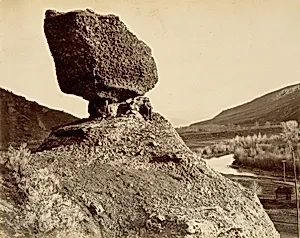
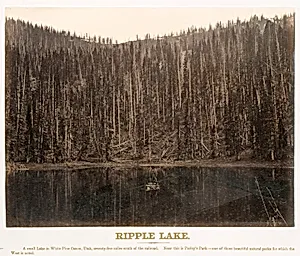
In 1868, Russell became the official photographer for the Union Pacific Railroad, producing over 200 full-plate images and 500 stereo cards of its construction through Wyoming and Utah. His painterly eye framed dramatic juxtapositions of human endeavor against sublime landscapes, as in the Dale Creek Bridge under construction (1868), the Weber River bridge at Devil’s Gate (1868), and the iconic "East and West Shaking Hands" at Promontory Summit on May 10, 1869, capturing the golden spike ceremony that united the nation's rails. These works, compiled in the 1869 album *The Great West Illustrated*, blended romantic vistas with gritty progress shots, evoking Manifest Destiny while erasing Native American presence to portray the West as untouched potential.
Returning to New York in 1869, Russell ran a design studio and contributed to *Frank Leslie's Illustrated Newspaper* until the 1890s. His photographs endure as invaluable historical records, identifying key figures and preserving the epic scale of America's expansion, influencing how we visualize the Civil War and Gilded Age industrialization.
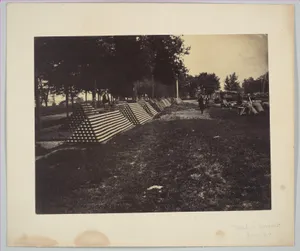
![[Artillery Camp, City Point, Virginia]](https://images.artheonmuseum.org/met/ph/thumb/artillery-camp-city-point-virginia-268144.webp)
![[Entrenchments on Left of Bermuda Hundred Lines, Near Richmond, Virginia]](https://images.artheonmuseum.org/met/ph/thumb/entrenchments-on-left-of-bermuda-hundred-lines-near-richmond-virginia-268149.webp)