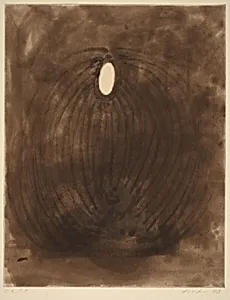
Sir Anish Kapoor, born Anish Mikhail Kapoor on 12 March 1954 in Mumbai, India, to a Punjabi Hindu father—a hydrographer and physicist in the Indian Navy—and an Iraqi-Jewish mother, grew up in a cosmopolitan family that shaped his multifaceted worldview. After attending the elite Doon School boarding school and a formative stint on an Israeli kibbutz, where he briefly pursued electrical engineering before embracing art, Kapoor moved to London in 1973. There, he studied at Hornsey College of Art (1973–77) and undertook postgraduate work at Chelsea School of Art and Design (1977–78), finding key inspiration under mentor Paul Neagu, who encouraged his shift toward performance and conceptual forms.
Kapoor emerged in the 1980s as a leading figure in the New British Sculpture movement alongside artists like Tony Cragg and Richard Deacon, blending post-minimalist rigor with lyrical, primordial energy. His early works, such as the *1000 Names* series (1979–84), coated geometric and biomorphic stone forms in vivid powdered pigments, evoking infinity, submersion, and cultural rituals drawn from his Indian roots—powder spilling like icebergs or projecting from walls to blur object and ground. Evolving into voids and cavities, as in *Void Field* (1989–90), his sculptures probed dualities of matter and non-matter, earth and sky, visible and invisible. From the mid-1990s, Kapoor pioneered mirrored stainless steel pieces that distorted perception and immersed viewers, alongside visceral red wax installations suggesting flesh and violence, transforming minimalism through metaphor, scale, and optical illusion.
Among his monumental achievements, *Marsyas* (2002) stretched a vast red PVC trumpet across Tate Modern's Turbine Hall, while *Cloud Gate* (2004–06)—Chicago's iconic "Bean"—reflects the city in seamless, liquid curves. *Sky Mirror* (2006) and the twisting *ArcelorMittal Orbit* tower (2012) for London's Olympics further blurred art, architecture, and public space, with collaborators like Cecil Balmond.
Kapoor's legacy endures through accolades like the 1991 Turner Prize, 2011 Praemium Imperiale, and knighthood (2013), alongside collections at MoMA, Tate, and Guggenheim; his exclusive use of Vantablack and advocacy for artists like Ai Weiwei cement his role as a provocative force in contemporary sculpture, challenging perception and infinity.
All 19 artworks loaded

![Untitled 12 [working proof 4]](https://images.artheonmuseum.org/nga/thumb/untitled-12-working-proof-4-nga-230377.webp)
![Untitled 12 [working proof 1]](https://images.artheonmuseum.org/nga/thumb/untitled-12-working-proof-1-nga-230374.webp)
![Untitled 12 [working proof 2]](https://images.artheonmuseum.org/nga/thumb/untitled-12-working-proof-2-nga-230375.webp)
![Door [working proof 9]](https://images.artheonmuseum.org/nga/thumb/door-working-proof-9-nga-230370.webp)
![Door [working proof 5]](https://images.artheonmuseum.org/nga/thumb/door-working-proof-5-nga-230366.webp)
![Racine [working proof 4]](https://images.artheonmuseum.org/nga/thumb/racine-working-proof-4-nga-230371.webp)
![Racine [working proof 5]](https://images.artheonmuseum.org/nga/thumb/racine-working-proof-5-nga-230372.webp)
![Racine [working proof 6]](https://images.artheonmuseum.org/nga/thumb/racine-working-proof-6-nga-230373.webp)
![Door [working proof 6]](https://images.artheonmuseum.org/nga/thumb/door-working-proof-6-nga-230367.webp)
![Door [working proof 7]](https://images.artheonmuseum.org/nga/thumb/door-working-proof-7-nga-230368.webp)
![Door [working proof 8]](https://images.artheonmuseum.org/nga/thumb/door-working-proof-8-nga-230369.webp)
![Untitled 12 [working proof 5]](https://images.artheonmuseum.org/nga/thumb/untitled-12-working-proof-5-nga-230378.webp)
![Untitled 12 [working proof 3]](https://images.artheonmuseum.org/nga/thumb/untitled-12-working-proof-3-nga-230376.webp)
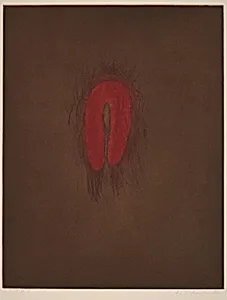
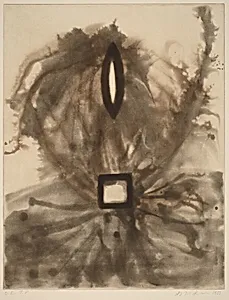
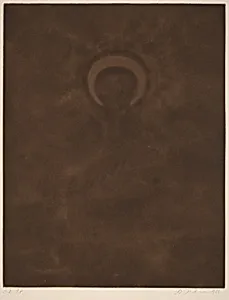
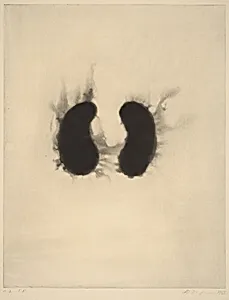
![Untitled #5 [working proof 5]](https://images.artheonmuseum.org/nga/thumb/untitled-5-working-proof-5-nga-230379.webp)