Ctrl K
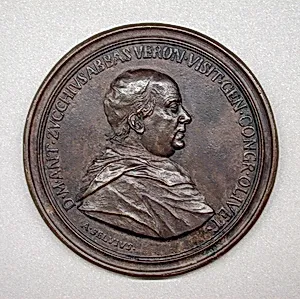
1679–1755
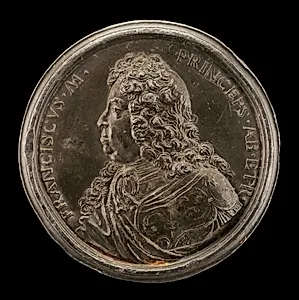
Antonio Francesco Selvi (1679–1753) was a prominent Florentine sculptor and medallist whose exquisite bronze portraits captured the elegance of late Baroque Italy. Little is known of his early life before he arrived in Florence in 1698, but he quickly established himself in the city's vibrant artistic scene by studying under Massimiliano Soldani-Benzi, the renowned bronze-worker, sculptor, medallist, and goldsmith who led the revival of the Florentine medal tradition. Apprenticed in Soldani's workshop, Selvi honed his skills in modeling and casting, producing small-scale masterpieces that blended classical restraint with Baroque dynamism, characterized by fine patination, high casting quality, and intricate allegorical reverses.
Selvi worked firmly within the Florentine school tradition of medal-making, creating intimate objets d’art for scholars, aristocrats, churchmen, and even rare international patrons like the British Molesworth brothers. His early style evolved from labored efforts to graceful finesse by the 1710s, incorporating Venetian influences and themes of moral and political allegory under Medici court patronage. A member of the Accademia delle Arti del Disegno, he excelled in portrait medals that served as personal talismans, often paired with symbolic reverses evoking liberty, faith, or navigation—such as the *Ship Guided by Stars* (1740) or *Cap of Liberty between Daggers* (c. 1740).
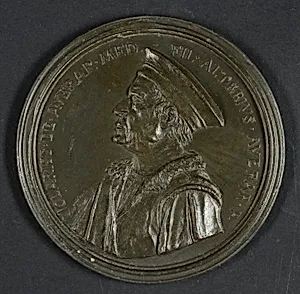
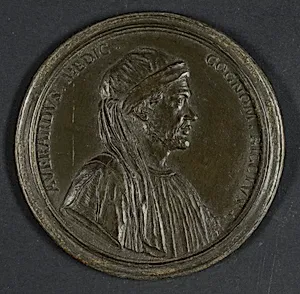
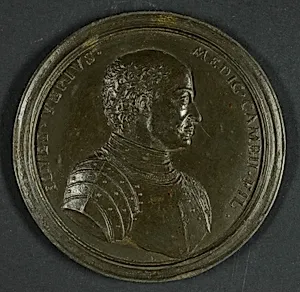
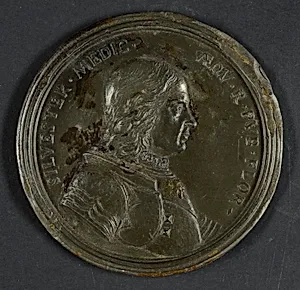
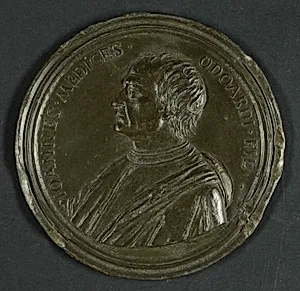
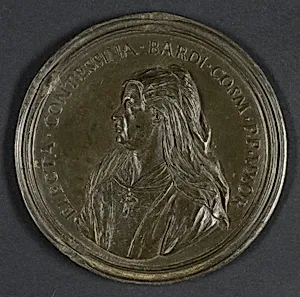
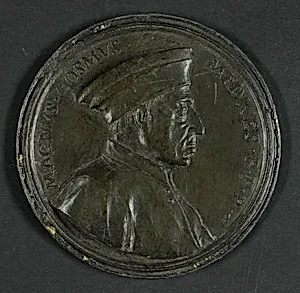
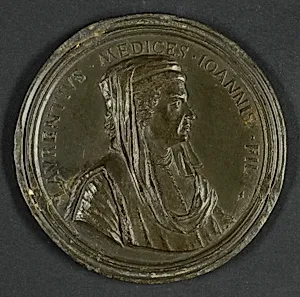
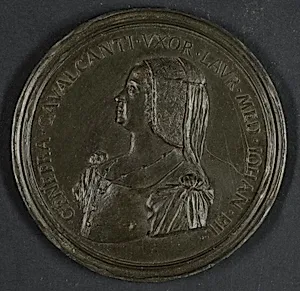
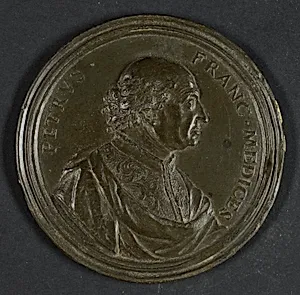
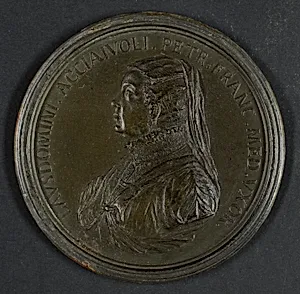
Selvi's crowning achievement was his grand Medici series (c. 1739–1744), a comprehensive bronze cycle honoring the dynasty's luminaries, including *Contessina de' Bardi* (c. 1740s), *Lorenzino de' Medici* (c. 1740), *Giovanni Carlo de' Medici* (1740), and *Giuliano II de' Medici* (1739–1744). He also produced notable portraits like *Marco Antonio Zucchi* (1750) and *Giovan Battista Fagiuoli* (c. 1740), extending his motifs to Doccia porcelain from 1739 onward. His works grace collections at the National Gallery of Art (12 pieces), Metropolitan Museum, and Art Institute of Chicago, cementing his legacy as a master of the medal whose refined artistry bridged Renaissance precedents and Rococo sensibilities, preserving Florence's numismatic heritage for posterity.
![Giancarlo Rossetti Preaching with the Agnus Dei on a Mound [reverse]](https://images.artheonmuseum.org/nga/thumb/giancarlo-rossetti-preaching-with-the-agnus-dei-nga-150368.webp)
![Giancarlo Rossetti, 1712-1793, Carmelite Preacher Padre Marco di San Francesco [obverse]](https://images.artheonmuseum.org/nga/thumb/giancarlo-rossetti-1712-1793-carmelite-preacher-nga-144855.webp)
![Cap of Liberty between Daggers [reverse]](https://images.artheonmuseum.org/nga/thumb/cap-of-liberty-between-daggers-reverse-nga-126817.webp)
![Lorenzino de' Medici, 1514-1547, Son of Pierfrancesco II [obverse]](https://images.artheonmuseum.org/nga/thumb/lorenzino-de-medici-1514-1547-son-of-nga-126818.webp)
![Giovanni Carlo de' Medici, 1611-1663, Cardinal 1644 [obverse]](https://images.artheonmuseum.org/nga/thumb/giovanni-carlo-de-medici-1611-1663-cardinal-1644-nga-103335.webp)
![Ship Guided by Stars [reverse]](https://images.artheonmuseum.org/nga/thumb/ship-guided-by-stars-reverse-nga-103336.webp)
![Ship and Fortified City [reverse]](https://images.artheonmuseum.org/nga/thumb/ship-and-fortified-city-reverse-nga-103332.webp)
![Contessina de' Bardi, died 1473, Wife of Cosimo de' Medici il Vecchio [obverse]](https://images.artheonmuseum.org/nga/thumb/contessina-de-bardi-died-1473-wife-of-cosimo-de-nga-103331.webp)
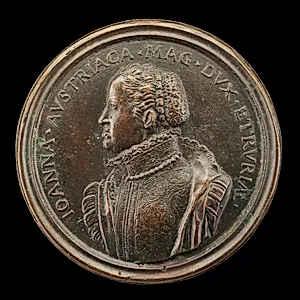
![Leafless Branches [reverse]](https://images.artheonmuseum.org/nga/thumb/leafless-branches-reverse-nga-123253.webp)
![Giuliano II de' Medici, 1479-1516, Duc de Nemours 1515 [obverse]](https://images.artheonmuseum.org/nga/thumb/giuliano-ii-de-medici-1479-1516-duc-de-nemours-nga-123252.webp)