Ctrl K

1883–1896
Adler & Sullivan was the Chicago architectural partnership that laid the conceptual and structural foundations for the modern American skyscraper. Dankmar Adler (1844–1900), a German-born engineer celebrated for his mastery of building acoustics and structural systems, hired Louis Sullivan (1856–1924) in 1879; the two became full partners in 1883. Sullivan had trained at the Massachusetts Institute of Technology, worked briefly in the office of Philadelphia architect Frank Furness, and spent a formative period studying at the École des Beaux-Arts in Paris before joining Adler's Chicago practice. Their collaboration proved immediately generative: Adler provided engineering rigor and business acumen, while Sullivan supplied the visionary design philosophy that would reshape American architecture.
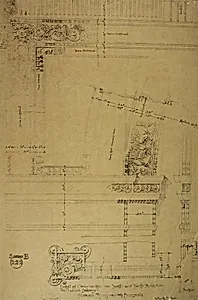
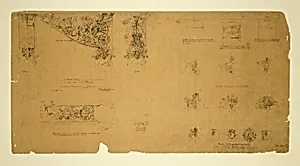
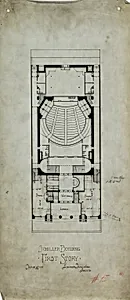
Over fifteen years together, Adler & Sullivan designed nearly two hundred buildings, primarily in the Midwest. Their masterwork was the Auditorium Building in Chicago (1886–1890), a monumental mixed-use structure combining a grand opera theater, a hotel, and office space. Adler's engineering of the building's acoustics made the theater widely regarded as the finest in the nation, while Sullivan's elaborate naturalistic ornament — flowing foliate forms inspired by organic growth — covered the interior surfaces in a style wholly unlike anything previously seen in American civic architecture. The firm followed this achievement with the Wainwright Building in St. Louis (1890–1891), one of the earliest modern skyscrapers and a landmark in the history of tall-building design. Its verticality was expressed openly and honestly through the building's exterior, anticipating Sullivan's influential 1896 essay in which he articulated the principle that form should follow function.
Other significant works of the partnership include the Schiller Building (1891) and the Chicago Stock Exchange (1893–1894), both in Chicago, and the Guaranty Building in Buffalo, New York (1894–1895). The economic panic of 1893 placed severe financial strain on the firm, and by 1895 Adler and Sullivan had dissolved their partnership. Of the 256 buildings attributed to the two men — jointly and individually — only approximately 30 survive.
Sullivan's principle that "form follows function" became a foundational tenet of modernist architecture, and his influence on Frank Lloyd Wright, who served as a draftsman in the Adler & Sullivan office, reverberates through twentieth-century design. Adler & Sullivan's body of work is now recognized as the essential transition between Victorian eclecticism and the rationalist architecture of the modern era, and the Wainwright Building has been cited by critics as "the first skyscraper that truly looked the part.