Ctrl K
1862–1934
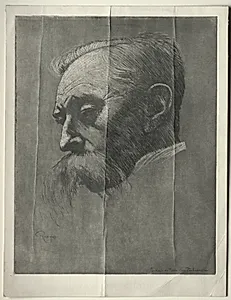
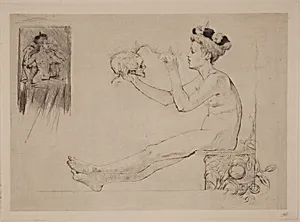
Armand Rassenfosse (1862-1934) was a Belgian graphic artist, printmaker, and painter whose technical mastery of etching and innovative approach to book illustration secured his place among the most important Belgian artists of the Belle Époque. Born in Liège, the industrial heart of Belgium's Walloon region, Rassenfosse was largely self-taught yet achieved extraordinary technical sophistication, particularly in color etching—a medium he helped revolutionize through his collaboration with the renowned Félicien Rops. Rassenfosse's masterwork remains his monumental illustrated edition of Charles Baudelaire's Les Fleurs du mal, for which he created 160 color etchings between 1899 and 1901. Published in an edition of only 130 copies, this project is considered one of the highlights in the history of book illustration, demonstrating both Rassenfosse's technical virtuosity and his ability to translate Baudelaire's complex, often dark poetry into compelling visual form. His friendship and collaboration with Félicien Rops proved transformative, leading to their joint development of the soft varnish etching technique re-baptized 'Ropsenfosse' in honor of their partnership.
Armand Rassenfosse was born on August 6, 1862, in Liège, Belgium, the son of a merchant family. Unlike most artists of his generation, Rassenfosse was largely self-taught, developing his skills through personal study, observation, and experimentation rather than formal academic training.
His early artistic development occurred during Liège's industrial expansion, when the city was becoming one of Europe's major manufacturing centers. This environment of technological innovation and industrial production may have influenced Rassenfosse's later interest in printmaking techniques and technical experimentation.
As a young man, Rassenfosse was exposed to the vibrant cultural life of Liège, including its growing community of artists, writers, and intellectuals. This milieu would later support his artistic career and provide the network of collaborators and patrons essential to his success.
In 1887, at age twenty-five, Rassenfosse traveled to Paris on family business. During this visit, he was introduced to Félicien Rops, one of Europe's most celebrated printmakers and a fellow Belgian. Rops was then at the height of his career, renowned for his technically accomplished etchings and provocative subject matter.
The meeting between Rassenfosse and Rops initiated a profound friendship and artistic collaboration that would transform both artists' practices. They shared a common dedication to achieving technical mastery in etching and pushing the medium's boundaries. Rops became Rassenfosse's first major inspiration and mentor in printmaking.
Together, Rops and Rassenfosse developed an innovative soft varnish etching technique that allowed for greater tonal subtlety and painterly effects than traditional hard-ground etching. This method, playfully renamed 'Ropsenfosse' in honor of their collaboration, combined their surnames and represented their joint contribution to printmaking history.
Under Rops's guidance, Rassenfosse refined his etching technique while developing his own distinctive artistic voice. His work from this period shows the influence of Symbolism and Art Nouveau, movements that dominated Belgian art during the fin de siècle.
Between 1899 and 1901, Rassenfosse undertook the most ambitious project of his career: illustrating Charles Baudelaire's Les Fleurs du mal (The Flowers of Evil). This seminal collection of poetry, first published in 1857, had scandalized French society with its frank treatment of decadence, eroticism, and modern urban alienation.
Rassenfosse created 160 color etchings for the volume, a staggering undertaking that required not only artistic vision but also extraordinary technical skill. Each image had to be executed with multiple plates to achieve the color effects, and the printing process demanded meticulous attention to registration and ink consistency.
The illustrated Les Fleurs du mal was published in an edition of only 130 copies, making it a rare and precious object from the moment of its creation. The limited edition reflected both the technical difficulty of producing color etchings at this scale and the book's status as a luxury art object for sophisticated collectors.
The project is generally considered one of the highlights in the field of book illustration. Rassenfosse's images captured the psychological complexity and aesthetic provocations of Baudelaire's verse, translating the poet's verbal imagery into compelling visual equivalents that neither merely illustrated nor overshadowed the text, but existed in productive dialogue with it.
Following the Baudelaire project's completion, Rassenfosse's reputation as a master printmaker was firmly established. He continued producing etchings, drawings, and occasional paintings while also contributing to poster design and other commercial graphic projects during the Art Nouveau period.
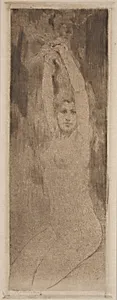
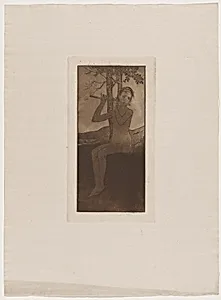
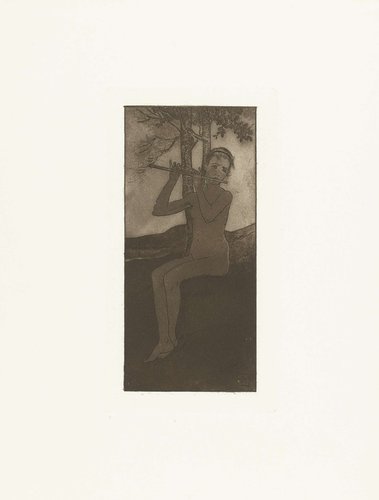
His work ranged widely across subjects and styles, from Symbolist narrative compositions to Japanese-influenced decorative drawings, ex-libris designs, and collaborative poster projects. This versatility demonstrated his technical command and artistic adaptability.
Rassenfosse received numerous honors throughout his later career, including appointment as Commander of the Order of Leopold, one of Belgium's highest civilian honors. These recognitions affirmed his status as one of Belgium's most important artists of his generation.
His studio-home in Liège, preserved after his death, became a museum dedicated to his work and legacy. The collection provides insight into his working methods and the breadth of his artistic production. Rassenfosse died in Liège on January 28, 1934, having witnessed the complete transformation of printmaking from a reproductive craft to an independent fine art medium, a revolution to which he had significantly contributed.
Artheon Research Team
Last updated: 2025-11-09
Biography length: ~454 words