Ctrl K
1873–1943
Arthur Briscoe (1873–1943) was a British painter and etcher celebrated for his vivid and authoritative depictions of life at sea. Born into a world still shaped by sail, Briscoe brought firsthand knowledge to his art: he was an experienced sailor who crewed on working vessels, and this immersive engagement with maritime life gave his work an authenticity that distinguished it from the work of painters who depicted the sea at a remove.
Briscoe studied at the Slade School of Fine Art in London, one of the leading institutions for artistic training in Britain, and later pursued further study in Paris, placing himself within a tradition of rigorous academic preparation. He went on to exhibit at the Royal Academy and became one of the most admired marine artists of his generation, elected to the Royal Society of Painter-Etchers and Engravers.
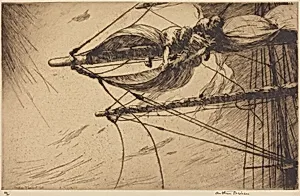
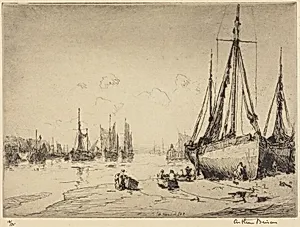
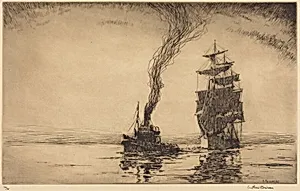
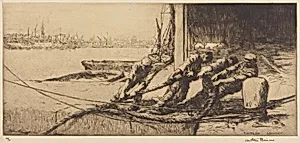
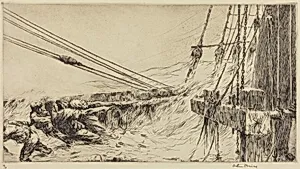
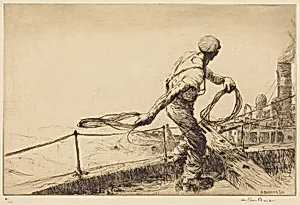
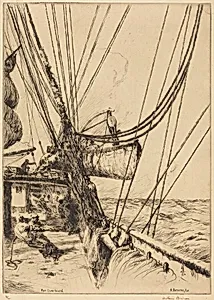
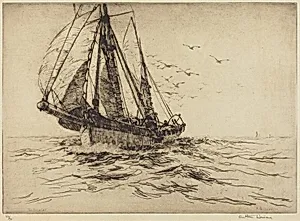
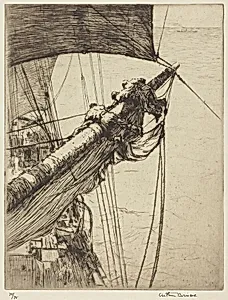
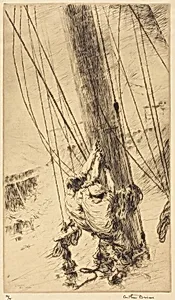
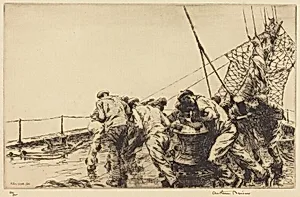
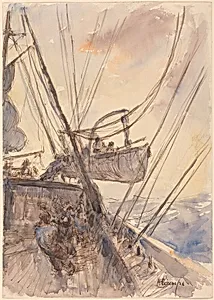
His etchings in particular earned wide recognition. Working in a medium well suited to the play of light on water and the intricate geometry of rigging and canvas, Briscoe produced prints that captured the drama and labor of sailing with remarkable precision. His compositions convey both the physical reality of working at sea — the strain of handling lines, the pitch of a vessel in heavy weather — and an underlying romance with the age of sail that was already passing as he worked.
Briscoe's legacy is secure within the tradition of British marine art. His prints and paintings continue to be collected and exhibited, valued for their technical accomplishment and for the conviction that comes from an artist who truly knew his subject. He stands as one of the last great chroniclers of the working sailing ship.