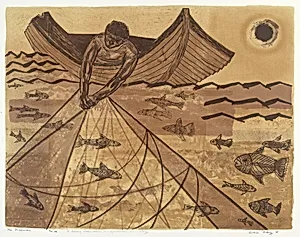
Arthur L. Flory (1914–1972) was an American artist born in Lima, Ohio, whose career bridged painting, printmaking, and illustration. He pursued formal training at the Philadelphia Museum School of Industrial Art and the National Academy of Design, institutions that shaped his technical proficiency in graphics and fine arts. Later sources also note studies at the Cape School of Art, where he earned an M.A., reflecting his commitment to diverse influences in American art education. Flory's early career included work as an illustrator, and he eventually became head of the Graphics Department and an instructor of graphics, printing, and lithography at the Philadelphia Museum College of Art.
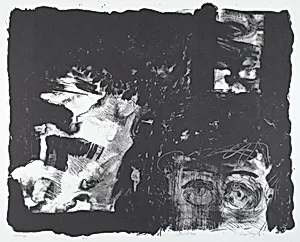
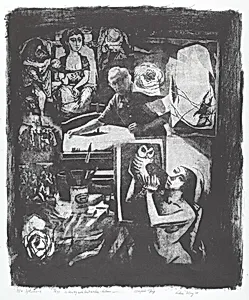
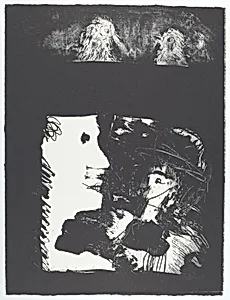
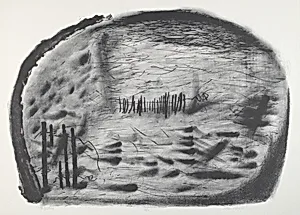
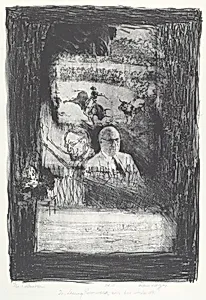
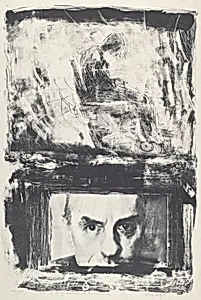
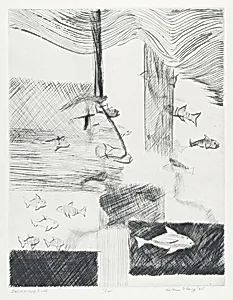
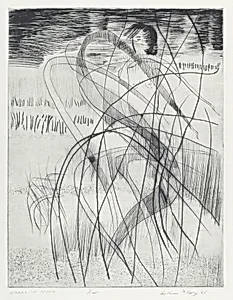
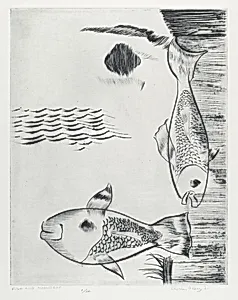
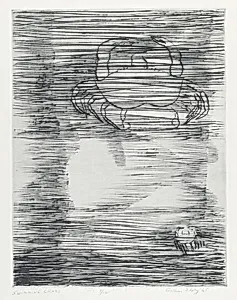
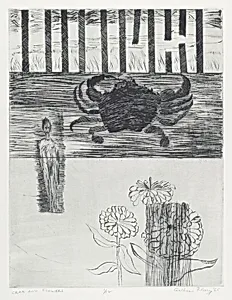
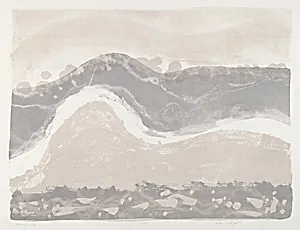
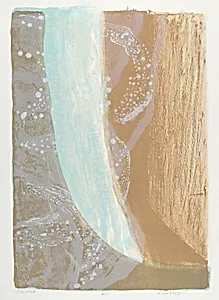
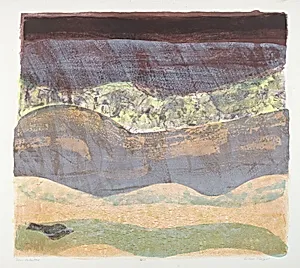
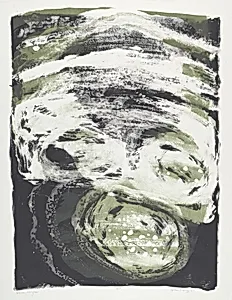
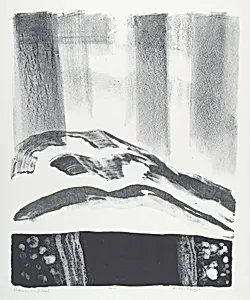
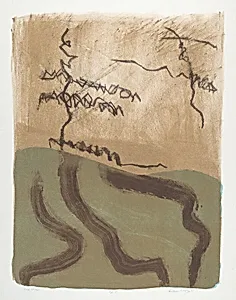
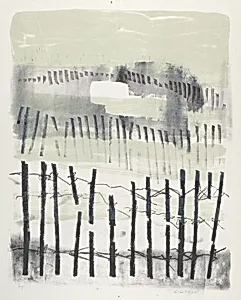
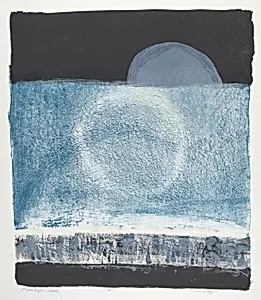
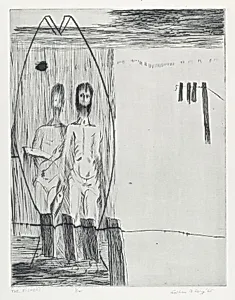
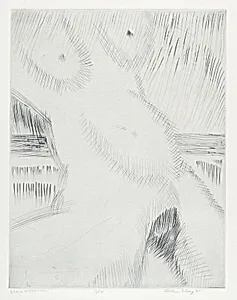
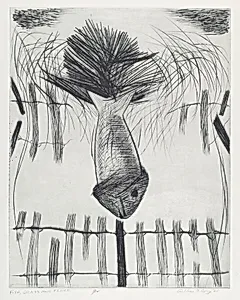
Flory specialized in landscape paintings and innovative printmaking techniques, including lithography, drypoint, and serigraphy. A member of the National Serigraph Society, he produced expressive works that captured natural scenes with a modern sensibility, often blending realism and abstraction. Among his notable pieces are the lithograph *The Collector* (1967), *Moonlight Beach* (1965), *Fish, Grass and Fence* (1965, drypoint), and *The Beach* (1967), which exemplify his command of light, texture, and form in capturing coastal and introspective motifs. He also created *Lost Boy*, an expressionist lithograph editioned at 20, showcasing his ventures into poignant, narrative-driven imagery. Flory taught at the Tyler School of Art at Temple University, mentoring a generation of artists in print techniques during the postwar era.
In his personal life, Flory was married to author and illustrator Jane Flory, with whom he had three children; together, they contributed to children's literature through his illustrations for several books she wrote. His legacy endures through extensive holdings in major institutions, including over 110 works at the National Gallery of Art and pieces at the Pennsylvania Academy of the Fine Arts, affirming his place in mid-20th-century American printmaking. Flory passed away in Melrose Park, Pennsylvania, leaving a body of work that celebrates the interplay of nature and human emotion.