Ctrl K
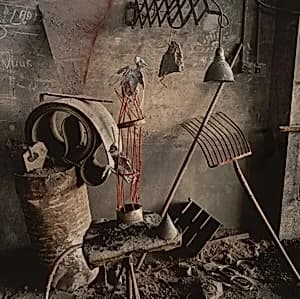
Arthur Tress (born 1940) is an American photographer whose deeply psychological and surrealist-inflected imagery has earned him a distinctive place in the history of fine art photography. Born in Brooklyn, New York, he studied art history at Bard College before traveling widely — to Japan, Africa, and Europe — absorbing visual traditions far beyond his own cultural background. These experiences profoundly shaped his eye and his interest in myth, ritual, and the unconscious dimensions of everyday life.
Tress came to wide attention in the late 1960s and 1970s with documentary work that nevertheless always carried an uncanny charge: his photographs of American poverty, counterculture communities, and the aftermath of environmental destruction combined social conscience with a formal intensity that set him apart from straightforward photojournalism. His series Theater of the Mind used staged scenarios — often involving children acting out dreamlike or nightmarish scenes — to explore the symbolic landscape of childhood fantasy and fear, anticipating the constructed photography that would become widespread in subsequent decades.
His later work grew increasingly theatrical and explicitly surrealist, incorporating elaborate staging, costume, and allegory. Series such as Facing Up and The Dream Collector explore identity, desire, and mythology through imagery of striking strangeness and beauty. Tress has described his practice as an effort to make the invisible dimensions of human psychology visible through the camera.
Widely exhibited and collected, Tress's photographs are held in major museum collections across the United States. His career represents a sustained commitment to photography as a medium of imagination rather than mere documentation, and his influence on subsequent generations of staged and conceptual photographers has been considerable.