
Ctrl K
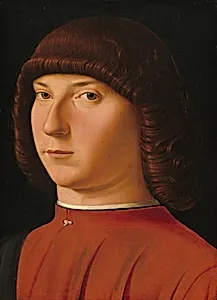
Antonello da Messina, born Antonello di Giovanni di Antonio around 1430 in Messina, Sicily, was the son of a sculptor, Giovanni de Antonio Mazonus, under whom he received his early training. The bustling port city of Messina exposed him to diverse influences, and by around 1450, he apprenticed in Naples under the painter Niccolò Colantonio, whose workshop housed Netherlandish works by Jan van Eyck and Rogier van der Weyden from the Aragonese court. There, Antonello mastered oil painting techniques, blending them with Italian traditions. He established his own workshop in Messina by 1457, employing his younger brother Giordano from 1461 and raising his son Jacobello, also a painter, born by that year.
Antonello's style epitomized the Early Italian Renaissance while fusing Sicilian clarity with Flemish precision: meticulous detail, subtle light gradations, and calm compositions that conveyed psychological depth through direct gazes and "movements of the mind." His bust-length portraits against dark grounds and illusionistic religious scenes, often with Sicilian landscapes, showcased volumetric forms inspired by Piero della Francesca. In 1475–1476, he worked in Venice, painting the San Cassiano Altarpiece and profoundly shaping the Venetian school by transmitting oil methods and portraiture to Giovanni Bellini.
Among his masterpieces are the Sibiu Crucifixion (1455), Virgin Annunciate (c. 1476, Palermo), Saint Jerome in His Study (c. 1474, London)—a virtuoso display of perspective, light, and symbolic still life—and portraits like Il Condottiere (1475, Louvre).) The San Gregorio Polyptych (1473) and Ecce Homo variants further highlight his emotive religious imagery.
Antonello died in Messina in February 1479, leaving a legacy as a pivotal bridge between Northern and Southern Renaissance art. Though no formal school followed, his innovations in oil, detail, and humanism rippled through Venice, influencing Bellini, Giorgione, and beyond, earning praise for figures that "seemed alive and missing only a soul."