Ctrl K
1701–1800
**Bamen Tomotsugu** (1701–1800) was a distinguished Japanese armorer and the last great master of the Bamen School, active in the Echizen province at Toyohara (present-day Fukui Prefecture) during the eighteenth century. The Bamen School itself traced its origins to the turbulent late sixteenth century, with a legendary connection to the Honda clan, for whom early masters reportedly crafted exceptional shaffrons (horse head armor), earning the school its name. Tomotsugu worked in this established lineage at a time when the production of custom armor had sharply declined following the unification of Japan under the Tokugawa shogunate, surviving primarily for high-ranking samurai and daimyō.
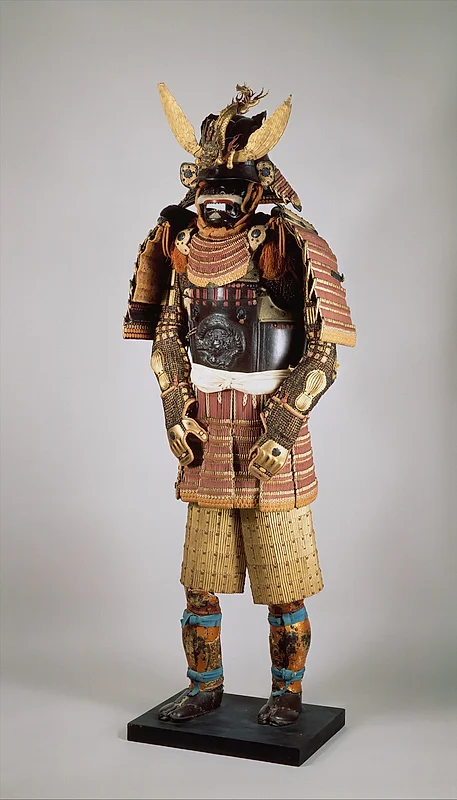
His artistic practice centered on the refined techniques of late *tōsei-gusoku* (modern armor), blending functionality with elaborate decoration. A signature example is the complete armor (*gusoku*) preserved at The Metropolitan Museum of Art, featuring a helmet bowl constructed from eighty-four ridged iron plates and a cuirass of eight vertical plates joined by ornamental rivets in the *byō-toji okegawa-dō* style. The suit displays *shakudō* (copper-gold alloy) crests of three whirling commas linked to the Okabe family of Kishiwada, along with an exceptionally rare lacings scheme on the *kusazuri* (skirt) that shifts colors between segments rather than rows, creating a striking visual progression around the torso.
This armor, signed inside the helmet by Tomotsugu, stands as his most prominent surviving work and exemplifies the high-quality materials and craftsmanship—iron, lacquer, silver, silk, horsehair, and ivory—that defined the final phase of traditional Japanese armor-making before medieval revival styles gained favor. As the culminating figure of the Bamen School, Tomotsugu’s legacy lies in preserving and elevating these specialized techniques into the eighteenth century, ensuring that the artistry of samurai armor endured as both protective equipment and a statement of status and aesthetic refinement. His signed pieces remain rare testaments to a specialized craft that bridged martial tradition and decorative excellence.