
Ctrl K
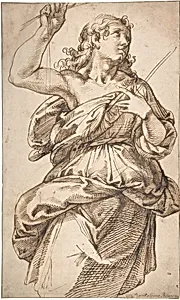
1529–1592
Bartolomeo Passarotti, born in Bologna on June 28, 1529, emerged as a pivotal figure in the Mannerist tradition of northern Italy. Little is known of his earliest years, but by around 1550, he journeyed to Rome, where he studied under the architects Giacomo Barozzi da Vignola and the painter Taddeo Zuccari, immersing himself in the city's rich antique collections and Michelangelo's revolutionary works. This Roman sojourn, lasting until about 1565, honed his skills in portraiture and religious painting, blending classical influences with emerging naturalism. Returning to his native Bologna, Passarotti established a thriving workshop that became the hub of the city's artistic scene, attracting pupils like Agostino Carracci.
In Bologna, Passarotti worked within the Bolognese school, producing altarpieces such as the large canvas for the Basilica of San Giacomo Maggiore (1564–1565) and *The Presentation of the Virgin in the Temple* (1583, now in the Pinacoteca Nazionale di Bologna). His portraits, including *Portrait of Pope Pius V* and a self-portrait circa 1560, captured the likenesses of popes and nobles with sharp realism and psychological depth, often signed with a sparrow—playing on his name, meaning "little sparrow." Yet Passarotti's true innovation lay in genre scenes, pioneering depictions of everyday life like *The Butcher's Shop* (Galleria Nazionale d'Arte Antica, Rome), *The Fish Stall*, and *Anatomy Lesson*, inspired by northern Europeans such as Pieter Aertsen. These lively market tableaux, with their meticulous still lifes of meat, fish, and tools, broke from Mannerist elegance toward earthy observation, influencing Tuscan models like Giorgio Vasari and Prospero Fontana.
Passarotti's legacy endures through his family and students: three sons—Aurelio (1560–1609), Ventura (1566–1618), and Tiburzio (d. 1612)—followed him as painters, with Tiburzio's sons Gaspare and Archangelo continuing the line. His workshop shaped Bolognese art's transition to Baroque, notably via Annibale Carracci, whose early works like *The Beaneater* echo Passarotti's genre motifs. Rediscovered gems, such as *Homer's Riddle* (Uffizi Gallery), underscore his enduring wit and narrative flair, cementing his role as a bridge between Mannerism and naturalism.