Ctrl K
1780–1847
**Bernard Gaillot (1780–1847)**
Born in Versailles on 17 February 1780, Bernard Gaillot emerged as a prominent French historical painter during the transition from Neoclassicism to Romanticism. Little is known of his early life beyond his birthplace near the royal palace, but by 1795 he had settled in Paris, where he studied under the masterful Jacques-Louis David, the leading exponent of Neoclassicism. This rigorous training instilled in Gaillot a commitment to classical clarity, dramatic composition, and moral grandeur, hallmarks of David's school. Gaillot later passed on this tradition as a teacher to Félicie de Fauveau, extending his influence into the next generation.
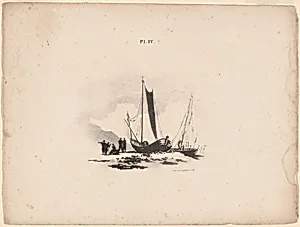
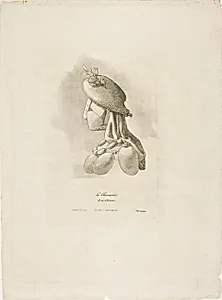
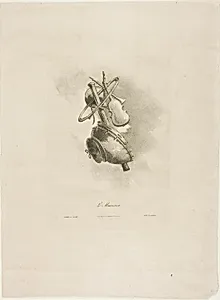
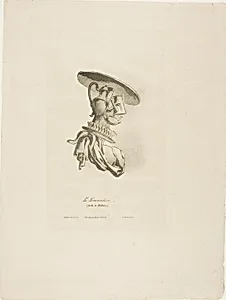
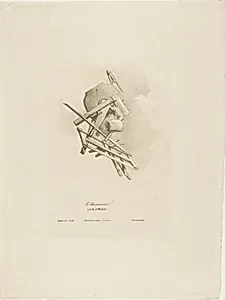
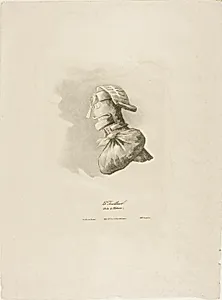
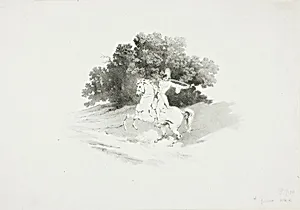
Gaillot's oeuvre centers on religious and historical subjects, executed with neoclassical precision and emotional depth. His principal works adorn French churches and public spaces, reflecting the post-Revolutionary demand for inspirational art. Key commissions include *Cornelia* (1817), *Conversion of St. Augustine* (1819, Notre-Dame-des-Victoires, Paris), *Dream of St. Monica* (1822, same church), and a trio from 1824: *St. Louis bearing the Crown of Thorns* (Palais synodal, Sens), *Holy Angels* (Saint-Maurice, Lille), and *Dream of St. Joseph* (Saint-Vincent-de-Paul, Paris). Later highlights feature *St. Peter Delivered from Prison* (1834, Saint-Pierre-du-Gros-Caillou, Paris), *Louis des Balbis-Berton, Seigneur de Crillon* (1835, Château de Versailles), and *Charles III, Duke of Bourbon* (1835, Versailles). Beyond oils, Gaillot excelled in lithography, studying under Alois Senefelder; notable prints include *Boats on the Beach* (1824, National Gallery of Art), *Trumpeter on Horseback* (ca. 1819–1829), and scenes from *Arts et Métiers* like *The Carpenter* and *The Tailor* (1838).
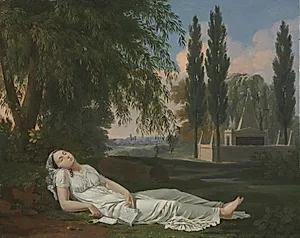
Gaillot died in Paris on 17 June 1847, leaving a legacy of devotional art that bridged David's austerity with emerging Romantic sentiment. His works grace institutions like the Cleveland Museum of Art (*Woman Sleeping in a Landscape with a Letter*, ca. 1800) and the Art Institute of Chicago, while auction records attest to enduring collector interest. Though not a household name, Gaillot's contributions to ecclesiastical painting and early lithography underscore his role in sustaining French artistic traditions amid turbulent times, with family ties like his niece Camille Chenou hinting at a personal network in creative circles.