Bernard Reder (1897–1963), born in Czernowitz, Bukovina—then part of Austria-Hungary and a vibrant center of Jewish and Hasidic culture—was the son of a Jewish innkeeper. At age four, he began drawing, but World War I interrupted his youth when, at 17, he was conscripted into the Austrian army and served in the trenches. After the war, Reder enrolled at the Academy of Fine Arts in Prague, studying sculpture and painting under Brömse, Spaniel, and Professor Stursa. To support himself, he carved cemetery monuments while honing his craft in stone.
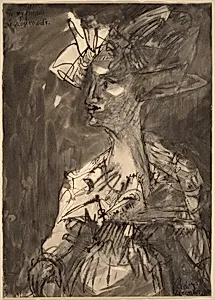
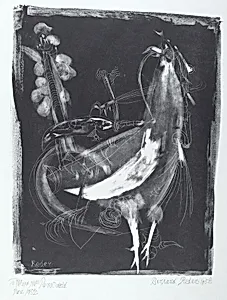
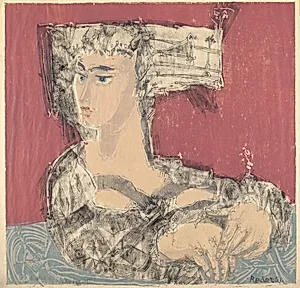
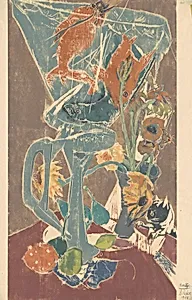
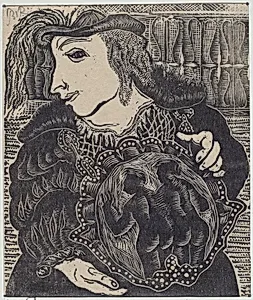
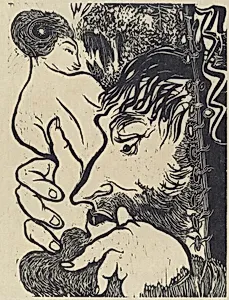
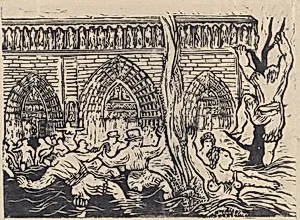
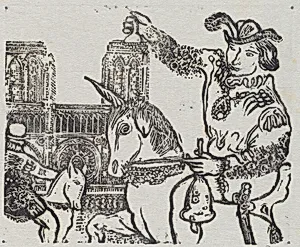
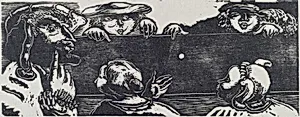
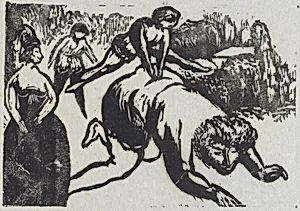
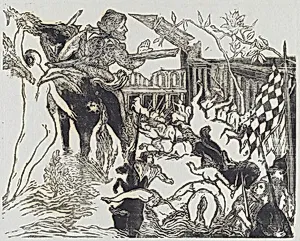
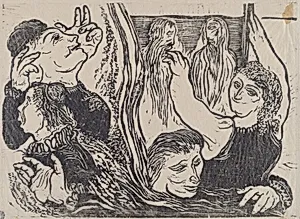
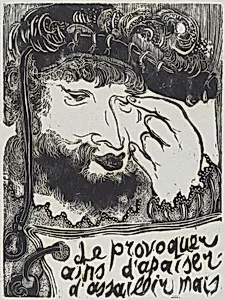
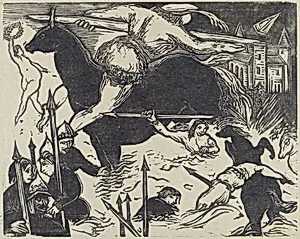
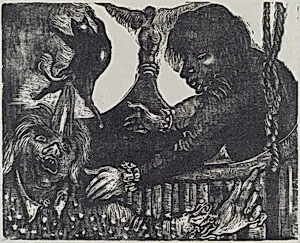
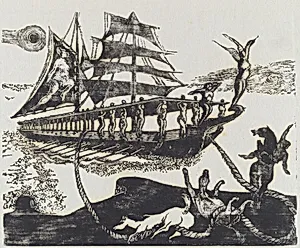
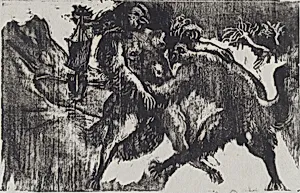
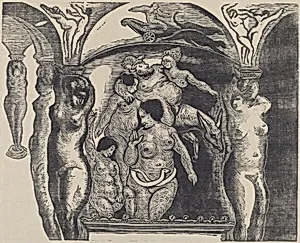
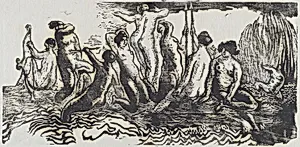
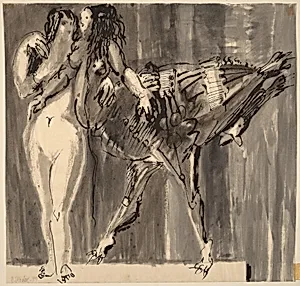
Amid rising antisemitism, Reder relocated to Prague in 1930, achieving breakthrough success with his first solo exhibition at the Manes Gallery in 1935, where most sculptures sold amid widespread acclaim. In 1937, he moved to Paris, befriending sculptor Aristide Maillol and exhibiting at the Wildenstein Gallery in 1940. Fleeing Nazi occupation—with Maillol's aid—he escaped to Spain (briefly imprisoned), then Cuba, before settling in New York in 1943, becoming a U.S. citizen in 1948. A 1945 illness left him partially paralyzed, shifting focus to woodcuts and drawings, though he later revived monumental bronzes after studying lost-wax casting in Italy (1954). Key works include the bronze *Aaron with Tabernacle* (1959, Israel Museum), *The Trumpeter* (1955), *The Conqueror*, the stone *Centaur's Head*, and the monumental *Wounded Woman*, gifted by Israel to Denmark in 1969.
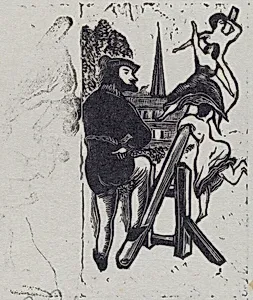
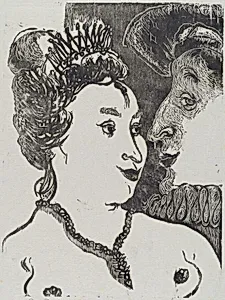
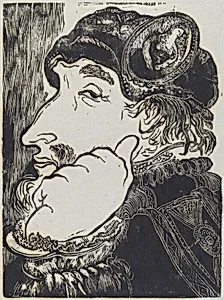
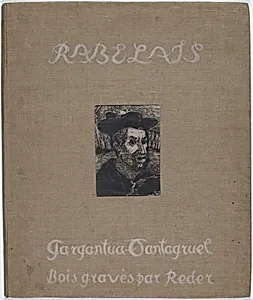
Reder's oeuvre evolved from realism to rhythmic abstraction, drawing from Jewish folklore, the Bible, Greek mythology, and Rabelaisian exuberance, infused with a baroque, fantastical spirit—human and mythical figures often musicians or hybrids, evoking mysticism and whimsy. Exhibitions at the Whitney (solo retrospective 1961, spanning three floors), Philadelphia Museum of Art (1949), and Sculpture International (1949) cemented his reputation. His prolific final years yielded over 35 bronzes; works grace the Whitney, MoMA, National Gallery of Art, and more, preserving his unique fusion of Hasidic roots and universal myth.