
Ctrl K
1515–1515
**Bernardino da Genoa** (active 1515) stands as one of the most enigmatic figures in early sixteenth-century Italian art, known exclusively through a single signed and dated panel painting housed in the Metropolitan Museum of Art. A Genoese painter by attribution, little is documented about his life, training, or broader career, rendering his early years and personal background not well documented. Active solely in 1515, he emerges briefly from obscurity via this work, which captures the devotional intensity of Renaissance sacred imagery amid Genoa's vibrant artistic scene.
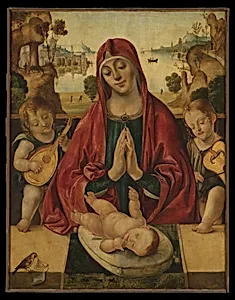
His sole surviving masterpiece, *Madonna and Child with Angels* (1515, oil on wood, 74.6 x 57.5 cm), depicts the Virgin tenderly supporting the Christ Child, who reaches audaciously foreshortened toward a goldfinch—a poignant symbol of Christ's Passion. Flanked by angels, the composition blends tender intimacy with bold spatial experimentation, characteristic of northern Italian traditions. The dramatic foreshortening of the infant evokes the innovative style of the Milanese master Bramantino, suggesting Bernardino worked within the Lombard school tradition, where artists increasingly migrated to Genoa in the late fifteenth and early sixteenth centuries.
Scholars note the painting's inscription identifies "Bernardino da Genoa," yet the artist's precise identity remains elusive. It is possible he was Bernardino Fasola, a Lombard painter documented in Genoa's Guild council by 1520, reflecting the influx of Milanese talents to the Ligurian port city. This attribution aligns with the work's stylistic hallmarks: refined modeling, luminous drapery, and perspectival daring that bridge late Gothic sweetness with emerging High Renaissance dynamics.
Though Bernardino's legacy is confined to this luminous panel—now a highlight of the Met's northern Italian holdings—his art exemplifies Genoa's role as a crossroads for Lombard innovation during a transitional era. Sparsely attested, he reminds us of countless regional masters whose contributions, preserved through singular treasures, enrich our understanding of Italy's diverse Renaissance tapestry.