Ctrl K
1535–1597
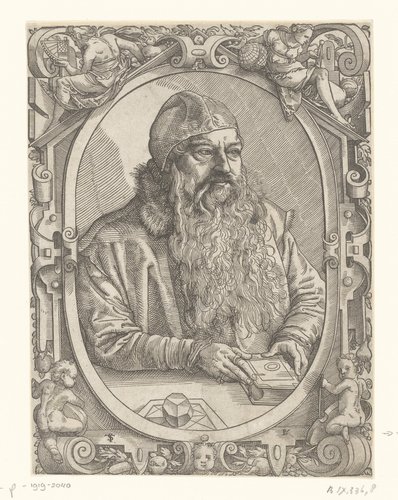
Bernhard Jobin, born before 1545 in Porrentruy in the Swiss canton of Jura, emerged as a pivotal figure in the Strasbourg printing world. Trained as a Formschneider—a skilled woodblock cutter—he acquired Strasbourg citizenship in 1560 as a typesetter and joined the printers' guild, marking the start of his professional ascent. In 1567, he married Anna Fischart, sister of the renowned writer Johann Fischart, forging a key alliance that shaped his publishing output; he would go on to print nearly all of Fischart's works from 1570 onward. His printer's mark, featuring an emperor's bust inscribed *Sapientia constans*, became a hallmark of his productions.
Jobin's press flourished in Strasbourg from the 1560s to his death in 1593, producing an array of books, broadsides, pamphlets, and woodcuts that bridged literature, music, and visual arts. He published first German translations of French and Dutch authors like François Rabelais, spiritual song collections, lute tablatures such as *Neuerlesner Kunstlicher Lautenstück* (1573), and works by Paracelsus, alongside legal, historical, and medical texts. Collaborations with leading artists enriched his output: Tobias Stimmer designed frontispiece ornaments and illustrated *Kunstreiche Figuren biblischer Historien* (1579), while Christoph Murer contributed in the late 1570s and Wendel Dietterlin appeared in later projects. Jobin often employed pseudonyms like Guttmann Tuiscum and false imprints, adding intrigue to his versatile catalog.
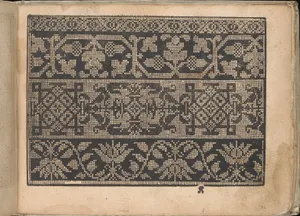
Central to Jobin's artistic legacy is his role in disseminating pattern books for craftsmen and designers. His *New Künstlichs Modelbuch*, with editions from 1579 through 1600 (continued by heirs), offered 45 pages of intricate woodcut designs for ornamentation—inspired by earlier Italian sources like Da Sera and Pagano—alongside an illustrated title page echoing Stimmer's style. This influential volume, held in collections like the Metropolitan Museum of Art, supported goldsmiths, engravers, and architects in the late Renaissance tradition. Other notable prints include a 1574 woodcut of Strasbourg Cathedral and broadsides like *Icones sive Imagines Virorum Literis Illustrium* (1587). Upon his death, his son Tobias Jobin sustained the press until 1604, when it passed to Johann Carolus, ensuring Jobin's contributions rippled through European print culture.