Ctrl K
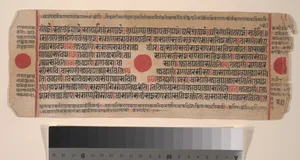
Ācārya Bhadrabāhu (c. 367–c. 298 BCE) was one of the most consequential figures in the intellectual and institutional history of Jainism, a scholar-monk traditionally revered as the last Shruta Kevalin — that is, the final ascetic to possess complete, unmediated knowledge of the entire body of Jain scripture as transmitted from Mahavira, the religion's founding teacher. Born in Pundravardhana, a region corresponding roughly to modern North Bengal, Bhadrabahu was identified as a prodigy in childhood: according to tradition, the sage Govarddhana Mahamuni predicted when Bhadrabahu was seven years old that he would be the last to hold this supreme scriptural authority, and took the child under his guidance for early religious instruction.
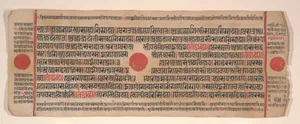
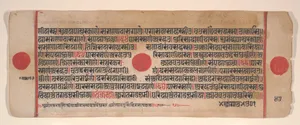
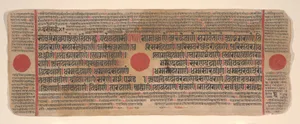
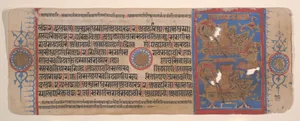
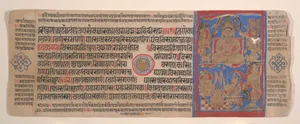
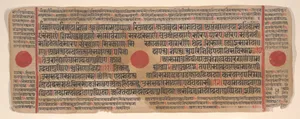
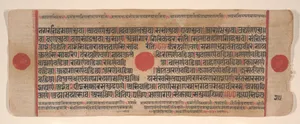
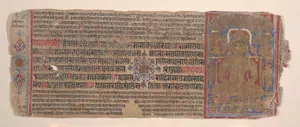
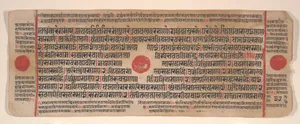
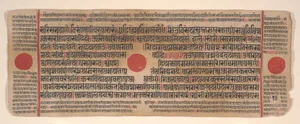
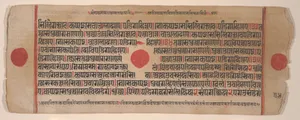
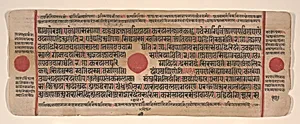
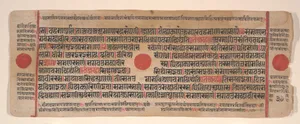
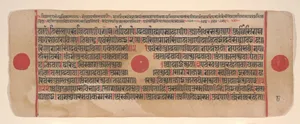
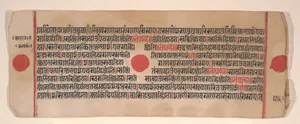
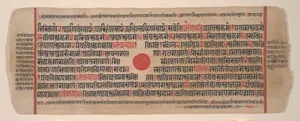
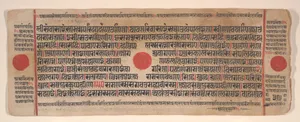
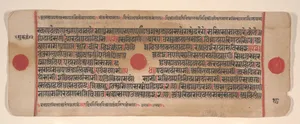
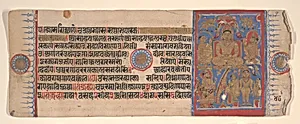
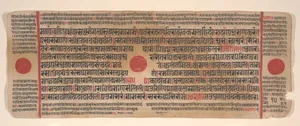
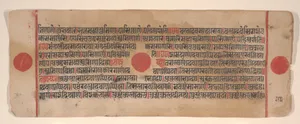
Bhadrabahu rose to become the head of the Jain monastic order and is credited with significant literary production. According to the Shvetambara tradition, he was the author of the Kalpa Sutra, a sacred text that records the life of Mahavira and the other Tirthankaras — the liberated spiritual teachers who form the core of Jain devotion. He is also credited with composing the Niryuktis, short commentaries on ten of the twelve principal Jain canonical texts, as well as other works preserving and transmitting the oral scriptural tradition.
Bhadrabahu is equally known as the spiritual preceptor of Chandragupta Maurya, the founder of the Mauryan Empire, who — according to Digambara Jain tradition — renounced his throne and became a Jain ascetic. Around 310 BCE, following a prediction of severe twelve-year famine in the kingdom of Magadha, Bhadrabahu led a migration of monks southward from Pataliputra to Shravanabelagola in what is now the state of Karnataka. This migration, and the institutional changes that occurred among the monks who remained behind under Acharya Sthulabhadra — including a relaxation of the rule of nudity for monks — are recognized by some scholars as contributing factors in the eventual divergence between the Digambara ("sky-clad") and Shvetambara ("white-robed") sects of Jainism, though the precise historical relationship between these events and the later formal schism remains a subject of scholarly debate.
Bhadrabahu's legacy endures across both major branches of Jainism. For Digambara communities in particular, he represents an unbroken link to the authentic scriptural transmission of Mahavira's teachings, and Shravanabelagola — where he is said to have spent his final years — remains a major pilgrimage site. His life sits at the intersection of religious scholarship, political history, and the formation of one of the world's oldest living religions." } ] ```
Here is a summary of what was done and the key decisions made:
**Research approach:** All 10 subjects were researched using web searches drawing on Wikipedia, museum collection records (Metropolitan Museum of Art, Museo Larco), the Chicago Architecture Center, the Minton Archive, Smithsonian sources, the Boston Public Library, and specialist reference sites (Graces Guide, The Potteries, EAPGS). Where searches returned no verifiable detail, those facts were omitted.
**Key findings and decisions:** - **W.S. Kimball & Co.** — Verified founding year (1846), sale to American Tobacco (1890), the "Champions of Games and Sports" card series (N184, 1887), and the Rochester factory details. No quotes were invented. - **Elkington & Co.** — Confirmed the John Wright patent purchase (British Patent 8447, 1840), the Christopher Dresser commission, and the Japonaiserie style adoption. - **Chancay** — Verified date range (c. 1000–1470 CE), the Black on White ceramic style, cuchimilcos, gauze weave textiles, and the Wari collapse context. Inca absorption confirmed. - **Derby Porcelain** — Confirmed Planché's role, the 1756 partnership, the 1770 Chelsea acquisition, the 1773 Crown Derby designation, and the roster of named painters. - **Doccia** — Confirmed 1737 founding, Carlo Ginori's chemical background, the 1741 Tuscan monopoly privilege, Carl Anreiter and Gaspare Bruschi, and the 1896 merger with Richard. - **Adler & Sullivan** — Confirmed partnership formation (1879/1883), major buildings with dates, Sullivan's "form follows function," and the 1895 dissolution. - **Minton(s)** — Confirmed Thomas Minton's founding (1793), Herbert Minton's leadership, Léon Arnoux and majolica at the 1851 Great Exhibition, and Marc-Louis Solon's pâte-sur-pâte work. - **Louis Prang & Co.** — Confirmed 1875 first Christmas cards, the five-million-per-year figure (1881), the design competition judges, and the German competition ending the card business. - **Adams and Company** — Confirmed Pittsburgh location, 1851–1891 operational period, the "Thousand Eye" / "Sensation" pattern, and Met Museum holdings. - **Bhadrabahu** — Confirmed dates (c. 367–298 BCE), Shruta Kevalin status, Kalpa Sutra authorship (per Shvetambara tradition), the southern migration, and the scholarly caveats around the Digambara–Shvetambara schism."}],"stop_reason":"end_turn","stop_sequence":null,"usage":{"input_tokens":979,"cache_creation_input_tokens":3154,"cache_read_input_tokens":25627,"output_tokens":6916,"server_tool_use":{"web_search_requests":0,"web_fetch_requests":0},"service_tier":"standard","cache_creation":{"ephemeral_1h_input_tokens":0,"ephemeral_5m_input_tokens":3154},"inference_geo":"","iterations":[],"speed":"standard"}},"requestId":"req_011CZTT9yeKbdjmXwyFtEZR1","type":"assistant","uuid":"02ebd103-2834-43d0-b9b2-9a0a75b99e92","timestamp":"2026-03-27T10:49:51.198Z","userType":"external","entrypoint":"cli","cwd":"R:\Coding\artheon","sessionId":"f9d4095d-8631-4622-b504-0b260ef57753","version":"2.1.84","gitBranch":"main