Ctrl K
The Boeotian terracotta artists of the 4th/3rd centuries B.C., often anonymously attributed in museum collections, represent a vibrant workshop tradition centered in the region of Boeotia, ancient Greece. Their most renowned output, the Tanagra figurines, emerged in the late 4th century B.C. from the town of Tanagra and continued into the early 3rd century B.C., marking a shift toward mass-produced, mold-cast clay statuettes that captured the Hellenistic spirit of naturalism and everyday grace. These anonymous coraplasters—sculptors who crafted the models for molds—operated in specialized workshops, drawing on earlier Greek terracotta traditions but innovating with two-part molds for front and back, allowing for varied poses and intricate details.
Crafted from fine terracotta clay coated in white slip, the figurines were fired in kilns, then hand-painted post-firing with vibrant watercolors: pinkish flesh tones, red lips and hair, purple drapery, and accents of blue. Standing 10-20 cm tall, they depicted fashionable women draped in flowing chitons and himations, their garments clinging dynamically to reveal the body beneath; girls at play, young men seated, children with pets, or comic actors from Menander's New Comedy. This style emphasized charm, variety, and subtle emotion—women adjusting veils, leaning coyly, or holding fans—contrasting rigid earlier votives with lively, secular naturalism influenced by Athenian prototypes yet distinctly Boeotian in whimsy.
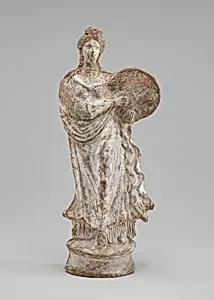
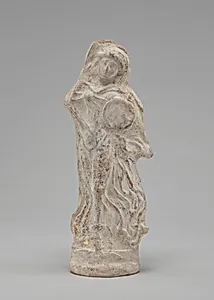
Iconic examples include the National Gallery of Art's *Figurine of a Veiled Dancer with Tambourine* (20.3 × 7.6 cm), where swirling fabric and rhythmic poise evoke performance, and Metropolitan Museum standouts like the *Terracotta Statuette of a Standing Woman* (late 4th–early 3rd century B.C.), showcasing preserved polychromy and poised elegance. Exported across the Mediterranean to Alexandria, Sicily, and beyond, these figurines served as grave goods mimicking life's poses or as household decorations, not strictly ritual objects.
Their legacy endures as emblems of Hellenistic refinement, captivating 19th-century collectors with their "Parisienne of the ancient world" allure, inspiring artists like Jean-Léon Gérôme and even literature by Oscar Wilde. Rediscovered amid 1870s tomb excavations at Tanagra, they highlight Boeotia's overlooked artistic prowess amid Attica's shadow, proving small-scale workshops could yield timeless intimacy.