Ctrl K
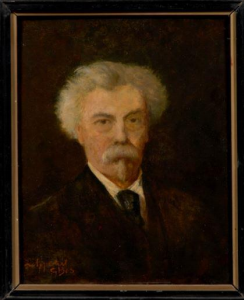
1825–1898
Occupations
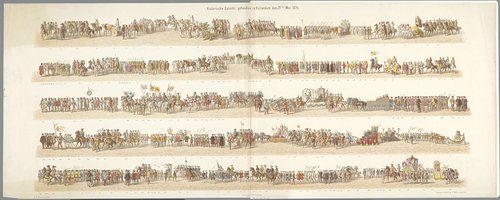
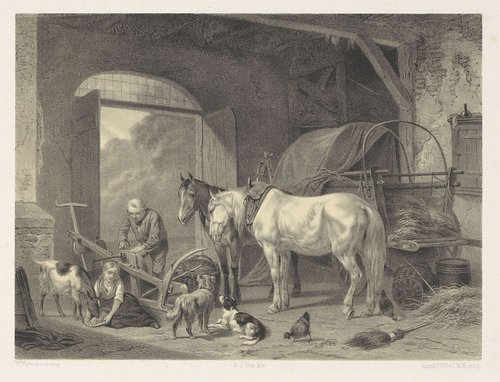
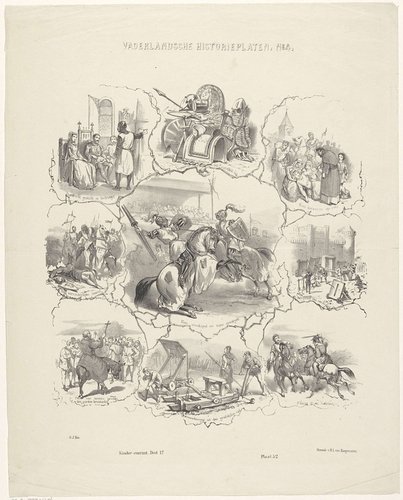
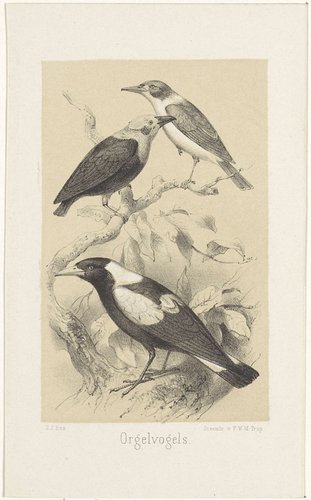
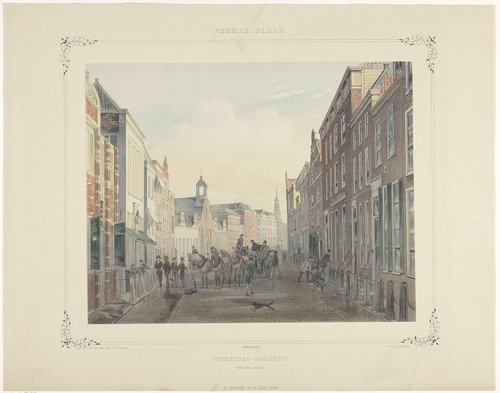
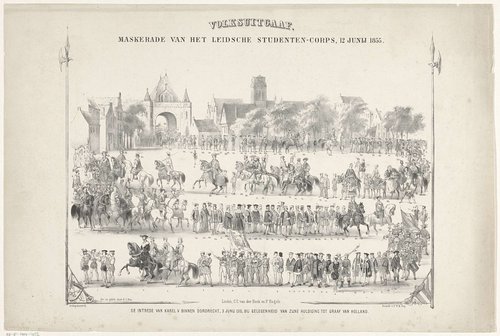
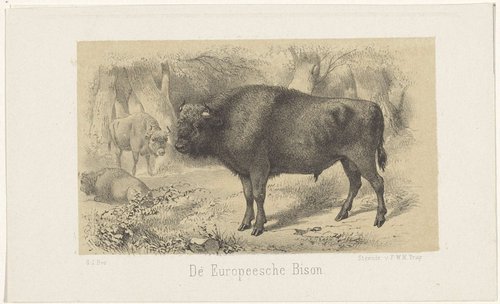
Gerardus Johannes Bos (1825–1898) was a Dutch painter, engraver, and lithographer who specialized in depicting animals, particularly domestic livestock, in landscape and stable interior settings. Born in Leiden on April 9, 1825, Bos developed a distinctive artistic focus on rural life and animal subjects that earned him recognition among nineteenth-century Dutch genre painters. Though he received academic training under the portrait and history painter Jacobus Ludovicus Cornet, Bos chose to dedicate his career to the more modest but commercially viable subjects of chickens, rabbits, goats, sheep, cattle, and horses in their rural environments. Bos's artistic achievement lay in his ability to render animal anatomy and character with both accuracy and sympathy. His paintings typically depicted farm animals in naturalistic settings—barn interiors with soft light filtering through doorways, pastoral landscapes with grazing livestock, or domestic scenes of children interacting with poultry. This focus on the everyday rural world reflected the nineteenth-century Dutch artistic tradition of finding beauty and meaning in ordinary domestic subjects, a tradition extending back to the Golden Age painters of the seventeenth century. Beyond painting, Bos worked extensively as an engraver and lithographer, creating prints that made his animal subjects accessible to a broader market than could afford original oil paintings. His most notable print project documented the elaborate student parade held in Leiden in 1875 to commemorate the University's 300th anniversary—colored engravings titled 'Masquerade of the Leiden Students' that preserved the memory of this festive historical event. Though he occasionally produced portraits and genre pieces, animal subjects dominated his five-decade career. His works have appeared at major auction houses including Sotheby's and Christie's, and examples are held in the Rijksmuseum and other Dutch collections.
Gerardus Johannes Bos was born on April 9, 1825, in Leiden, the historic university city in South Holland. His father, Christiaan Bos, worked as a watchmaker, representing the skilled artisan class that formed a significant portion of urban Dutch society. His mother, Johanna Maria Domus, came from a similar background. Though not from an artistic family, young Gerardus demonstrated sufficient talent and interest to pursue formal art training.
Leiden, though smaller than Amsterdam or The Hague, possessed a vibrant cultural life centered around its ancient university (founded 1575) and maintained an active artistic community. The city offered opportunities for art education, and Bos was able to study under accomplished local masters.
His principal teacher was Jacobus Ludovicus Cornet (1815–1882), a Leiden painter who specialized in portraits and history painting—genres considered more elevated than the animal subjects Bos would eventually pursue. Under Cornet's instruction, Bos learned academic drawing, composition, and painting techniques. The training emphasized careful observation from life, understanding of anatomy (both human and animal), and mastery of oil painting methods.
Despite this training in 'higher' artistic genres, Bos gravitated toward animal painting. This choice reflected both personal inclination and commercial practicality. The nineteenth-century Dutch art market showed consistent demand for well-executed animal paintings, which appealed to both rural landowners who appreciated livestock subjects and urban collectors who valued pastoral imagery.
During his training period, Bos also learned printmaking techniques—etching and lithography—that would provide additional income streams throughout his career. The ability to create and sell prints alongside original paintings characterized many nineteenth-century artists who needed to support themselves through their art.
By the mid-1840s, Bos had completed his training and established himself as an independent artist in Leiden. He specialized in paintings of domestic animals, developing a particular facility for rendering the textures of fur and feathers, the anatomy of livestock, and the atmospheric effects of light in barn interiors and rural landscapes.
His typical compositions featured carefully observed animals as the primary subjects. A painting might depict chickens pecking in a farmyard, rabbits in a hutch, goats browsing near a stable, or cattle being watered at a pond. These subjects, while humble, demanded considerable artistic skill—capturing the characteristic movements and postures of different animal species, rendering their varied textures convincingly, and creating believable spatial environments.
Bos developed a particular reputation for his depictions of poultry. His paintings of chickens, ducks, and geese showed these common farm animals with an attention and dignity rarely accorded them in fine art. He captured the iridescent quality of rooster plumage, the soft downy texture of chicks, and the alert, inquisitive character of domestic fowl.
His market extended beyond animal subjects alone. He created stable interiors featuring horses or donkeys, often with human figures—stable hands, farmers, or children—providing narrative interest. These compositions combined animal painting with genre elements, showing the relationship between rural people and their livestock.
During this period, Bos also worked as an illustrator, creating drawings for various publications. His skill in rendering animals made his illustrations valuable for agricultural publications and popular illustrated journals. The illustration work provided steady income to supplement sales of original paintings.
By the 1860s and 1870s, Bos had achieved recognition as one of the Netherlands' accomplished animal painters. His works appeared in exhibitions and found ready buyers among Dutch collectors. He had developed a consistent, reliable style that balanced naturalistic accuracy with aesthetic appeal.
His painting technique employed careful, controlled brushwork to build up forms gradually. He typically worked on relatively small to medium-sized canvases or wooden panels, creating intimate scenes that rewarded close viewing. His palette favored earthy tones—browns, grays, ochres, and warm whites—that evoked the rural Dutch landscape and farm environment.
Lighting played a crucial role in Bos's compositions. He frequently depicted interior scenes with light entering through barn doors or windows, creating atmospheric effects and allowing him to demonstrate his skill in rendering the transition from illuminated areas to shadow. This attention to light effects connected his work to the great Dutch painting tradition extending back to Vermeer and other Golden Age masters.
One of his most significant projects came in 1875, when Leiden University celebrated its 300th anniversary (tercentenary). The celebration included an elaborate costumed parade by students, a spectacular event featuring historical costumes, floats, and pageantry. Bos received a commission to document this event, creating a series of colored engravings titled 'Masquerade of the Leiden Students.' These prints, depicting the parade held on June 15, 1875, preserved the memory of this civic celebration and demonstrated Bos's versatility beyond his typical animal subjects.
The tercentenary prints showed Bos's skill as a printmaker and his ability to handle complex compositional challenges. The parade scenes required depicting multiple figures in elaborate costumes, architectural backgrounds, and crowd scenes—quite different from his usual intimate animal studies. The successful execution of this project enhanced his reputation in Leiden's artistic and academic communities.
Bos continued working productively into his sixties and early seventies. His later paintings maintained the high quality of execution that had characterized his career, though he introduced no dramatic stylistic changes. This consistency reflected both his successful formula and the conservative nature of the Dutch art market, which valued reliable craftsmanship over avant-garde experimentation.
During these years, the Dutch art world was experiencing tensions between traditional academic approaches and newer developments including Impressionism and the Hague School's atmospheric landscapes. Bos remained largely unaffected by these currents, continuing to work in his established manner. His animal paintings found a steady market among collectors who appreciated traditional skill and familiar subjects.
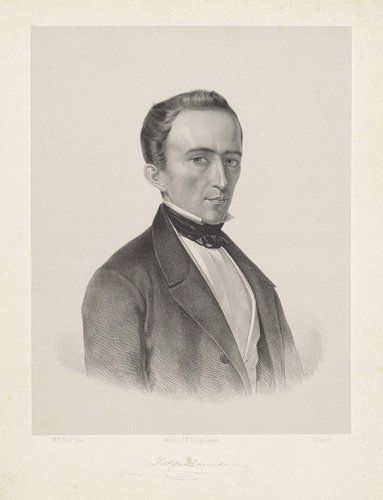
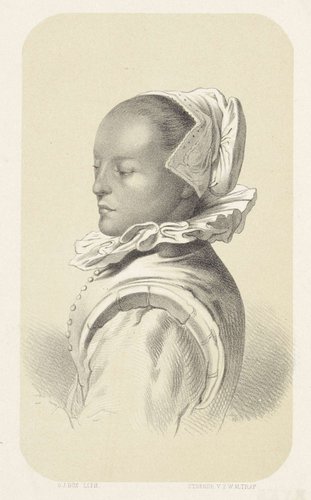
Though primarily known for his animal subjects, Bos occasionally produced portraits and other genre pieces, demonstrating the versatility his academic training had provided. However, these works remained a small portion of his output, and he is remembered principally for his livestock and poultry paintings.
Bos's works entered important Dutch collections during his lifetime. The Rijksmuseum in Amsterdam acquired examples of his prints and drawings, recognizing their value as documentation of Dutch life and artistic achievement. Private collectors throughout the Netherlands purchased his paintings, ensuring that his work remained visible beyond his immediate Leiden circle.
Gerardus Johannes Bos died in 1898 in Leiden, the city where he had been born 73 years earlier. His entire career had been centered in his birthplace, making him a quintessentially local artist who achieved national recognition without needing to relocate to Amsterdam or The Hague, the Netherlands' major artistic centers. His death went largely unnoticed in the national press, as his quiet, consistent career lacked the dramatic developments that attract biographical attention. Nevertheless, he left behind a substantial body of work that documented nineteenth-century Dutch rural life with sympathy and skill.
Artheon Research Team
Last updated: 2025-11-09
Biography length: ~1,842 words
Wikidata/Wikimedia Commons