Ctrl K
1825–1888
The Boston & Sandwich Glass Company, a pioneering force in American glassmaking, was established in 1825 in Sandwich, Massachusetts, by visionary entrepreneur Deming Jarves, who had honed his expertise as an agent for the New England Glass Company in Cambridge. Jarves built the factory on the banks of the Cape Cod Canal, incorporating it formally the following year with Boston investors. Drawing on his prior innovations in domestic red lead production and furnace efficiency, he assembled a workforce of skilled immigrants from England, Ireland, and later France, starting with 60 employees and expanding to over 500 by the 1850s. The company revolutionized the industry by perfecting pressed glass techniques—using lever-operated machines and Jarves' patented mold designs—to mass-produce high-quality, affordable lead flint glass tableware, eclipsing European imports and fueling America's burgeoning middle-class aesthetic.
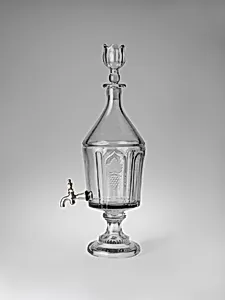
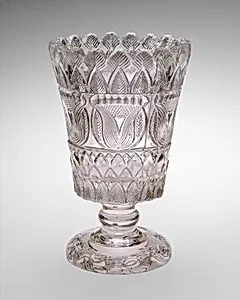
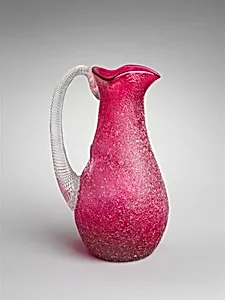
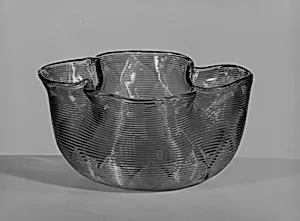
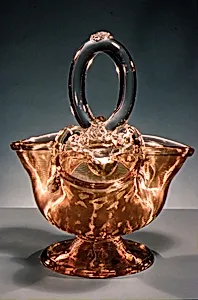
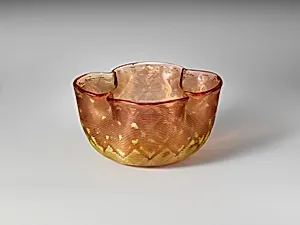
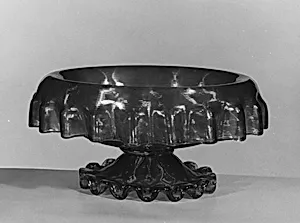
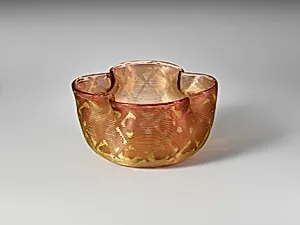
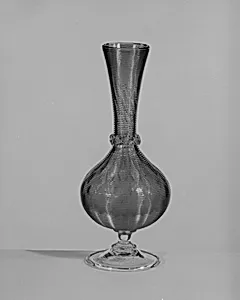
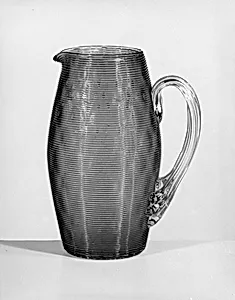
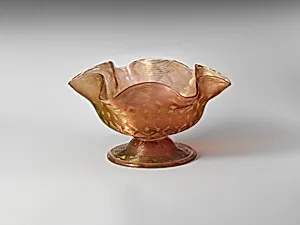
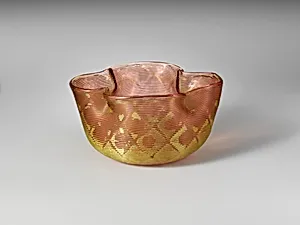
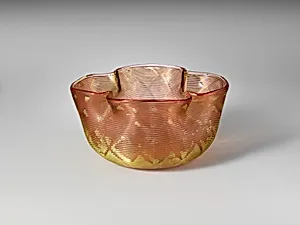
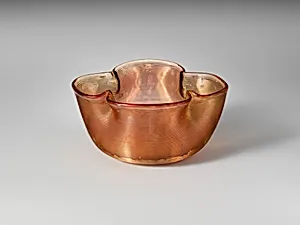
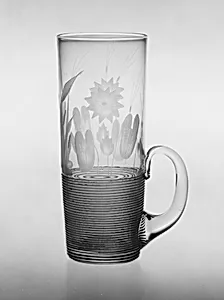
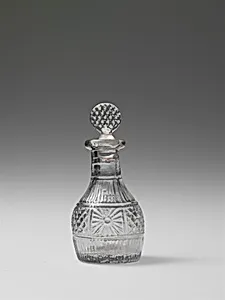
At its height, the firm produced an astonishing 50-60 tons of cut and pressed glass weekly, excelling in intricate patterns like lacy glass salts adorned with stippled motifs to mask imperfections, colorful celery vases, cup plates, candlesticks, lamps, perfume bottles, and spoon holders. Early innovations included mold-blown wares and threaded glass in the 1830s-1840s, followed by experiments in colored glass. In 1869, French artist Nicholas Lutz joined, introducing art glass and paperweights, while Mary Gregory painted delicate landscape scenes on lamps and plaques from 1880 to 1884. Dolphin candlesticks, tricolor bracelets tossed to crowds at the 1876 Centennial, and opalescent lyre salts exemplify their bold designs, blending functionality with ornamental flair in the pressed glass tradition.
Jarves departed acrimoniously in 1858 amid board disputes, founding the rival Cape Cod Glass Works with his son John, who died young in 1863; leadership then passed to superintendents George Fessenden and Henry Francis Spurr. Post-Civil War competition from cheaper Midwestern glass prompted a shift to upscale engraved and blown wares, but a 1888 labor lockout amid union demands sealed its fate, ending operations after 62 years. Today, the Sandwich Glass Museum safeguards thousands of surviving pieces, cementing the company's legacy as the "father" of American pressed glass—sparking an industry that democratized beauty for everyday life and influencing generations of U.S. glassmakers.