Ctrl K
1840–1889
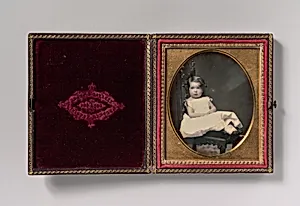
Brady & Co., the pioneering American photography studio active from the 1840s to the 1880s, was founded by Mathew B. Brady, who established his first daguerreotype gallery in New York City in 1844 at the corner of Broadway and Fulton Street. Brady had studied portrait painting under artist William Page in Saratoga and Albany before moving to New York, where he trained in the new daguerreotype process under inventor Samuel F.B. Morse, a pioneer of the medium in America. A second studio opened in Washington, D.C., in 1849, expanding operations with a team of assistants equipped with mobile darkrooms. These galleries specialized in formal portraits of America's elite, capturing presidents from John Quincy Adams to William McKinley in crisp, hand-tinted daguerreotypes and ambrotypes, such as the studio's *Bearded Man* (1853–57) and *Francis Alofsen* (1855).
The studio's signature style blended meticulous portraiture—posed subjects in dramatic lighting against painted backdrops—with innovative field photography using large glass negatives for albumen prints, aligning with the emerging tradition of documentary realism in American visual arts. Brady's 1850 publication *The Gallery of Illustrious Americans*, a lavishly printed album of lithographs from his daguerreotypes, featured luminaries like Andrew Jackson, Daniel Webster, and Edgar Allan Poe, cementing the studio's reputation for elevating photography to fine art.
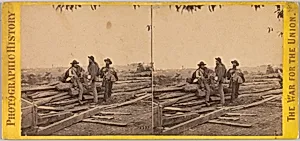
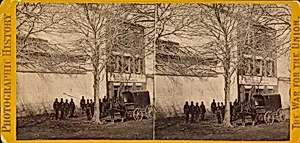
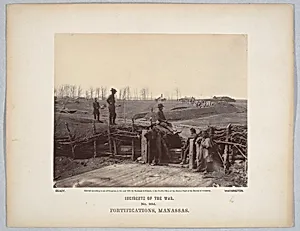
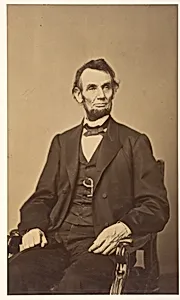
Brady & Co. achieved immortality through its unprecedented Civil War documentation, starting in 1861 when Brady secured permission from President Lincoln to photograph the conflict. Assistants like Timothy H. O'Sullivan and Alexander Gardner produced over 10,000 images under the Brady imprint, including harrowing scenes like *The Dead of Antietam* exhibition (1862), *Rebel Prisoners, Gettysburg* (1863), *Slave Pen, Alexandria, Virginia* (July 1863), and *Senator and Mrs. James Henry Lane* (1861–66). These works brought the war's brutal reality—battlefields strewn with corpses, generals like Ulysses S. Grant and Robert E. Lee, ruined forts—to a shocked public, revolutionizing visual reporting.
Though financial ruin followed the war due to unsold negatives, Brady & Co.'s legacy endures as the birthplace of photojournalism. Housed in institutions like the Metropolitan Museum of Art and Library of Congress, the studio's images shaped national memory, influenced history textbooks, and inspired generations of photographers to wield cameras as witnesses to truth.
![[Major General William Tecumseh Sherman Wearing Mourning Armband]](https://images.artheonmuseum.org/met/ph/thumb/major-general-william-tecumseh-sherman-wearing-mourning-armband-301993.webp)
![[Senator and Mrs. James Henry Lane]](https://images.artheonmuseum.org/met/ph/thumb/senator-and-mrs-james-henry-lane-283187.webp)
![[Bearded Man]](https://images.artheonmuseum.org/met/ph/thumb/bearded-man-291775.webp)
![[Mourning Corsage with Portrait of Abraham Lincoln]](https://images.artheonmuseum.org/met/ph/thumb/mourning-corsage-with-portrait-of-abraham-lincoln-301949.webp)
![Confederate Soldier [on the Battlefield at Antietam]](https://images.artheonmuseum.org/met/ph/thumb/confederate-soldier-on-the-battlefield-at-antietam-259606.webp)
![[Presidential Campaign Medal with Portraits of Abraham Lincoln and Andrew Johnson]](https://images.artheonmuseum.org/met/ph/thumb/presidential-campaign-medal-with-portraits-of-abraham-lincoln-and-andrew-johnson-299482.webp)