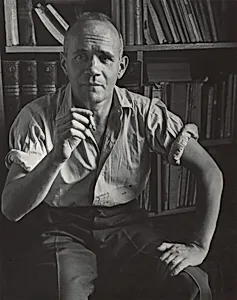
Brassaï was born Gyula Halász on September 9, 1899, in Brassó, Transylvania — a city then part of Austria-Hungary and now Brașov, Romania — from which he would eventually take his celebrated pseudonym. After studying painting and sculpture at the Hungarian Academy of Fine Arts in Budapest and later at Berlin's Academy of Fine Arts, he settled in Paris in 1924, initially working as a journalist and living among a circle of Hungarian expatriate artists and intellectuals. He learned photography from his friend and fellow Hungarian André Kertész, and taught himself French, by his own account, through the novels of Marcel Proust.
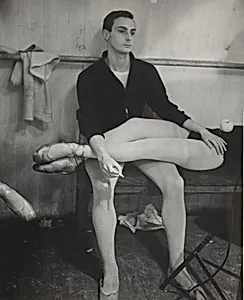
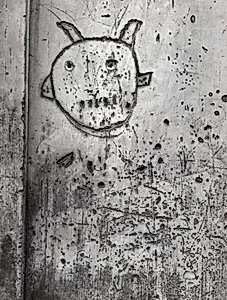
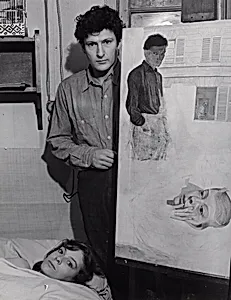
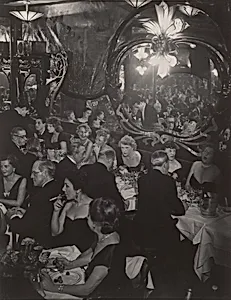
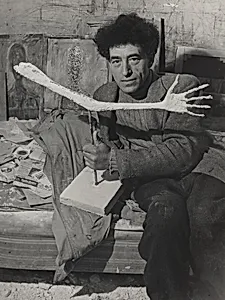
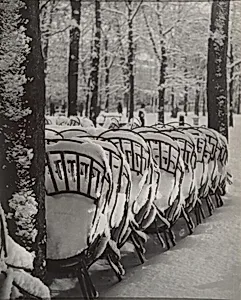
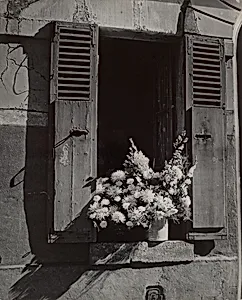
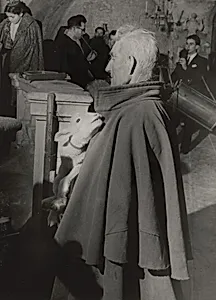
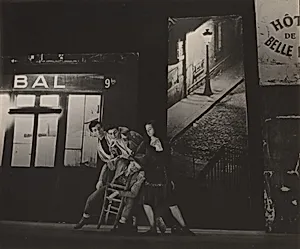
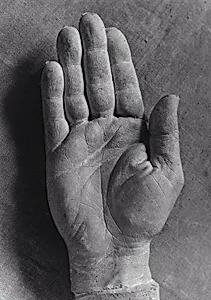
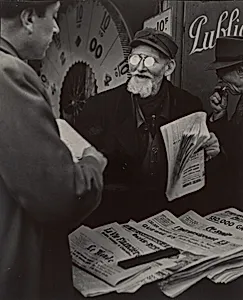
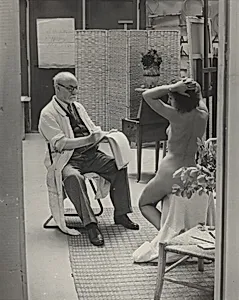
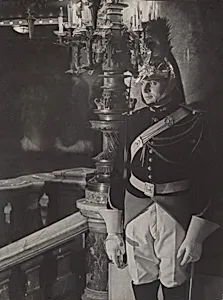
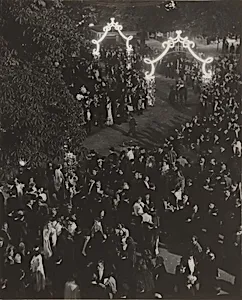
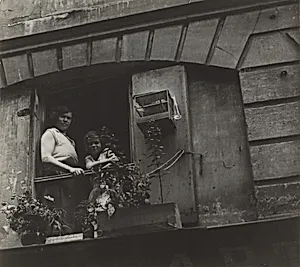
It was the nocturnal life of Paris that made Brassaï famous. Wandering the city's streets, cafes, brothels, and back alleys by night, he produced a body of photographs of extraordinary atmospheric power, published in 1933 as Paris de nuit (Paris by Night). The book was an immediate success and earned him the epithet 'the eye of Paris,' a phrase coined by Henry Miller. Brassaï went on to document a vast range of Parisian life: the haute monde of balls and operas, the underworld of street gangs and prostitutes, and the intimate studios of artists he knew personally, including Pablo Picasso, Salvador Dalí, Henri Matisse, and Alberto Giacometti. His long friendship with Picasso resulted in the publication Conversations with Picasso (1964), a richly observed memoir of visits spanning years. He also published The Secret Paris of the 30s (1976), drawn from his archive of images made during that defining decade.
Brassaï became a naturalized French citizen in 1949 and continued working as a photographer, sculptor, filmmaker, and writer for decades. He won the prize for Most Original Film at the 1956 Cannes Film Festival, and his photographs were exhibited at the Museum of Modern Art in New York as early as 1948. He died on July 8, 1984, near Nice, on the French Riviera. As a chronicler of twentieth-century Paris in all its shadow and light, Brassaï remains one of the most significant photographers of the modern era.