Ctrl K
1759–1808
**The Real Fábrica del Buen Retiro** (also known as the Royal Buen Retiro Porcelain Factory or simply “La China”) was Spain’s premier royal porcelain manufactory, established in 1759–1760 in Madrid’s Parque del Buen Retiro. King Charles III founded the enterprise by transferring the entire Capodimonte porcelain works—including skilled artisans, molds, and raw materials—from Naples to Madrid upon his accession to the Spanish throne. The factory operated under direct royal patronage, producing luxury soft-paste porcelain for the court until its relocation and renaming in 1817.
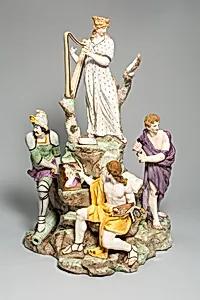
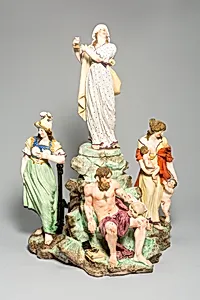
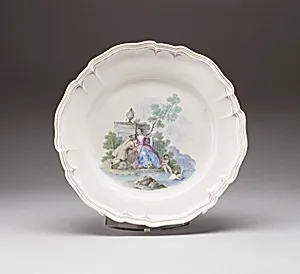
Its early production closely followed the Neapolitan Capodimonte tradition, employing the same fleur-de-lis mark and delicate modeling techniques. Over time the factory evolved toward a fully Neoclassical idiom, creating elegant vases, allegorical figure groups, and elaborate porcelain rooms that adorned royal palaces. Notable surviving examples include finely painted vases from the 1780s–1790s and sculptural groups such as *Apollo and Marsyas* from the 1760s. These works combined Italianate modeling with Spanish royal iconography, often featuring mythological or courtly subjects rendered in polychrome enamels.
Although no single “master” artist is universally credited, the factory employed a succession of modelers and painters trained in the Capodimonte workshops. Their collective output established a distinctive Spanish porcelain style that bridged Rococo exuberance and emerging Neoclassicism. The Buen Retiro factory supplied the Spanish crown with table services, decorative sculptures, and architectural porcelain elements, elevating Madrid as a center of European ceramic production.
Its legacy endures in major museum collections worldwide, where its pieces exemplify eighteenth-century royal patronage of the decorative arts. The factory’s transfer of technology and personnel from Italy to Spain helped shape subsequent Spanish porcelain manufacture, notably influencing the later Real Fábrica de La Moncloa. Today its surviving works remain prized for their technical refinement and historical significance as emblems of Bourbon Spain’s artistic ambitions.