Ctrl K
François Le Seigneur was a skilled pewterer, or potier d’étain, working in Caen, Normandy, during the early nineteenth century. He was received as a master potter in Caen in 1806, a formal recognition that allowed him to operate independently and stamp his wares with his hallmark. Little is known of his early life or training, as is typical for many provincial craftsmen of the period, but his admission to the mastery placed him within the long-standing Norman tradition of pewter making, a craft that had flourished in the region for centuries producing both utilitarian and finely finished objects.
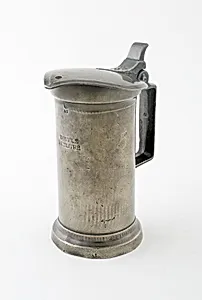
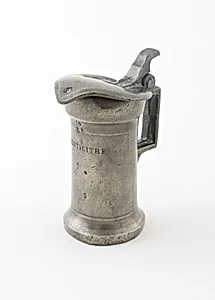
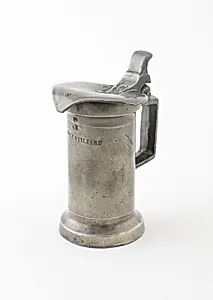
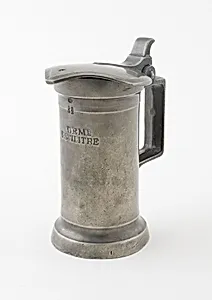
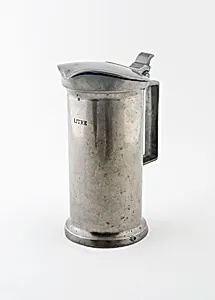
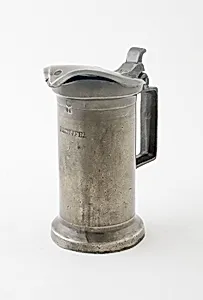
The workshop he established, later known as Maison Le Seigneur (sometimes appearing as Maison Leseigneur Deverre or with a successor mark), continued well into the later nineteenth century. Pieces bearing the Le Seigneur name or related stamps include a handsome covered cider pitcher with a worked handle and push-button lid from around 1806, as well as a range of official capacity measures such as double-decilitre and demi-litre tankards dating from the 1850s through the 1875–1895 period. These objects typically feature hinged lids, sturdy handles, and inspection or control marks required for public use in taverns, markets, and households. The later marks often combine the original family name with that of a successor, indicating the continuity of a family or workshop enterprise typical of French artisan trades.
Le Seigneur’s output belongs to the practical yet aesthetically considered world of French provincial pewter. The forms are functional—pitchers for cider, graduated measures for liquids—yet they display careful proportions, quality alloy, and the distinctive hallmarks that identified both maker and city. This work continued the regional tradition of Norman étainiers, who produced durable, attractive vessels long after the old guild system had been abolished. Surviving examples, now found in private collections, antique markets, and even museum holdings such as a related pewter bedpan associated with a Caen institution, attest to the workshop’s productivity and the enduring appeal of well-made everyday objects.
Today, the pewter of Le Seigneur, Caen, offers a tangible link to nineteenth-century Norman daily life and craftsmanship. These pieces illustrate how a master pewterer and his successors supplied the needs of a growing urban and rural population while maintaining high standards of workmanship. Their presence in collections underscores the value of decorative arts that blend utility, regional identity, and quiet elegance.