Ctrl K
1701–1781
**Jacques Dumont, called le Romain (1704–1781), was a French painter, engraver, and draftsman whose long career spanned the height of the Académie Royale de Peinture et de Sculpture.** Born in Paris on 10 May 1704, he was the son of the court sculptor Pierre Dumont and brother to the sculptor François Dumont. He earned his nickname from an early sojourn in Rome, where he traveled on foot as a youth before returning to Paris in 1725. He studied under Antoine Lebel and quickly established himself in the academic system.
In 1728 Dumont was received into the Académie with his reception piece *Hercule et Omphale*. He exhibited regularly at the Paris Salon from 1727 onward and became known for history paintings of biblical and mythological subjects, as well as portraits and genre scenes. Notable works include *Glaucus and Scylla* (1726), *Mucius Scaevola* (1747), and the *Allegory of the Peace of Aix-la-Chapelle* (1761). He also practiced etching, reproducing his own paintings and other compositions, and served as painter to the Aubusson tapestry manufactory from 1731 to 1755, where he supplied cartoons and raised design standards.
Dumont held several institutional roles, including a brief directorship of the Académie in 1763 and a short stint as governor of the École royale des élèves protégés in 1749. Contemporaries remembered him for his sharp wit and caustic remarks at academy meetings. Though his reputation has faded compared with some contemporaries, he enjoyed considerable success and celebrity during his lifetime, contributing to both easel painting and the decorative arts.
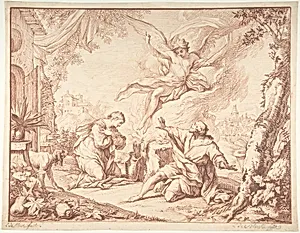
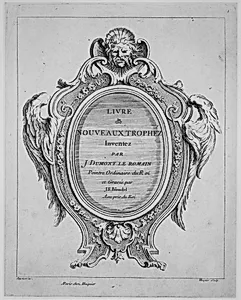
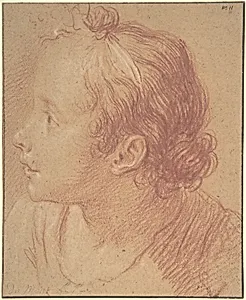
His family connections to sculpture and his multifaceted practice across painting, engraving, and design exemplify the interconnected artistic world of eighteenth-century Paris. Three works by Dumont are held in the museum’s collection, offering visitors a glimpse of his refined academic style and technical versatility.
All 3 artworks loaded