Ctrl K
1623–1664
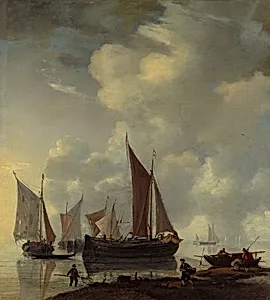
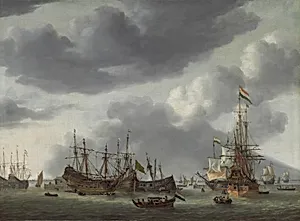
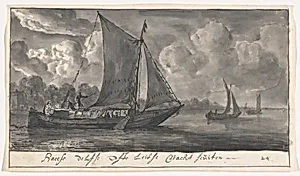
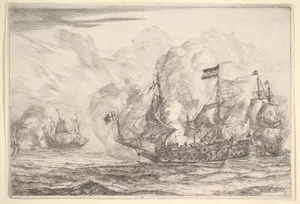
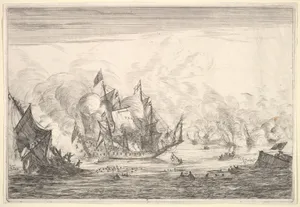
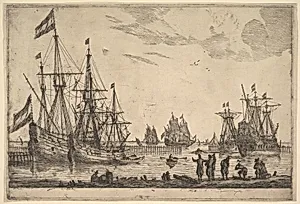
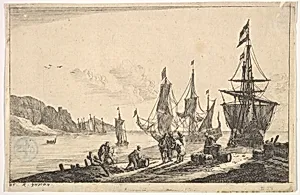
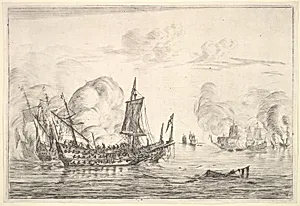
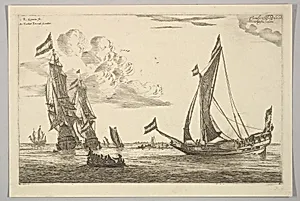
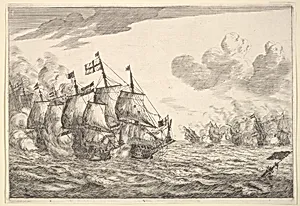
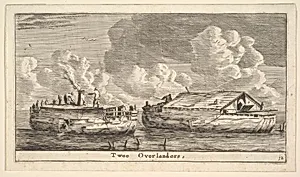
Reinier Nooms, known as Zeeman ("sailor" in Dutch), was a prominent Dutch maritime painter, draftsman, and etcher of the Golden Age, born around 1623 or 1624 in Amsterdam and dying there in 1664 at about age 40. Before turning to art around 1643, he led a rough life as a professional seaman, which informed his unparalleled accuracy in depicting ships, ports, naval battles, and coastal scenes—knowledge that set a standard for other artists. His earliest known work, a 1643 drawing of Amsterdam's Old City Hall, marks the start of a prolific career yielding over 80 paintings and 177 etchings in just 14 years.
No records identify Nooms's teacher or formal training, though he likely honed his skills in Amsterdam; he may have learned etching techniques in Paris during stays in the late 1640s to early 1650s, possibly in Matthieu van Plattenberg's workshop. A restless traveler, he visited Paris multiple times (1650–1652, 1656), Venice, possibly Berlin in 1657, and joined Admiral Michiel de Ruyter's 1661–1663 expedition against North African pirates. In 1653, he married Maria Jansdr Moosijn from Bruges—sister of engraver Michael Moosijn, with whom he collaborated on portraits of Admiral Maarten Tromp—and they baptized daughters Neeltjen and Lisbet in 1653 and 1655.
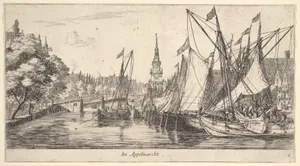
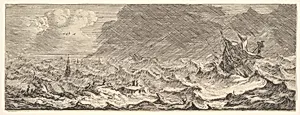
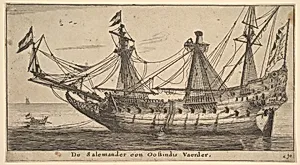
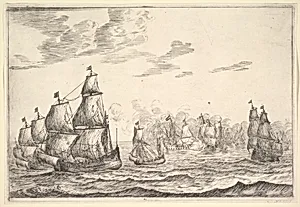
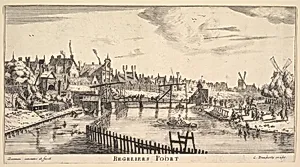
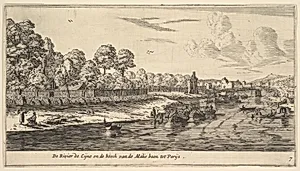
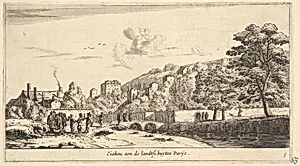
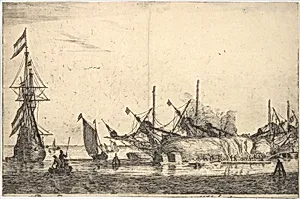
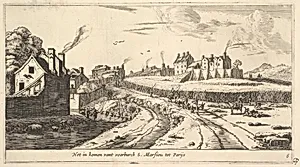
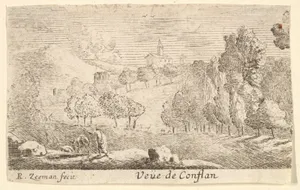
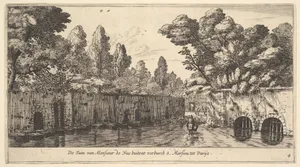
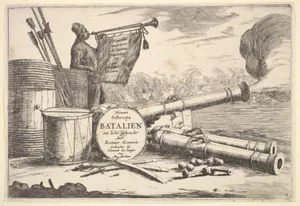
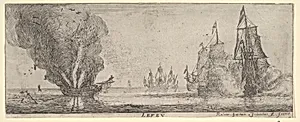
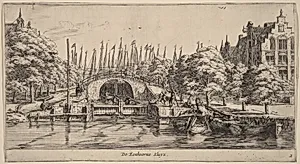
Nooms worked in the vivid Dutch maritime tradition, employing a blue-gray palette accented by luminous light effects, golden ship highlights, and precise rigging details to evoke weather, motion, and atmosphere. His etchings, published by Cornelis and Danckerts Danckerts, include meticulous series like *Receuil de plusiers Nauires* (1650), *The Four Elements* (1651–1652), *Verscheijde Schepen en Gesichten van Amstelredam* (c. 1652–1656), and *Vues de Paris* (c. 1667–1677). Notable paintings feature the flagship *Amalia* before the Battle of the Downs (National Maritime Museum, Greenwich), the Battle of Leghorn (1653; Rijksmuseum), four Admiralty-commissioned North African port views (Algiers, Tunis, Tripoli, Valletta; Rijksmuseum), and a 1664 Amsterdam harbor panorama (Nederlands Scheepvaartmuseum).
Nooms's oeuvre captured the Dutch Republic's seafaring prowess during the Anglo-Dutch Wars and commercial expansion, earning acclaim from merchants and mariners. His widow's 1667 dowry listed his paintings and navigation books, underscoring their value. In the 19th century, etcher Charles Meryon drew inspiration from Nooms's topographic precision for his Paris views, dedicating works to him poetically—cementing Zeeman's enduring influence on marine art.