Ctrl K
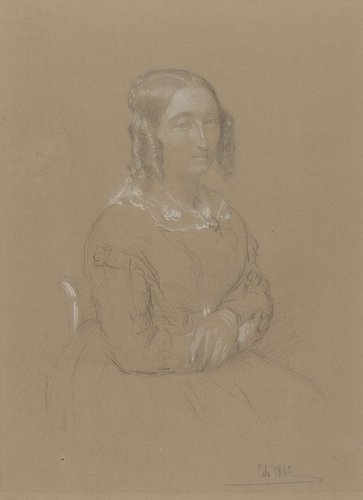
1810–1880
Movements
Occupations
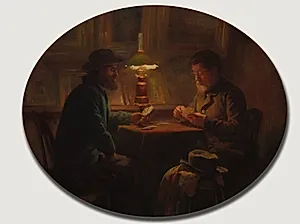
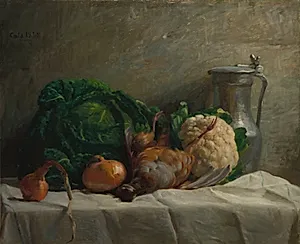
Adolphe-Félix Cals (1810–1880) was a French painter whose work bridges Realism and Impressionism, earning him recognition as one of the five 'fathers' of Impressionism alongside Eugène Boudin, Johan Barthold Jongkind, Édouard Manet, and Camille Corot. Born into poverty in Paris on October 17, 1810, Cals overcame his circumstances through talent and determination. After training as an engraver and studying under Léon Cogniet, he parted ways with his neoclassical-influenced teacher over disagreements about the emerging Impressionist movement. Cals's participation in the 1863 Salon des Refusés alongside Monet, Degas, and Pissarro marked him as part of the artistic vanguard. At Monet's invitation, he exhibited in the First Impressionist Exhibition in 1874 and continued participating through 1876 and 1881. Having settled in Honfleur in 1873, Cals spent his final years painting the harbor, the sea, and maritime life with a luminous palette and direct observation that embodied Impressionist principles. He died on October 3, 1880, in Honfleur, having helped establish the movement that would transform modern painting.
Adolphe-Félix Cals was born into a poor family on October 17, 1810, in Paris. Despite their poverty, his parents attempted to prevent him from performing manual labor, recognizing his potential for advancement through education and skill.
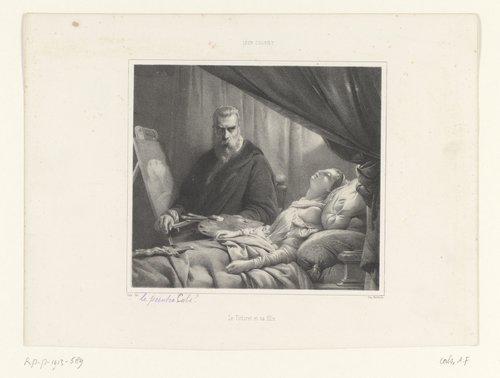
Cals initially trained as an engraver under Jean-Louis Anselin, a family friend who provided crucial early instruction. After Anselin died suddenly, Cals continued studying engraving, first with Ponce, then under Bosc.
Eventually, he entered the atelier of Léon Cogniet, a successful academic painter. However, Cals parted company with his neoclassical-influenced teacher owing to Cogniet's lack of appreciation for the emerging Impressionist movement in art.
This break with academic tradition marked a crucial turning point in Cals's development, setting him on a path toward the progressive artistic circles that would eventually coalesce into Impressionism.
In 1863, Cals exhibited at the historic Salon des Refusés, the exhibition of works rejected by the official Paris Salon. He showed alongside Claude Monet, Edgar Degas, and Camille Pissarro, establishing his association with the artists who would soon form the Impressionist movement.
The Salon des Refusés was a watershed moment in modern art, publicly demonstrating the gulf between academic tradition and emerging progressive tendencies. Cals's participation marked him as part of this artistic vanguard.
During these years, Cals developed friendships with the Impressionists and refined his own approach to painting, emphasizing direct observation, luminous color, and contemporary subjects.
Divided between Paris and Honfleur since 1871, Cals finally decided to settle permanently in 1873 in the Norman port of Honfleur, where many progressive painters gathered.
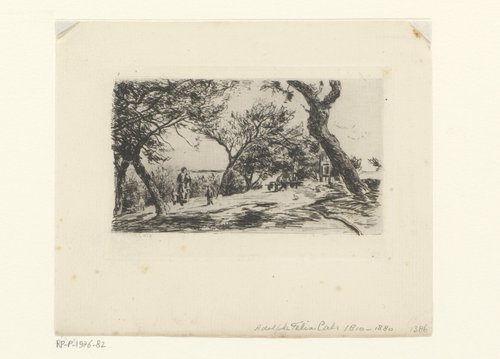
Having settled with his daughter in Honfleur during the last decade of his life, Cals painted the harbor, the sea, and its associated human life—fishermen, sailors, maritime commerce—with direct observation and atmospheric sensitivity.
At the invitation of Claude Monet, Cals participated in the groundbreaking First Impressionist Exhibition in 1874, lending his participation legitimacy and demonstrating the movement's breadth.
He continued exhibiting with the Impressionists in 1876 and 1881 (posthumously), maintaining his commitment to the movement's principles of direct observation, contemporary subject matter, and luminous color.
Adolphe-Félix Cals died on October 3, 1880, in Honfleur, at age sixty-nine. Looking carefully at the evidence, scholars have identified him as one of at least five 'fathers' of Impressionism, alongside Boudin, Jongkind, Manet, and Corot—recognizing his crucial role in establishing the movement's foundations.
Artheon Research Team
Last updated: 2025-11-09
Biography length: ~478 words
Wikidata (CC0); Getty ULAN (ODC-By)