Ctrl K
1860–1960
Camille Bourget, born Alexandre Camille Bourget on April 12, 1866, in Clermont-Ferrand, France, was the son of Justin Bourget, a professor of sciences at the local faculty, and his second wife, Marie Marguerite Nicard; he was the half-brother of the renowned writer Paul Bourget. His early training took place in Paris, where he studied under the academic masters Alexandre Cabanel and Léon Bonnat at the École des Beaux-Arts, and attended the Académie Julian. This rigorous education immersed him in the traditions of precise draftsmanship and classical composition, hallmarks of late 19th-century French academic art.
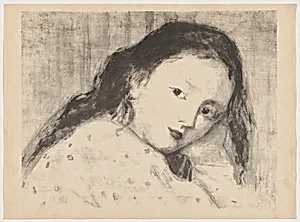
Bourget established himself as a painter and engraver, specializing in evocative urban scenes of Paris's historic quarters, rural landscapes, portrait studies, and allegorical works. His style reflected the École des Beaux-Arts tradition, with meticulous attention to light, texture, and everyday life, often capturing the bustling streets or serene countryside in a realist vein. He exhibited regularly at the Salon des Artistes Français, becoming a sociétaire (member) of the society, and earned recognition including a bronze medal and the prestigious Prix Marie-Bashkirtseff in 1912. In 1895, he contributed lithographs to Maurice Dumont's album *L'Épreuve*, showcasing his graphic prowess.
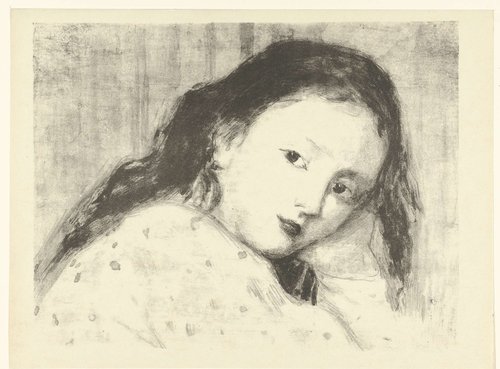
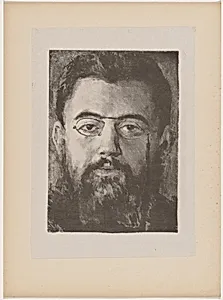
Among his notable works are the oil painting *Allégorie du commerce et de la navigation* (1900), depicting maritime trade in symbolic grandeur; wood engraving *Le Gonflement d’un ballon* (1909); rural scenes like *Les Meules* (haystacks) and *La Fenaison* (haymaking); and detailed Paris street views such as *La rue Saint-Bon* (1907), *La rue Mouffetard* (1909), *Rue Saint-Paul, rue Eginhard*, and *Rue Domat*. Portrait studies including *Tête d'homme (Head of a Man)* (1895) and *Étude d'enfant (Study of a Child)* (1895) appear in collections like the National Gallery of Art.
Bourget spent his final years in Italy, dying on December 29, 1931, in Massa dei Sabbioni, Tuscany. Though not a household name today, his contributions to academic realism endure in museum holdings, including six works in the Artheon Virtual Museum and the Musée Carnavalet, preserving his intimate visions of fin-de-siècle France.