Ctrl K
1746–1811
Occupations
**Angelo Campanella (1746–1811)**
Born in Rome on 7 February 1746, Angelo Campanella emerged as a prominent Italian painter and engraver within the Papal States during the late Enlightenment era. His early training began at the Ospizio Apostolico di San Michele, where he entered at age eight in 1754, earning prizes for engraving in 1759, 1767, and 1769, as well as recognition from the Scuola del Nudo at the Accademia di San Luca. He studied under the master engraver Giovanni Volpato, whose workshop honed Campanella's expertise in reproductive printmaking, translating classical sculptures, Renaissance paintings, and contemporary frescoes into precise etchings and engravings. Active exclusively in Rome from 1771 until his death on 13 January 1811, Campanella thrived amid the city's neoclassical revival, fueled by papal patronage and the Grand Tour's demand for antiquarian prints.
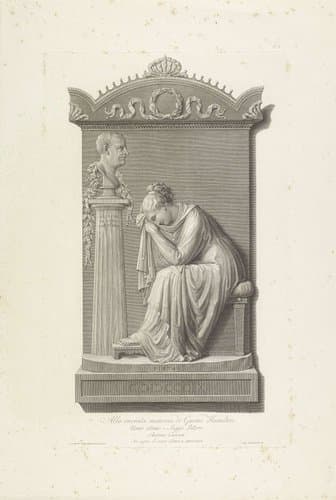
Campanella worked in the neoclassical tradition of reproductive engraving, employing etching for fluid tones and burin techniques for sharp lines, cross-hatching, and dotted textures to evoke volume, light, and classical anatomy. His major series include plates for Gavin Hamilton's *Schola Italica Picturae* (1771), such as *The Presentation in the Temple* after Fra Bartolommeo, and contributions to *Choix des meilleures statues antiques* (1780–1793) alongside Volpato and Domenico Cunego. He documented Villa Negroni frescoes in *Parietinas Picturas* (1778) after Anton Raphael Mengs and Anton von Maron, including *Drunken Hercules* (1781) and *Bacchus and Ariadne* (1783), as well as interior scenes from the Palace of Emperor Antoninus Pius.
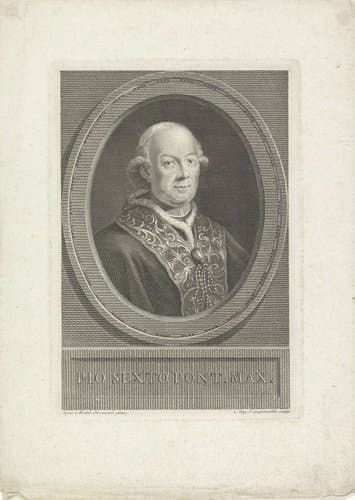
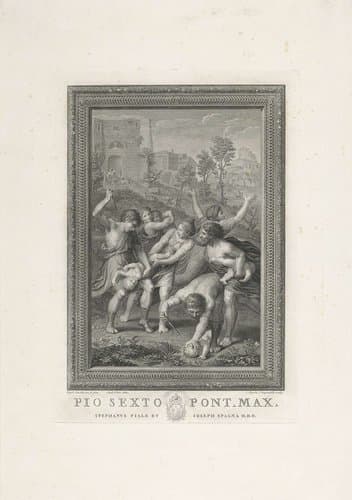
Reproducing Renaissance masters like Raphael—*Psyche and Cupid*, *Supper at Emmaus* (after 1771), *Adoration of the Shepherds* (1785), and *Massacre of the Innocents* (1775–1799)—Campanella also captured papal iconography, such as portraits of *Clement XIV* (1777) after Vincenzo Milione and scenes related to Pius VI, including *Morte di S.S. Pio VI*. Engravings of the twelve colossal Apostle statues in St. John Lateran (c. 1770s) further highlight his role in ecclesiastical preservation.
Campanella's legacy endures through prints in institutions like the National Gallery of Art, Metropolitan Museum of Art, Victoria and Albert Museum, and British Museum, bridging Renaissance ideals with neoclassical audiences and sustaining Rome's artistic heritage amid political upheaval. His meticulous reproductions, from mythological narratives like *Venus Teaching Cupids to Fly* (c. 1806) to antique monuments, fueled scholarly dissemination and remain vital for art historical study today.
Wikidata (CC0); Getty ULAN (ODC-By)
All 3 artworks loaded