
Ctrl K
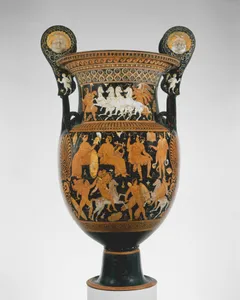
The Capodimonte Painter was a Greek vase painter active in South Italy during the late fourth century BCE, working in the Apulian red-figure tradition. He is recognized as a follower of the Baltimore Painter, one of the most prolific artists of the late Apulian period. This connection places him firmly within the ornate style of Apulian vase painting, which flourished in the Hellenistic era and featured elaborate compositions covering nearly the entire surface of large vessels.
His known oeuvre centers on monumental forms such as volute-kraters, where he employed dense iconography and intricate patternwork. The primary surviving work attributed to him is a terracotta volute-krater now in the Metropolitan Museum of Art, dated circa 320–310 BCE. On the obverse, it depicts an assembly of gods above an Amazonomachy; the reverse shows a youth in a naiskos flanked by youths and women; the neck features a woman with torches leading Nike in a chariot; and the handles bear heads of Io and young Pans. This vase exemplifies the painter’s skill in combining mythological narratives with funerary motifs typical of Apulian production.
The painter’s name derives from the vessel’s early modern history: discovered in 1785 near Naples, it was acquired by the king of Naples for his palace at Capodimonte. Eighteenth-century antiquarians first encountered Greek vase painting through such impressive examples, sparking scholarly interest and collections that shaped the modern understanding of ancient South Italian ceramics. Though only this single work is firmly attributed to him, the Capodimonte Painter contributed to the final flourishing of Apulian red-figure pottery before its decline, preserving rich mythological and decorative traditions that continue to inform studies of Hellenistic art in Magna Graecia.
All 1 artworks loaded