Ctrl K
1833–1907
**Carlo Ferrario** (7 September 1833 – 11 May 1907) was an Italian scenic and costume designer, painter, and architect renowned for his contributions to opera and theater design, particularly his long association with La Scala in Milan. Born in Milan to a blacksmith father, Giuseppe Ferrario, and mother Francesca Basulli, he left school early to support himself, taking a job with a local decorator that sparked his passion for theatrical draperies and stage effects. In 1852 he enrolled in night classes at the Brera Academy, studying under Enrico Robecchi, and the following year joined La Scala as an assistant stage manager.)
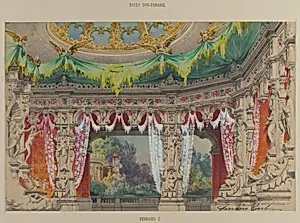
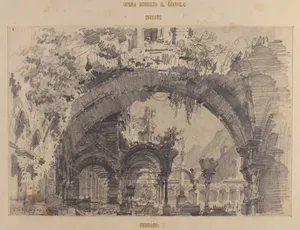
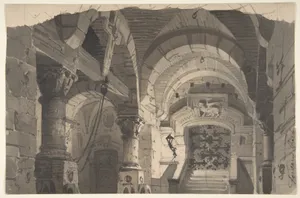
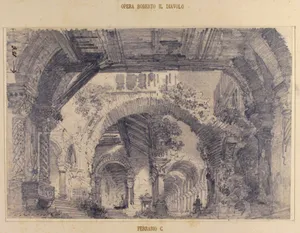
By 1859 he was working as an associate professor of perspective at the academy under Luigi Bisi, and in 1867 he became co-director and then Director of Scenography at La Scala. Ferrario created curtains for several Milan theaters and designed sets for productions such as *Salvator Rosa* (1878) at Rome’s Teatro Argentina. After a temporary departure in 1881 over disagreements about workshop facilities, he returned in 1887 at the personal request of Giuseppe Verdi to design the sets for *Otello*. He later collaborated with Verdi on *Falstaff* and *Rigoletto*, and prepared Italian premieres of several Wagner operas while also working at the Teatro Carcano and Teatro di San Carlo in Naples.)
Beyond the stage, Ferrario painted landscapes and architectural interiors in oil and watercolor. Notable among these are six panels for the new façade of Milan Cathedral, which earned him the Canonica Prize in 1883, and decorative work at the Palazzo Turati alongside Giuseppe Bertini. In 1882 he received a gold medal in the competition for a monument to Victor Emmanuel II. His artistic output reflects a precise command of perspective and atmospheric detail honed through both academic training and practical theater work.)
Ferrario’s legacy endures through his influential scenic designs for Verdi’s late masterpieces and the preservation of roughly 600 of his drawings and sketches at the La Scala Museum, with additional works held at Casa Ricordi and in private collections. His career bridged the worlds of fine art and performance, shaping the visual language of Italian opera in the late nineteenth century.